
What to Buy Near Amboseli: Authentic Maasai Crafts, Fair Prices & Customs Rules
Overview
Shopping for Souvenirs to Buy near Amboseli means avoiding painted yellow-wood fakes, driver kickback shops, and airport customs bans. The Kenya Wildlife Service regulates exports across this Kajiado ecosystem—often confused with Narok County Council—where Amboseli Elephant Research Project herds roam near Enkongo Narok swamp beneath Mount Kilimanjaro.
Fast Navigation Links
- 5 Day Safari Package Rates
- Local Souvenir Fair Price Guide
- Spotting Fake Ebony Wood Carvings
- Best Bomas and Local Markets
- Airport Customs Bans and Rules
Stepping out of your Land Cruiser at a roadside curio market outside Kimana Gate can feel overwhelming. It is dusty, chaotic, and crammed with bright acrylic blankets, hand-carved animals, and rows of beaded jewelry. Vendors will call out from their stalls, offer to trade for your sneakers, and start bartering at three times what an item is actually worth.
Knowing what to look for—and what will get seized at airport customs—keeps you from overpaying for painted softwoods or accidentally breaking international wildlife laws on your way home.
5-Day Multi-Destination Safari Package (2 Nights Amboseli + 1 Night Lake Naivasha + 1 Night Lake Nakuru)
We route this 5-day circuit through Amboseli, Lake Naivasha, and Lake Nakuru because regional craft styles change completely once you leave Kajiado County. You go from heavy Maasai beadwork and olive wood carvings near Kilimanjaro to woven sisal baskets around Naivasha and banana-leaf artwork in Nakuru.
Rates below show total costs per person for two adults traveling together in a private 4×4 Safari Land Cruiser:
5-Day Circuit Rates & Lodging Options
| Package Tier & Route Details | Included Lodges & Hotels | Price per Person (Low – Peak)* |
| Budget Tier | Penhy Eco Camp, Lake Naivasha Crescent Camp & Hotel Merica | From USD $1,620 to USD $2,670 |
| Mid-Range Tier | Tulia Amboseli Camp, Sawela Lodges Naivasha & Nakuru Windward Hotel | From USD $1,980 to USD $3,030 |
| Luxury Tier | Amboseli Serena Safari Lodge, Lake Naivasha Simba Lodge & Sarova Lion Hill | From USD $2,660 to USD $3,710 |
| Luxury Plus Tier | Campi ya Kanzi, Kiboko Luxury Camp Naivasha & The Cliff Nakuru | From USD $4,960 to USD $6,880 |
Rates cover 2026/2027 travel for two adults sharing a room or tented suite with a private 4×4 Land Cruiser and driver-guide. Standard/Low season covers January through May and November. Peak season spans June through October and December. Rates include full-board lodging, private transport, driver allowances, fuel, daily $90 USD KWS park permits (plus the mandatory 5% eCitizen gateway processing fee), Naivasha boat passes, Nakuru sanctuary passes, and chilled vehicle water. Luxury Plus includes domestic flights from Wilson Airport (WIL) on Safarilink or Airkenya.
To check open dates or reserve a private Land Cruiser, submit your inquiry through our safari booking form.
What’s Included
- Private 4×4 Safari Land Cruiser with pop-up roof hatch and custom beanbag mounts
- Services of a TRA-licensed driver-guide for the full 5-day itinerary
- Full-board accommodation covering breakfast, lunch, and dinner daily
- Pre-paid daily $90 USD KWS entry permits (plus 5% eCitizen fee), Naivasha passes, and Nakuru passes
- Chilled drinking water stocked in the vehicle cooler
What’s Excluded
- International flights, travel insurance, and digital Kenya entry processing through the official eTA portal
- Tipping your driver-guide or lodge staff
- Alcoholic beverages, soft drinks, or personal laundry
- Optional Maasai village entry vouchers ($30) or hot air balloon flights ($450)
Optional Add-Ons
- Local village entry voucher & cultural walkthrough: USD 30 per person
- Night game drive in a private conservancy: USD 50 per person
- Sunrise hot air balloon flight over central marshes: USD 450 per person
Fair Price Guide for Local Crafts
Bartering is a normal part of buying crafts in East Africa, but figuring out a starting price can be tricky. Use these baseline numbers so you don’t overpay or insult local carvers and weavers:
| Souvenir Item | Fair Local Price (KES / USD) | Recommended Opening Offer |
| Beaded Bracelet / Wristband | KES 200 – 500 ($1.50 – $4.00) | KES 800 |
| Brushed Acrylic Maasai Shuka | KES 1,200 – 2,000 ($10.00 – $15.00) | KES 3,000 |
| Medium Olive Wood Animal (8-10″) | KES 1,500 – 3,000 ($12.00 – $23.00) | KES 4,500 |
| Hand-Woven Sisal Kiondo Bag | KES 1,500 – 2,500 ($12.00 – $20.00) | KES 3,500 |
| Smoke-Cured Milk Gourd (Enkala) | KES 2,500 – 4,000 ($20.00 – $30.00) | KES 5,500 |
Where to Shop: Gate Stalls, Cooperatives & Driver Kickbacks
Large “curio barns” along the main Nairobi-Emali highway look convenient, but they inflate prices by 300% or more. They do this to pay driver-guides a 30% to 50% cash kickback on everything you buy.
Ask your guide to skip those massive highway complexes and stop at local, community-run spots instead:
- Kimana Gate Cultural Stalls: An open-air market right outside the main park entrance run by local Maasai women’s groups. It is the best place to buy glass beadwork (Olkelai), brass arm cuffs, and leather belts directly from the people who make them.
- Kimana Town Market Day: If you pass through on a Tuesday, stop in Kimana Town. Rural artisans sell leather sandals, blankets, and household goods to locals at domestic prices.
- Loitokitok Artisans Collective: Located 50 km southeast on the slopes of Kilimanjaro. It is famous for skilled woodcarvers and leatherworkers crafting genuine olive wood animal figures and embossed knife sheaths.
Artisans inside cultural homesteads (Enkang) welcome direct trades alongside cash. They often ask for practical items like lightly used running shoes, solar flashlights, reading glasses, or warm fleece hoodies in exchange for heavy beadwork.
You can review boma entry fees and travel timing on our Amboseli safari planning guide.
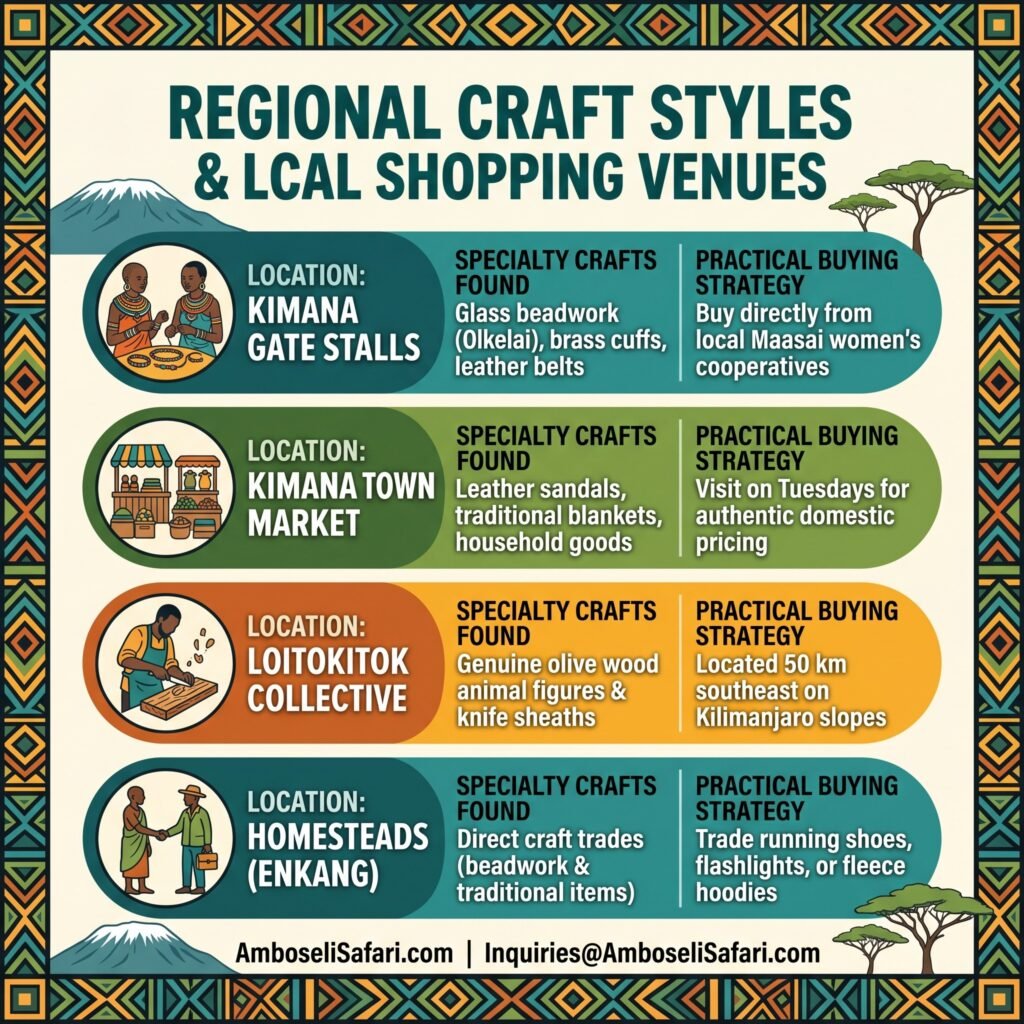
Regional Craft Styles & Local Shopping Venues
Bypassing commercial roadside curio barns allows you to support local artisan cooperatives while securing fair domestic prices. Regional craft styles shift dramatically as you travel across Kajiado County toward Naivasha and Nakuru, moving from heavy glass beadwork to sisal weaving. Use this quick-reference guide to match authentic craft items with their best local community markets and cooperatives.
| Shopping Location | Specialty Crafts Found | Practical Buying Strategy |
| Kimana Gate Stalls | Glass beadwork (Olkelai), brass cuffs, leather belts | Buy directly from local Maasai women’s cooperatives |
| Kimana Town Market | Leather sandals, traditional blankets, household goods | Visit on Tuesdays for authentic domestic pricing |
| Loitokitok Collective | Genuine olive wood animal figures & knife sheaths | Located 50 km southeast on Kilimanjaro slopes |
| Homesteads (Enkang) | Direct craft trades (beadwork & traditional items) | Trade running shoes, flashlights, or fleece hoodies |
Spotting Fake Ebony Carvings
Roadside stalls outside Iremito Gate sell thousands of wooden animals every month. A common trick is taking soft, light yellow wood—like Jacaranda—and slathering it in dark shoe polish or dark wood stain to pass it off as rare East African Ebony.
Real ebony is heavy, dense, and naturally dark throughout the wood grain.
Scratch the unpolished base of a carving with your fingernail or the edge of a coin. If pale white wood shows through or your thumb comes away smelling like black shoe polish, put it back—it’s a cheap painted soft wood.
Look for carvings made from Wild Olive Wood (Olea europaea, or Ol’erien). It has a honey-and-dark brown grain with natural oils that never need black paint.
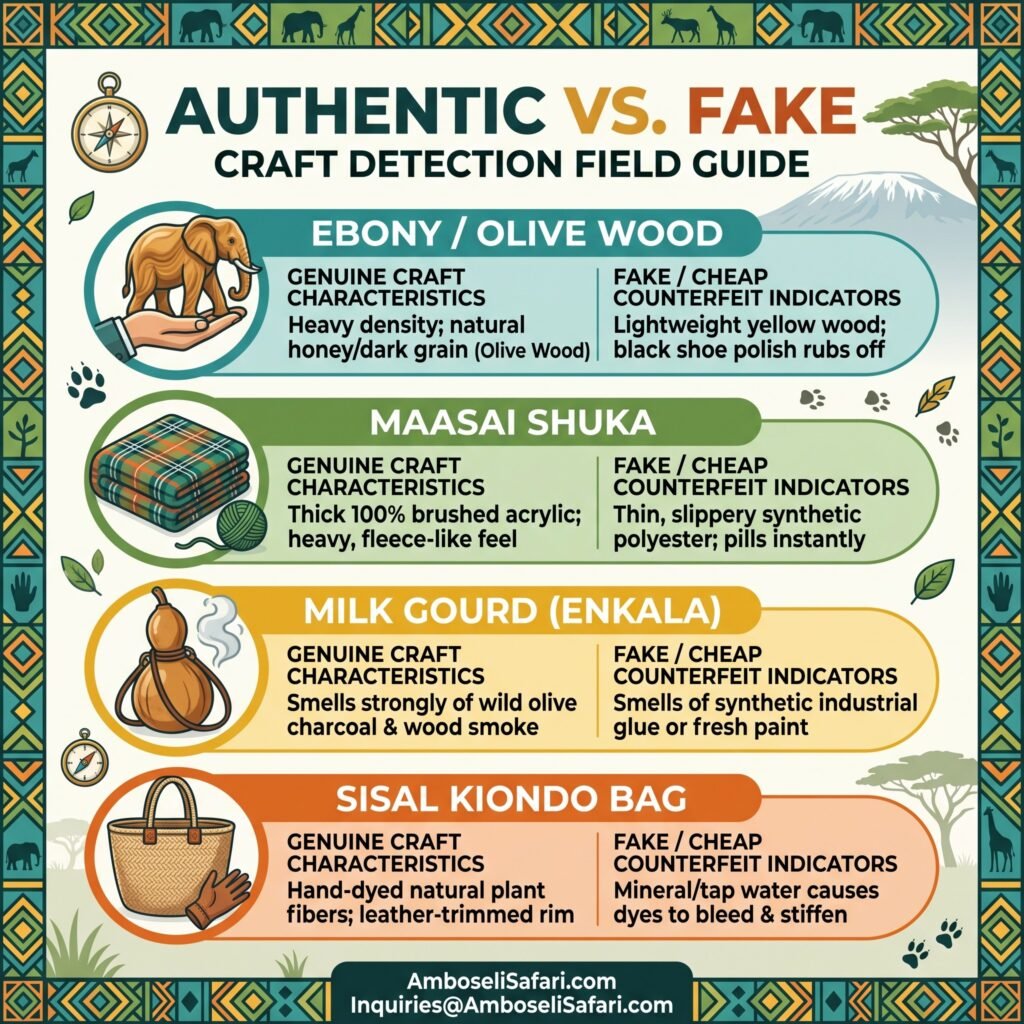
Authentic vs. Fake Craft Detection Field Guide
Spotting authentic East African crafts outside Amboseli requires knowing how genuine natural materials behave under simple field tests. Unscrupulous vendors frequently disguise cheap yellow wood with black shoe polish, pass off slippery synthetic blankets as traditional wools, or sell glue-scented replica gourds. Use this practical field guide to quickly test wood grain, fabric weight, and traditional scents before buying souvenirs.
| Souvenir Item | Genuine Craft Characteristics | Fake / Cheap Counterfeit Indicators |
| Ebony / Olive Wood | Heavy density; natural honey/dark grain (Olive Wood) | Lightweight yellow wood; black shoe polish rubs off |
| Maasai Shuka | Thick 100% brushed acrylic; heavy, fleece-like feel | Thin, slippery synthetic polyester; pills instantly |
| Milk Gourd (Enkala) | Smells strongly of wild olive charcoal & wood smoke | Smells of synthetic industrial glue or fresh paint |
| Sisal Kiondo Bag | Hand-dyed natural plant fibers; leather-trimmed rim | Mineral/tap water causes dyes to bleed & stiffen |
Smoke-Cured Milk Gourds (Enkala)
Traditional Maasai milk containers (Enkala or Orinka) are made from dried bottle gourds encased in hand-stitched leather and decorated with glass beads.
If you pick one up at a boma near Kimana Gate, smell the inside opening. Authentic gourds smell strongly of charcoal and burnt wood. Maasai women sanitize the interior using glowing embers of wild olive wood and wild rosemary before pouring in fresh milk.
If it smells like synthetic glue or fresh industrial paint, it is an artificial factory replica made for airport gift shops.
Airport Customs Bans and International Import Rules
Buying certain crafts can cause major headaches at airport security when you leave Kenya or land back home.
KWS Wildlife Export Bans
Stalls near Meshanani Gate sometimes sell necklaces or wall hangings made with real porcupine quills, animal bone inlay, or ostrich eggshell beads. Under Kenya Wildlife Service regulations and CITES laws, exporting any animal parts without a KWS Wildlife Export Permit is illegal—even if you picked up a naturally shed quill off the dirt. Customs officers at Nairobi’s Jomo Kenyatta International Airport (JKIA) scan outgoing bags, confiscate unpermitted animal items, and issue heavy cash fines. Stick strictly to carved wood, glass beads, brass, and textiles.
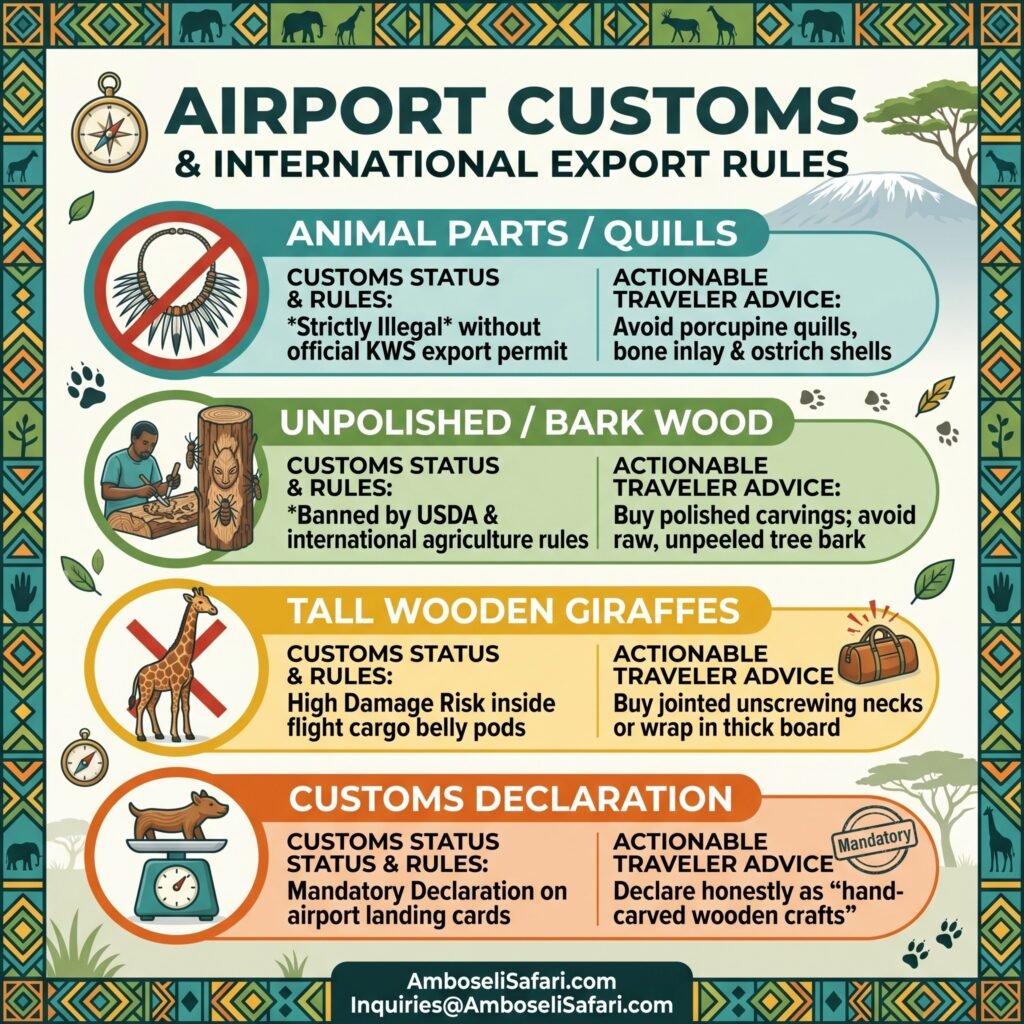
Airport Customs & International Export Rules
Bringing safari souvenirs home requires navigating strict Kenya Wildlife Service export regulations and international destination customs laws. Unpermitted animal products—including shed porcupine quills and bone carvings—face immediate seizure and heavy fines at Jomo Kenyatta International Airport (JKIA). Review this airport customs reference to ensure your wooden crafts, textiles, and plant-based items pass border inspections smoothly.
| Item Category | Customs Status & Rules | Actionable Traveler Advice |
| Animal Parts / Quills | Strictly Illegal without official KWS export permit | Avoid porcupine quills, bone inlay & ostrich shells |
| Unpolished / Bark Wood | Banned by USDA & international agriculture rules | Buy polished carvings; avoid raw, unpeeled tree bark |
| Tall Wooden Giraffes | High Damage Risk inside flight cargo belly pods | Buy jointed unscrewing necks or wrap in thick board |
| Customs Declaration | Mandatory Declaration on airport landing cards | Declare honestly as “hand-carved wooden crafts” |
Foreign Agricultural Import Rules
Customs agencies like the U.S. Department of Agriculture (USDA) and European border forces inspect natural plant materials:
- Untreated Bark: Avoid wooden carvings that keep raw, unpeeled tree bark as part of the design. Insects live inside raw bark, and customs agents will destroy the item at your destination airport.
- Wild Seeds: Jewelry made with unvarnished wild seeds or raw plant pods can get held up in agricultural quarantine.
- Landing Cards: Declare wooden items honestly on your customs form as “hand-carved wooden crafts” to avoid fines during routine inspections.
Check park boundary rules and entry gate locations on our main Amboseli National Park guide.
Flying with Tall Wooden Giraffes
Carved wooden giraffes are popular, but they break easily on bush flights.
Last summer at Amboseli Airstrip, I watched a traveler’s two-foot wooden giraffe snap right at the neck inside a Cessna Caravan belly pod when a heavy duffel bag shifted on top of it. Flight loaders at Safarilink and Airkenya have to squeeze luggage into tight, curved aircraft pods.
If you buy a tall carving, ask the vendor at Kimana to wrap the neck in thick cardboard and tape it tight. Or better yet, buy a two-piece jointed carving where the neck unscrews from the body.
Spotting Quality Maasai Shuka Blankets
The iconic plaid Maasai blanket (Shuka or Rubega), traditionally worn in bold red, blue, and black checks, is sold in two completely different material qualities outside the gates.
Authentic Kenyan-made Shukas (woven by local mills like Spinners & Spinners) are made from 100% thick, brush-finished acrylic. They feel heavy and fleece-like, blocking cold pre-dawn mountain drafts when you stand through open roof hatches at 06:00 AM.
Cheaper imported synthetic knockoffs are made from thin, slippery polyester. They pill immediately, offer zero wind protection, and melt if a stray ember hits them from a lodge campfire. Feel the fabric before paying—a good Shuka feels heavy in your hands.
Compare lodge campfires and tented camp amenities across our guide on where to stay in Amboseli.
Sisal Kiondo Baskets and Water Bleed
Hand-woven Kiondo tote bags are crafted from local sisal fibers and dyed with natural plant extracts like tea leaves or acacia bark. Local leatherworkers stitch cowhide handles onto the rim in Kimana Town.
Keep sisal Kiondos away from wet counters or tap water. Borehole tap water across the basin carries high mineral salt and volcanic ash runoff from Kilimanjaro. Mineral water causes natural dyes to bleed into lighter fibers and stiffens the sisal, making the bag brittle and prone to cracking when folded in your suitcase.
Read up on vehicle prep and dust warnings in our tested Amboseli self-drive tips.
Restoring Crafts After Returning Home
Dry indoor heating in European and North American homes can damage natural materials months after your trip.
- Olive Wood: Dry air causes natural hardwood to crack along the grain. Rub a few drops of food-grade mineral oil or coconut oil into your wood carvings every six months to restore the honey color and stop splitting.
- Sisal Bags: If your sisal basket gets squished inside your luggage, hold it over a steaming kettle or leave it in a steamy bathroom after a shower. The steam softens the fibers so you can reshape it by hand without causing vegetable dyes to bleed.
Field Advice from Our Driving Team
Shopping for local crafts works best when you keep things simple and take your time.
Anthony Mule told me while we were waiting at Kimana Gate: “Honestly, don’t carry big bills. Vendors never have change for a thousand, so keep a stack of 200s and 500s in your front pocket. It makes buying a bracelet quick and easy.”
Watching local women string glass beads while matriarch elephant herds monitored by the Amboseli Elephant Research Project move across the plains in the background makes every piece feel connected to this landscape.
Ready to book your private Land Cruiser and driver-guide with Amboselisafari.com? Send your details through our safari inquiry form to hold your dates.
Frequently Asked Questions
What are the best authentic souvenirs to buy near Amboseli?
Hand-stitched glass beadwork, carved olive wood animals, thick brush-acrylic Shuka blankets, smoke-cured milk gourds (Enkala), and hand-woven sisal Kiondo bags are the top local crafts.
Can I export animal bone or porcupine quill souvenirs from Kenya?
No. Under Kenya Wildlife Service rules, exporting any unpermitted animal parts—including naturally shed porcupine quills or bone carvings—is illegal without an official KWS Wildlife Export Permit. Unpermitted items are seized at airport customs.
Is bartering expected at roadside curio markets?
Yes. Bartering is standard practice at roadside stalls and cultural bomas. Use our fair price guide as a reference point and negotiate politely from their opening offer.
How do I tell if a Maasai Shuka is good quality?
Real Kenyan-made Shukas are made from thick 100% brushed acrylic that feels heavy like fleece. Cheap imports are made from thin, slippery polyester that offers no warmth and pills easily.