
What to Wear on Amboseli Safari: Clothes, Layers & Gear
Overview
Knowing what to wear on Amboseli safari comes down to handling volcanic dust, mountain windchills, and luggage limits. The Kenya Wildlife Service manages this Kajiado County basin—often confused with Narok County Council—where Amboseli Elephant Research Project herds roam under Mount Kilimanjaro.
Fast Navigation Links
- 5 Day Circuit Package Rates
- Safari Luggage Rules and Soft Bags
- Cold Mountain Winds and Layering
- Wet Season Rain Gear
- Camera Protection and Cold Batteries
- Women Specific Trail Comfort Tips
Packing for a safari feels simple until you stand in an open Land Cruiser at 6:00 AM with a freezing mountain draft cutting through your shirt, or you realize fine volcanic dust has glued itself to your synthetic fleece. Out here, clothes aren’t about looking fashionable. They are your main defense against equatorial sun, swirling silt, and dramatic temperature drops.
How much you can comfortably pack also depends on your vehicle setup. If you are sharing a crowded pop-top van, luggage space is tight. Booking a private 4×4 Land Cruiser gives you dedicated boot space for soft duffel bags, making daily gear access much easier.
5-Day Multi-Destination Safari Package (2 Nights Amboseli + 1 Night Lake Naivasha + 1 Night Lake Nakuru)
If you’re planning your overall trip alongside your packing list, combining the open elephant marshes of Amboseli with the flamingo shores of Lake Naivasha and Lake Nakuru creates a smooth, well-routed circuit. We run this trip using private 4×4 Safari Land Cruisers equipped with pop-up roof hatches, heavy-duty suspension, and vehicle fridges stocked with cold bottled water.
Rates below show total costs per person for two adults traveling together in a private vehicle:
5-Day Circuit Rates & Lodging Options
| Package Tier & Route Details | Included Lodges & Hotels | Price per Person (Low – Peak)* |
| Budget Tier | Little Amanya Camp, Naivasha West Beach Camp & Hotel Merica | From USD $1,620 to USD $2,670 |
| Mid-Range Tier | Amboseli Cultural Eco Camp, Lake Naivasha Sopa Resort & Nakuru Windward Hotel | From USD $1,980 to USD $3,030 |
| Luxury Tier | Elerai Safari Camp, Enashipai Resort & Spa & Sarova Lion Hill Game Lodge | From USD $2,660 to USD $3,710 |
| Luxury Plus Tier | Ol Donyo Lodge, Chui Lodge & The Cliff Nakuru | From USD $4,960 to USD $6,880 |
*Rates cover 2026/2027 travel for two adults sharing a room or tented suite with a private 4×4 Land Cruiser and driver-guide. Standard/Low season covers January through May and November. Peak season spans June through October and December. Rates include full-board lodging, private transport, driver allowances, fuel, daily $90 USD KWS park permits (plus the mandatory 5% eCitizen gateway processing fee), Naivasha boat passes, Nakuru sanctuary fees, and chilled vehicle water. Luxury Plus includes domestic flights from Wilson Airport (WIL) on Safarilink or Airkenya.
To check open dates or reserve your private vehicle, submit your details through our safari booking form.
Amboseli Clothing & Fabric Selector Matrix
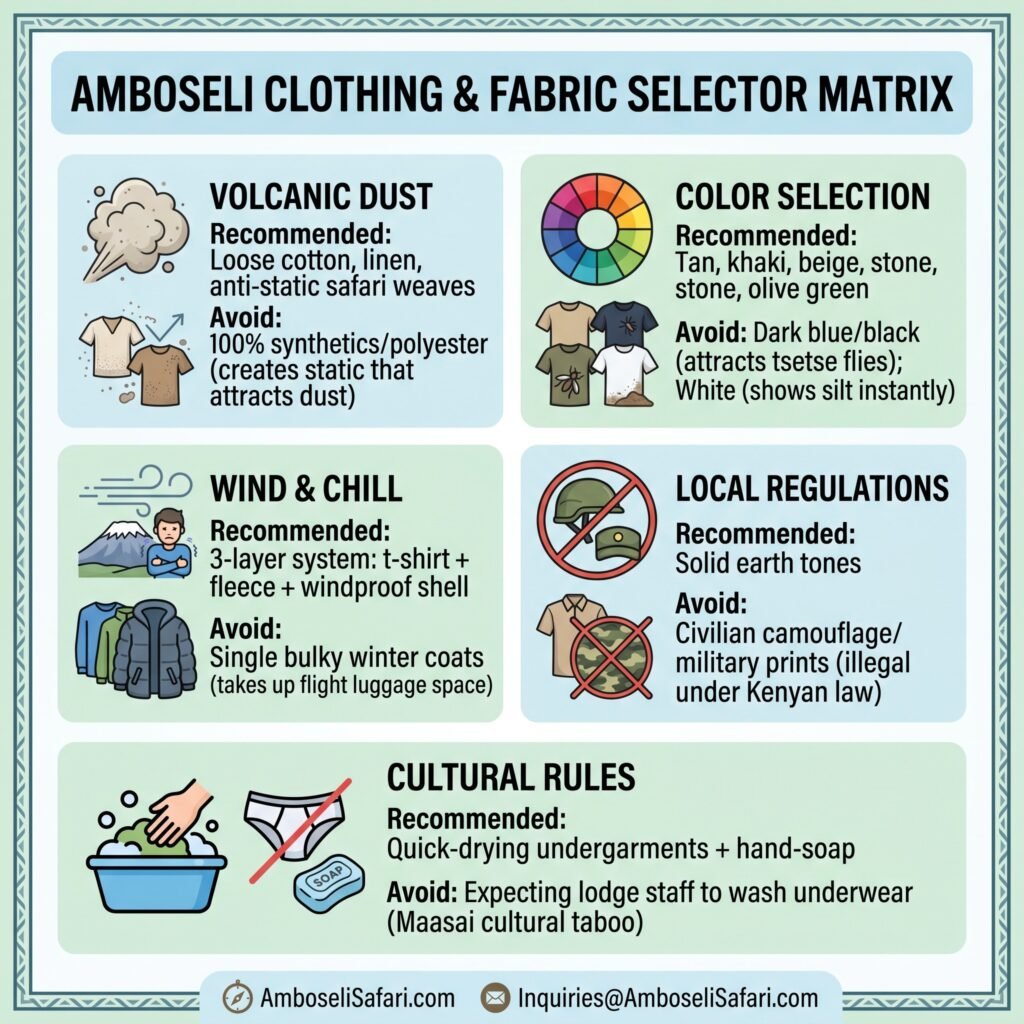
Dressing for an Amboseli safari requires balancing early morning mountain chills, intense midday equatorial heat, and airborne volcanic dust. Use this fast-decision matrix to choose fabrics, colors, and clothing items engineered specifically for the Kajiado basin environment. By selecting dust-shedding, non-static textiles and earth tones, you will stay comfortable while adhering to local wildlife regulations.
| Need / Factor | Recommended Item / Fabric | Avoid / Reason |
| Volcanic Dust | Loose cotton, linen, anti-static safari weaves | 100% synthetics/polyester (creates static that attracts dust) |
| Color Selection | Tan, khaki, beige, stone, olive green | Dark blue/black (attracts tsetse flies); White (shows silt instantly) |
| Wind & Chill | 3-layer system: t-shirt + fleece + windproof shell | Single bulky winter coats (takes up flight luggage space) |
| Local Regulations | Solid earth tones | Civilian camouflage/military prints (illegal under Kenyan law) |
| Cultural Rules | Quick-drying undergarments + hand-soap | Expecting lodge staff to wash underwear (Maasai cultural taboo) |
What’s Included
- Private 4×4 Safari Land Cruiser with a pop-up roof hatch and custom beanbag mounts
- Dedicated, TRA-licensed driver-guide for the full itinerary
- Full-board accommodation covering breakfast, lunch, and dinner daily
- Pre-paid daily $90 USD KWS entry permits (plus 5% eCitizen fee), Naivasha passes, and Nakuru sanctuary fees
- Chilled drinking water stocked in the vehicle cooler
What’s Excluded
- International flights, travel insurance, and digital Kenya entry processing through the official eTA portal
- Tipping your driver-guide or lodge staff
- Alcoholic beverages, soft drinks, or personal laundry
- Optional Maasai village entry vouchers ($30) or hot air balloon flights ($450)
Optional Add-Ons
- Local village entry voucher & cultural walkthrough: USD 30 per person
- Night game drive in a private conservancy: USD 50 per person
- Sunrise hot air balloon flight over central marshes: USD 450 per person
We lay out every vehicle day-rate, fuel calculation, and entry permit on our Amboseli safari cost breakdown page so you can budget accurately.
Safari Luggage Limits & Soft-Bag Rules
Flying on a bush plane into Amboseli Airstrip means adhering to strict luggage rules. Airlines like Safarilink enforce a 15 kg (33 lbs) per person limit that covers your main bag, hand luggage, and heavy camera gear combined. Small luggage holds on Cessna Caravans have tight, curved spaces where rigid suitcases won’t go.
- Leave hard-shell suitcases at your Nairobi hotel. They get rejected at bush airport counters and smash against metal frame rails in 4×4 luggage boots.
- Use frameless soft canvas or nylon duffel bags. They squeeze easily into tight aircraft holds and stack neatly in safari trucks.
- Store city clothes in Nairobi before flying out.
Static Cling & Dust-Proof Fabrics
100% synthetic gym shirts and polyester hoodies look great in theory, but they generate static electricity as you move around inside a vehicle. That static charge acts like a magnet for fine volcanic dust, pulling microscopic silt deep into the synthetic weave where it stays trapped drive after drive.
Lightweight cotton, linen, or anti-static safari weaves keep dust sitting loosely on the surface so you can brush it off before walking into the lodge dining mess. Stick with loose button-down cotton shirts that let air flow while keeping static attraction low. Neutral earth tones—khaki, tan, stone, and pale green—hide powder coats far better than dark colors.
Cold Mountain Winds & Winter Layering
Because Amboseli sits right on the equator, first-time visitors expect warm weather all day long. The reality catches many off guard, especially during the winter dry season from June through August. Pre-dawn temperatures regularly drop to 10°C (50°F) as heavy mountain air rushes down from Mount Kilimanjaro. When your Land Cruiser hits 40 km/h with open roof hatches at 06:15 AM, that mountain draft creates a sharp windchill.
Use three thin layers instead of one bulky coat.
- Start with a short-sleeve cotton t-shirt as your base.
- Add a fleece sweater to lock in warmth during the early morning drive.
- Top it off with a light windproof softshell or down vest.
By 09:30 AM, the sun warms the basin quickly, letting you peel back down to a light cotton shirt for the rest of the day. For seasonal temperature shifts and weather planning, review our Amboseli safari planning guide.
Daily Temperature & Layering Schedule
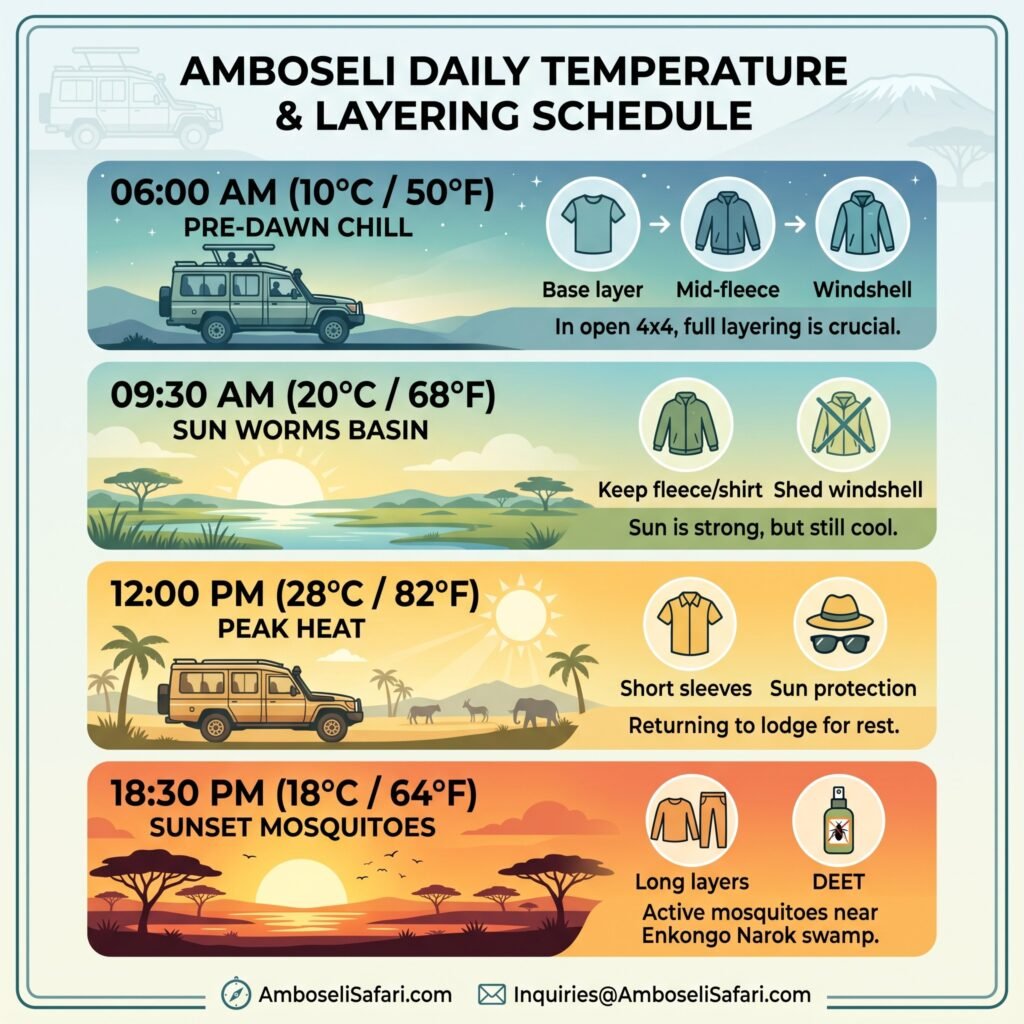
Pre-dawn temperatures beneath Mount Kilimanjaro regularly drop to 10°C (50°F) before surging past 28°C (82°F) by midday. Rather than packing heavy coats, layer your clothing so you can peel off items as the sun warms the open Land Cruiser. This visual timeline shows exactly what to wear during every phase of your morning game drive.
| Time & Temp | What Happens | What to Wear |
| 06:00 AM (10°C / 50°F) | Pre-dawn windchill in open 4×4 Land Cruiser | Base t-shirt + mid-layer fleece + outer windshell/down vest + scarf |
| 09:30 AM (20°C / 68°F) | Equatorial sun warms basin; roof hatches open | Shed outer windshell; keep fleece or long-sleeve cotton shirt on |
| 12:00 PM (28°C / 82°F) | Peak heat; returning to lodge/camp | Short-sleeve cotton shirt + light trousers/shorts + sun hat & sunglasses |
| 18:30 PM (18°C / 64°F) | Sunset; mosquitoes near Enkongo Narok swamp | Long-sleeved cotton shirt + long trousers + DEET on ankles/wrists |
Wet Season & Rain Gear for Mud Months
When the rains hit in April, May, or November, weather shifts fast. Standing in an open roof hatch during a sudden downpour will get you soaked in seconds.
Keep a packable waterproof jacket or lightweight rain shell in your daypack rather than a heavy rubberized coat that traps tropical humidity. A compact emergency poncho thrown over your camera bag keeps gear dry during sudden open-roof rain, while quick-drying synthetic trousers work much better than cotton jeans that stay soggy for hours.
Women-Specific Trail Comfort
Riding across corrugated dirt roads subjects your body to constant vehicle vibration.
High-impact sports bras are essential for female travelers. Standard underwire bras cause chafing and back fatigue after three hours of rough vehicle bouncing.
Bring biodegradable feminine hygiene supplies and sealed ziplock bags for disposal, as these items are impossible to buy inside park gates or remote camps. Wrapping a light cotton bandana or scarf around your hair also keeps swirling volcanic dust from matting your hair while standing through open roof hatches.
Camera Protection & Cold Battery Care
Fine volcanic dust is a camera sensor’s worst enemy, and it sneaks past zip-top bags if you aren’t careful.
Keep your camera inside a roll-top dry bag or slip a clean cotton pillowcase over your lens setup between animal sightings. Pillowcases give you instant access while blocking airborne grit off your glass.
Cold morning winds off Kilimanjaro also drain camera and phone batteries fast. Keep spare lithium batteries inside an interior jacket pocket close to your body heat until you start shooting at sunrise, and always use a soft rubber air-blower brush to puff dust off lens elements before wiping them with a microfiber cloth.
Amboseli Field Gear & Comfort Hacks
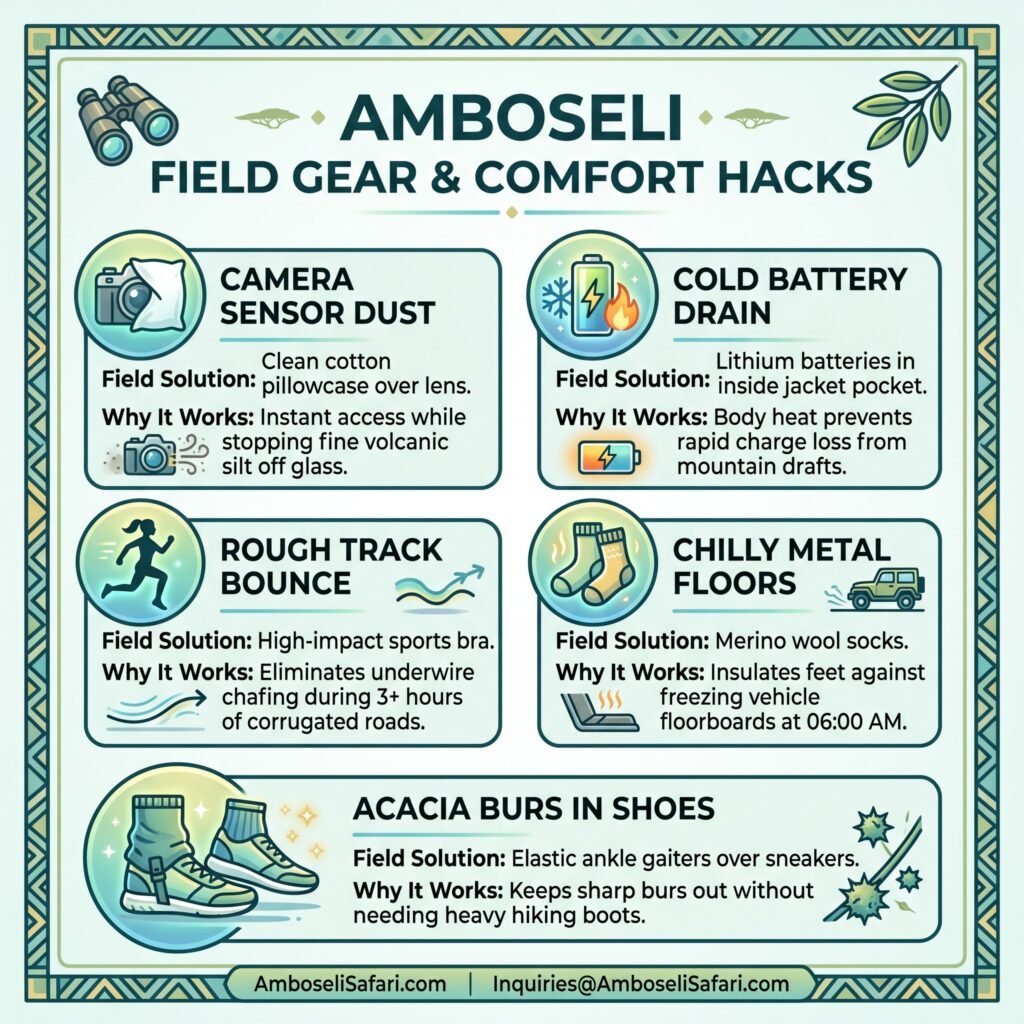
Safaris present unique physical challenges—from fine silt penetrating camera sensors to vehicle vibrations on corrugated tracks. These practical field hacks solve common trail issues using simple items like pillowcases and merino wool. Protect your electronics, prevent dust buildup, and stay comfortable across long game drives with these essential adjustments.
| Hazard / Challenge | Quick Field Solution | Why It Works |
| Camera Sensor Dust | Clean cotton pillowcase over lens | Instant access while stopping fine volcanic silt off glass |
| Cold Battery Drain | Lithium batteries in inside jacket pocket | Body heat prevents rapid charge loss from mountain drafts |
| Rough Track Bounce | High-impact sports bra | Eliminates underwire chafing during 3+ hours of corrugated roads |
| Chilly Metal Floors | Merino wool socks | Insulates feet against freezing vehicle floorboards at 06:00 AM |
| Acacia Burs in Shoes | Elastic ankle gaiters over sneakers | Keeps sharp burs out without needing heavy hiking boots |
Footwear, Socks & Lodge Sandals
Heavy leather hiking boots are bulky and unnecessary for vehicle-based game drives. Trail running shoes or sturdy sneakers work best for stepping in and out of Land Cruisers.
- Wear merino wool socks during freezing 06:00 AM drives to cushion your feet against cold metal floorboards.
- Switch to thin, moisture-wicking socks for hot afternoon drives.
- Pull lightweight elastic gaiters over your sneakers when walking up the stone staircase at Observation Hill (Noomotio) to keep sharp acacia burs out of your shoes.
- Pack a pair of slip-ons or sandals for lounging around camp decks in the evening.
Inspect hill lookouts, marsh causeways, and boundary tracks on our main Amboseli National Park guide.
Camouflage Restrictions on Highway Routes
Leave all military-style or camouflage-patterned clothes at home. Under Kenyan law, civilian camouflage—including camo caps, shorts, or photo vests—is strictly illegal and reserved exclusively for military and KWS anti-poaching rangers. Police officers at highway checkpoints along the C103 Emali-Namanga road enforce this strictly, and wearing camo can lead to confiscated gear or cash fines. Stick to plain, solid earth tones.
Maasai Cultural Laundry Rules
Lodge laundry service is fast and reliable, meaning you can easily travel with three or four main outfits. However, local Maasai lodge staff do not wash guest undergarments due to strict cultural taboos.
Bathrooms provide small washing tubs for this reason. Pack four or five pairs of quick-drying underwear along with a small bar of laundry soap so you can rinse your own items in your room.
Compare lodge amenities, laundry policies, and tent layouts across our guide on where to stay in Amboseli.
Evening Bug Wear & Mosquito Prevention
While game drives wrap up at 18:00 PM, mosquitoes near Enkongo Narok swamp get active as darkness falls. Change into long-sleeved cotton shirts and long trousers before walking to the lodge dining mess, and apply 20–30% DEET repellent to your ankles and wrists after sundown.
Check insect precautions and medical prep in our guide on health and vaccinations for Amboseli.
Practical Packing Checklist
- 3 loose cotton or linen long-sleeve shirts
- 2 pairs convertible safari trousers
- 1 packable rain shell or rain jacket
- 1 warm fleece jacket for cold mornings
- 1 windproof outer softshell or down vest
- High-impact sports bras for female travelers
- Wide-brimmed sun hat with a chin strap
- Trail running shoes plus lightweight lodge sandals
- Merino wool socks for morning drives and thin socks for afternoon
- 4-5 pairs quick-drying undergarments
- Polarized UV400 sunglasses and a cotton scarf or shemagh wrap
If you’re planning your own driving route, review our tested Amboseli self-drive tips page.
Field Realities & Guide Advice
Dressing right for the bush comes down to layering smartly and expecting a little dust on your collar.
Anthony Mule, who has spent over ten years guiding these park tracks for Amboselisafari.com, usually tells guests over morning coffee at the lodge: “Look, wrap a light cotton scarf around your neck before we start the truck. You’ll thank me when the wind picks up across the marsh, and it gives you something quick to wipe dust off your camera lens.”
Out near the marsh tracks at 06:30 AM, cold mountain air carries the sharp smell of crushed papyrus and wet soil. Watching elephant herds walk through shallow channels as Mount Kibo clears in the early light makes those chilly morning starts completely worth it.
Ready to organize your Land Cruiser and driver-guide? Send your details through our safari inquiry form to reserve your dates.
Frequently Asked Questions
What color clothes are best for an Amboseli safari?
Stick to neutral earth tones like khaki, beige, tan, olive green, and light brown. Avoid dark blue and black because they draw tsetse flies in bushy sectors, and avoid bright whites or neons that show dust instantly.
What are the baggage limits for flights into Amboseli?
Airlines like Safarilink enforce a strict 15 kg (33 lbs) weight limit per person, including hand luggage and camera gear combined. All luggage must be in soft-sided duffel bags; hard-shell suitcases are refused.
Can I wear shorts on game drives?
Yes, shorts are fine for midday game drives inside safari vehicles. However, long light trousers work better for early morning game drives, evening sundowners, and walking safaris to protect your skin from cold air, sun, and mosquitoes.
Do I need heavy hiking boots for Amboseli?
No. Heavy leather hiking boots are bulky and unnecessary for standard vehicle game drives. Closed trail running shoes, Chukka boots, or sturdy sneakers are lighter, easier to pack, and fully sufficient.
What is the dress code at safari lodges for dinner?
Lodge dress codes are casual and relaxed. Long trousers, a clean long-sleeved shirt, and closed shoes or sandals are standard for dinner to protect against evening mosquitoes. There is no need for formal evening wear.