
Where to Stay in Amboseli National Park: Lodges, Rates & Field Reviews
Overview
Deciding where to stay in Amboseli National Park comes down to choosing between central park lodges managed alongside Kenya Wildlife Service (KWS) land and private community conservancies in Kajiado County. Properties inside the park offer fast access to marshland elephant herds, while private sanctuaries like Kimana, Kilitome, and Chyulu Hills allow night game drives and unique lodging layouts. Full-board 3-day and 4-day safari packages in a private 4×4 Land Cruiser range from $1,080 per person for budget-friendly stays to $5,950 per person for fly-in luxury options.
Fast Navigation Links
- Intent-Based Lodge Quick-Picks
- Park vs Conservancy Locations
- High-Gain Lodge Nuances
- Granular Logistics & Transit Data
- Off-Grid Systems & Utilities
- Regulatory Rules & Field Realities
- Safari Package Pricing
- Frequently Asked Questions
Intent-Based Lodge Quick-Picks
- Best for Photography: Ol Donyo Lodge (Sunken Hide & Rooftop Starbeds)
- Best for Luxury & Views: Angama Amboseli (Kimana Sanctuary)
- Best Budget & Dietary Flexibility: AA Lodge Amboseli (Halal-Compliant Kitchen)
- Best Off-Grid Bush Experience: Little Amanya Camp (Geodesic Domes)
Park vs. Conservancy Locations: How Position Shapes Your Trip
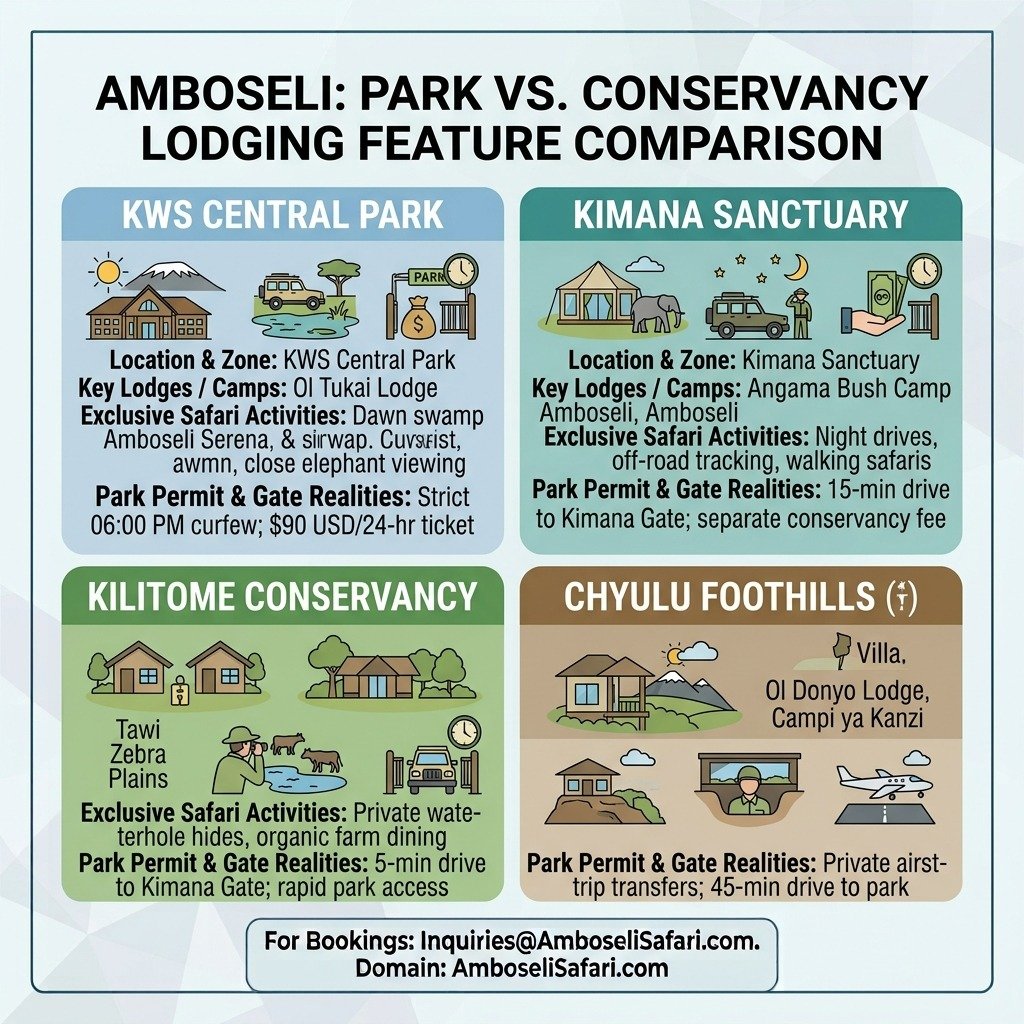
Where you set up camp or book a room changes your daily safari rhythm. While many travelers assume the entire ecosystem falls under Narok County Council, Amboseli sits entirely within Kajiado County. The official national park covers the central basin, but surrounding community group ranches host some of the most innovative lodges in East Africa.
Staying inside the main KWS boundary puts you minutes from the swamps, but you must follow strict 06:00 PM park curfews. Staying in outer conservancies lets you track nocturnal wildlife, walk on foot with Maasai guides, and enjoy private waterholes away from minibus crowds.
KWS Park Entry Permit Rules
KWS park permits run on a strict 24-hour clock ($90 USD per non-resident adult). Staying outside the park in a private conservancy means you must plan your gate re-entries carefully. If your 24-hour permit expires while you are resting at your conservancy lodge, re-entering the main park boundary requires purchasing a fresh daily permit.
Park vs. Conservancy Lodging Feature Comparison
Deciding whether to lodge inside the official KWS park boundary or within surrounding private conservancies directly shapes your daily safari itinerary. While park lodges put you minutes from central elephant swamps, conservancy properties offer exclusive activities like night game drives, bush walks, and uncrowded waterhole hides. Use this matrix to weigh the operational trade-offs before booking your stay.
| Location & Zone | Key Lodges / Camps | Exclusive Safari Activities | Park Permit & Gate Realities |
| KWS Central Park | Ol Tukai Lodge, Amboseli Serena | Dawn swamp game drives, close elephant viewing | Strict 06:00 PM curfew; $90 USD/24-hr ticket |
| Kimana Sanctuary | Angama Amboseli, Amboseli Bush Camp | Night drives, off-road tracking, walking safaris | 15-min drive to Kimana Gate; separate conservancy fee |
| Kilitome Conservancy | Tawi Lodge, Zebra Plains | Private waterhole hides, organic farm dining | 5-min drive to Kimana Gate; rapid park access |
| Chyulu Foothills | Ol Donyo Lodge, Campi ya Kanzi | Open-air starbeds, sunken photography hide | Private airstrip transfers; 45-min drive to park |
AA Lodge Amboseli
Located 4 km outside Kimana Gate (an 8-minute drive), AA Lodge is a solid base for travelers who want convenient park access without paying internal lodge premiums. The main dining hall operates a certified Halal-compliant kitchen alongside dedicated vegetarian buffet stations to cater to specific dietary requirements.
You can compare boundary lodge setups across our guide to where to stay in Amboseli.
High-Gain Lodge Nuances & Unique Architectural Features
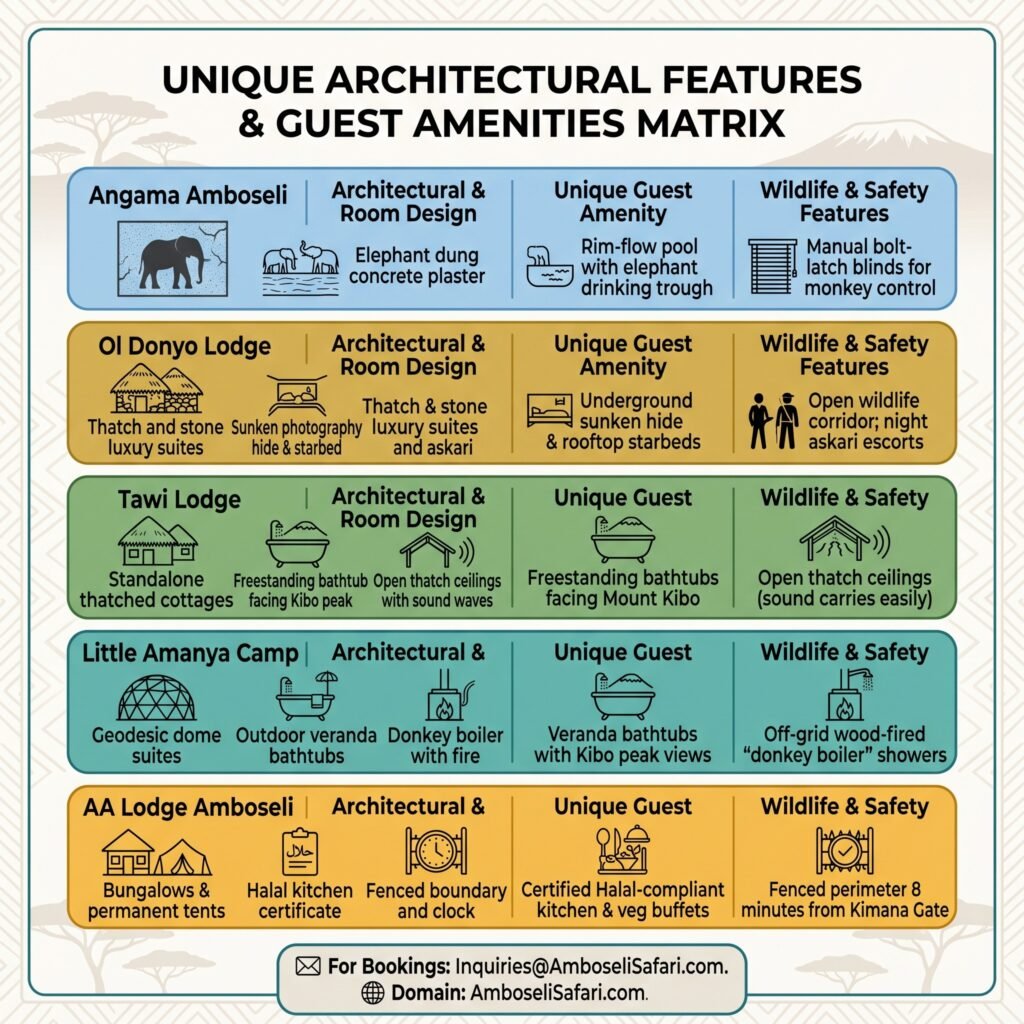
Beyond standard room ratings, specific properties around the park offer architectural details designed around wildlife behavior and savanna views.
Angama Amboseli (Kimana Sanctuary)
Tucked inside the private Kimana Sanctuary, Angama’s building exteriors feature a unique textured plaster made by mixing local elephant dung directly into concrete plaster. The raised rim-flow swimming pool includes an integrated elephant drinking trough built right beneath the pool’s outer edge. Guests swimming in the pool can watch wild elephant herds drinking water just feet below them.
To keep vervet monkeys out of guest suites, room windows use manual bolt-latch blinds. You need to lock these bolts individually every time you step away from your room.
Unique Architectural Features & Guest Amenities Matrix
Lodges across the Amboseli ecosystem incorporate unique architectural features designed around wildlife interactions and savanna views. From sunken eye-level photography hides and starbeds to dung-plastered walls and geodesic dome suites, properties offer distinctly different stays. Review these structural highlights and room layouts to match your aesthetic and travel preferences.
| Lodge Name | Architectural & Room Design | Unique Guest Amenity | Wildlife & Safety Features |
| Angama Amboseli | Elephant dung concrete plaster | Rim-flow pool with elephant drinking trough | Manual bolt-latch blinds for monkey control |
| Ol Donyo Lodge | Thatch & stone luxury suites | Underground sunken hide & rooftop starbeds | Open wildlife corridor; night askari escorts |
| Tawi Lodge | Standalone thatched cottages | Freestanding bathtubs facing Mount Kibo | Open thatch ceilings (sound carries easily) |
| Little Amanya Camp | Geodesic dome suites | Veranda bathtubs with Kibo peak views | Off-grid wood-fired “donkey boiler” showers |
| AA Lodge Amboseli | Bungalows & permanent tents | Certified Halal-compliant kitchen & veg buffets | Fenced perimeter 8 minutes from Kimana Gate |
Ol Donyo Lodge (Chyulu Hills Foothills)
Overlooking an active wildlife corridor between Amboseli and Tsavo, Ol Donyo Lodge features an underground concrete “sunken hide” built at water level beside a natural waterhole. You can sit safely inside the hide and take eye-level photos of giant bull elephants drinking inches from your camera lens. Each suite also includes an open-air rooftop terrace fitted with a private starbed for sleeping under the stars.
Tawi Lodge (Kilitome Conservancy)
Set just 5 minutes from Kimana Gate, Tawi’s 13 standalone thatched cottages feature freestanding bathtubs positioned in front of floor-to-ceiling windows facing Mount Kilimanjaro. Dining here centers on Swahili-spiced dishes prepared with organic produce grown in on-site volcanic soil gardens irrigated by Kilimanjaro spring water.
Evaluating these conservancy locations helps clarify route planning on our Amboseli safari planning guide.
Granular Logistics, Transit Data & Kilimanjaro Visibility
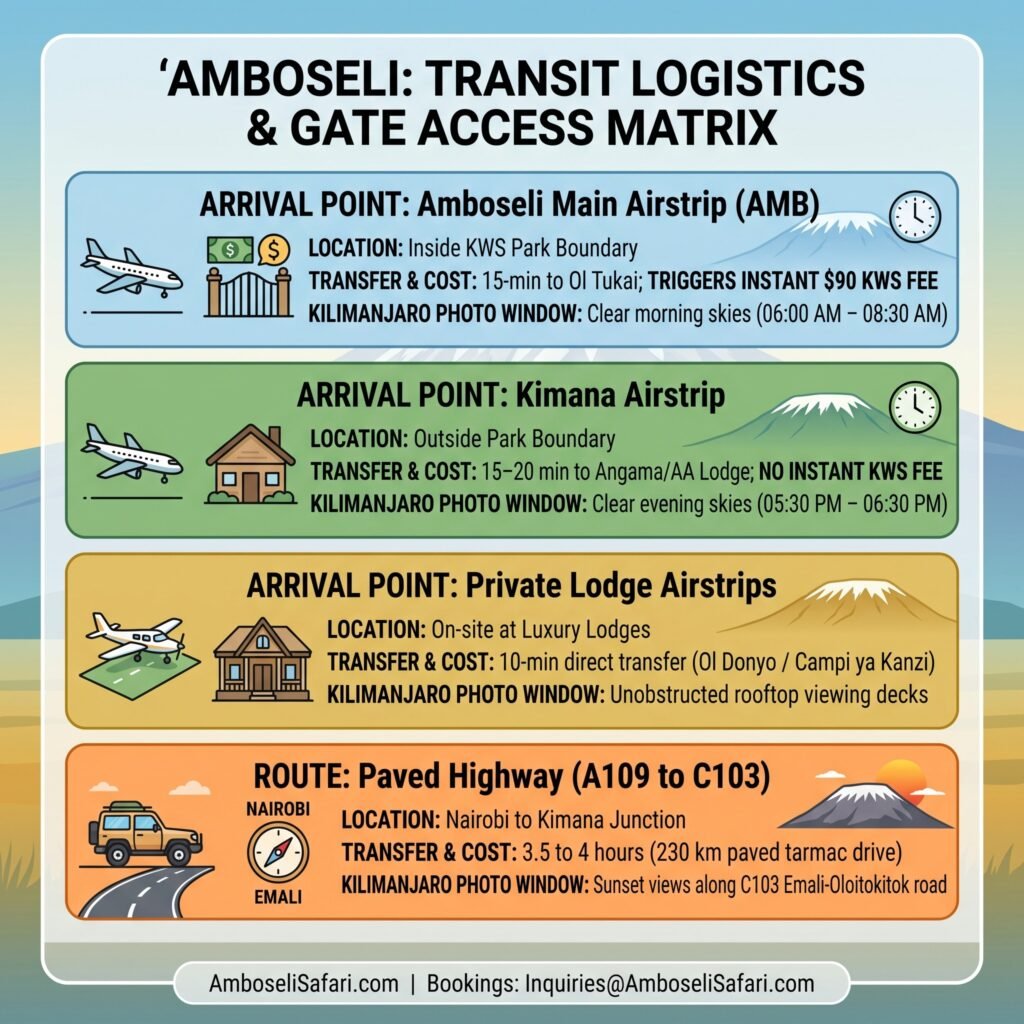
Gate & Sightseeing Drive Times
Drive times vary depending on seasonal corrugation and dust levels along the dirt tracks:
- Kimana Gate to Observation Hill: 35 minutes across central park tracks.
- AA Lodge to Kimana Gate: 8 minutes on paved access road.
- Iremito Gate to Central Marshes: 40 minutes through acacias.
- Meshanani Gate to Namanga Border: 45 minutes on graded dirt.
Airstrip Specifics
- Amboseli Main Airstrip (AMB): Located inside the KWS park boundary. Transfer times take 15 minutes to Ol Tukai Lodge or Serena. Note that landing here triggers immediate KWS permit fees.
- Kimana Airstrip: Located outside the park boundary. Transfer times take 15 to 20 minutes to Angama, AA Lodge, or Zebra Plains without incurring immediate park entry fees.
- Private Bush Airstrips: Luxury lodges like Ol Donyo and Campi ya Kanzi maintain private private airstrips with direct 10-minute lodge transfers.
Kilimanjaro Visibility Patterns
Mount Kibo peak is clearest between 06:00 AM and 08:30 AM before midday thermal heat creates cloud cover over the summit. Peak viewing months align with the dry seasons (July to October and January to February). You can check full seasonal weather charts across our guide on the best time to visit Amboseli.
Transit Logistics, Airstrips & Gate Access Matrix
| Arrival Point / Route | Location Relative to Gate | Transfer Duration & Cost Impact | Best Kilimanjaro Photo Window |
| Amboseli Main Airstrip (AMB) | Inside KWS Park Boundary | 15-min to Ol Tukai; triggers instant $90 KWS fee | Clear morning skies (06:00 AM – 08:30 AM) |
| Kimana Airstrip | Outside Park Boundary | 15–20 min to Angama/AA Lodge; no instant KWS fee | Clear evening skies (05:30 PM – 06:30 PM) |
| Private Lodge Airstrips | On-site at Luxury Lodges | 10-min direct transfer (Ol Donyo / Campi ya Kanzi) | Unobstructed rooftop viewing decks |
| Paved Highway (A109 to C103) | Nairobi to Kimana Junction | 3.5 to 4 hours (230 km paved tarmac drive) | Sunset views along C103 Emali-Oloitokitok road |
Off-Grid Utilities, Domes & Exclusive Bush Stays
Off-grid lodges in the savanna rely on clever engineering to maintain comfort while protecting the surrounding environment.
Little Amanya Camp
Located 5 km from Iremito Gate, Little Amanya features geodesic dome suites (including the “Lioness” and “Cheetah” domes) with outdoor veranda bathtubs facing Kibo peak. Because the camp operates off-grid with truck-delivered water, hot shower water comes from traditional wood-fired “donkey boilers” lit twice daily during scheduled morning and evening hours.
Amboseli Bush Camp
Positioned 15 minutes from Kimana Gate, this private camp operates on an exclusive-use basis split between Upper and Lower camps. While it offers full kitchen setups for self-catering travelers, resident Maasai staff include a dedicated chef who operates an outdoor wood-fired brick oven to serve fresh pizzas after evening game drives.
Before packing sensitive camera equipment or extra battery packs for off-grid stays, review our Amboseli safari packing list for power advice.
Regulatory Rules, Drone Laws & Field Realities
KCAA Drone Compliance Disclaimer
Recreational drone flying is strictly regulated across Kenya. Under Kenya Civil Aviation Authority (KCAA) regulations, operating a drone anywhere in the country requires a Remote Pilot License (RPL), a Remote Operator Certificate (ROC), private land authorization, and written clearance from KWS. Flying an unapproved drone inside national parks or conservancies will result in heavy fines and equipment confiscation at gate security checkpoints.
Field Disclaimers & Trade-Offs
- Sound Carrying in Open Thatch: At Tawi Lodge, interior bathroom dividing walls do not extend all the way to the thatched ceiling. Because the top remains open under the roof canopy, sound carries easily across the suite.
- Scheduled Hot Water Windows: Off-grid camps using wood-fired donkey boilers require advance notice if you want a hot shower outside regular morning or evening heating cycles.
- Fine Lakebed Dust: Wind blowing across the dry basin carries fine white dust into rooms and vehicle windows. Zip your daypacks tight and wrap camera gear when driving past Lake Amboseli tracks.
Stepping out onto your veranda at dawn brings the cool scent of yellow-fever trees (Acacia xanthophloeia) and damp earth. As morning mist clears over Enkongo Narok swamp, you can hear the deep rumbles of elephant matriarchs studied by the Amboseli Elephant Research Project.
Our licensed senior guide, Anthony Mule, brings over ten years of field experience across these routes, helping guests choose the right lodge location based on seasonal animal movements.
If you plan to drive yourself down from Nairobi, review our Nairobi to Amboseli road condition report for tarmac and gate updates.
2027 Safari Package Pricing
Our road packages cover a private 4×4 Safari Land Cruiser with a pop-up roof for optimal game viewing, full-board accommodation at your chosen lodge, driver-guide allowances, fuel, vehicle entry fees, chilled bottled water, and pre-paid KWS non-resident park permits ($90 USD per adult per 24 hours).
All transport, guide fees, and hotel costs are bundled into the per-person rates below based on two adults traveling together in a private vehicle.
3-Day & 4-Day Amboseli Safari Packages (2027)
| Package Duration & Hotel Tier | Standard Season (USD / Person)* | Peak Season (USD / Person)* | Action |
| 3-Day Budget Safari (AA Lodge Amboseli / Amboseli Bush Camp) | $1,080 | $1,820 | Book Now |
| 3-Day Mid-Range Safari (Tawi Lodge / Little Amanya Camp) | $1,290 | $2,150 | Book Now |
| 3-Day Luxury Safari (Angama Amboseli / Ol Donyo Lodge) | $2,250 | $3,450 | Book Now |
| 4-Day Fly-In Luxury Plus Safari (Safarilink Flight + Angama / Ol Donyo) | $3,950 | $5,950 | Book Now |
*Prices reflect total per-person costs for two adults sharing a room/tent and a private 4×4 Safari Land Cruiser. Standard Season covers January to May and November. Peak Season covers June to October and December. Includes full-board lodging, private transport, guide allowances, fuel, conservancy fees, and pre-paid KWS permits. Fly-in packages include roundtrip flights from Wilson Airport (WIL) on Safarilink or Airkenya and transfers built-in.
Ready to lock in your preferred lodge? You can hold vehicle dates on Amboselisafari.com or use our main safari booking form to reserve your private Land Cruiser.
Package Inclusions:
- Private 4×4 Safari Land Cruiser with pop-up roof for all game drives and transfers.
- Services of a TRA-licensed, English-speaking driver-guide.
- Full-board accommodation at your chosen lodge or camp.
- Pre-paid non-resident KWS park entry permits ($90 USD per 24 hours) and conservancy fees.
- Chilled bottled drinking water inside the vehicle cooler.
Package Exclusions:
- International airfare, entry visas, and Electronic Travel Authorization (eTA portal) fees.
- Personal expenses like driver tips, spa treatments, or alcoholic drinks.
- Optional Maasai cultural village visits or hot air balloon safaris.
Optional Add-Ons:
- Authentic Maasai cultural village visit: USD 30 per person.
- Sunrise hot air balloon safari over Amboseli: USD 450 per person.
Frequently Asked Questions
Is it better to stay inside Amboseli National Park or in a private conservancy?
Staying inside the park gives you immediate access to central swamps without gate drive times. Staying in a private conservancy like Kimana or Kilitome allows night game drives, guided bush walks, and private waterhole viewing away from park crowds.
How far in advance should I book lodges in Amboseli?
For peak season travel (July to October and December), book 6 to 9 months in advance to secure top rooms with unblocked views of Mount Kilimanjaro. Standard season dates can usually be booked 2 to 3 months out.
Are lodges in Amboseli safe from wild animals?
Yes. Lodges inside the park use perimeter wire fencing or active security teams. Unfenced conservancy camps employ trained Maasai security guards (ascars) who escort guests safely between rooms and dining areas after dark.
Do lodges in Amboseli cater to halal or vegetarian diets?
Yes. Properties like AA Lodge operate certified Halal-compliant kitchens and offer dedicated vegetarian buffets. Most mid-range and luxury lodges easily accommodate vegetarian, vegan, or gluten-free diets when notified in advance.