
Family Safari in Amboseli: 4-Day Itinerary, Child Safety & Pricing
Overview of Family Safari in Amboseli
A 4-day family safari in Amboseli (3 nights) costs between $1,480 and $8,250 per adult sharing depending on lodge tier and travel season. Packages include private 4×4 Land Cruiser transport (or return bush flights for Luxury Plus), full-board family accommodation, driver-guide services, and pre-paid KWS park permits.
Jump Ahead
- Ol Tukai Chalet Veranda Warnings
- Cold Spring Pools & Early Kids Dinners
- Observation Hill Safety & Vehicle Cushions
- School Holiday Timing & Kids’ Programs
- 4-Day Family Safari Itinerary
- Family Package Pricing & Hotels
- Frequently Asked Questions
Taking a family safari in Amboseli gives children a front-row seat to Africa’s largest elephant herds walking against the backdrop of Mount Kilimanjaro. Escaping city noise for three nights in the bush allows families to travel at a relaxed pace without the exhausting long drives of multi-park circuits.
Traveling with young children requires practical planning on the ground. Simple details—like securing booster cushions for pop-up roofs, protecting young eyes from volcanic dust, and ordering early dinners—make the difference between a smooth trip and a difficult one.
Before selecting your travel dates, check how seasonal wildlife movements shift across Kajiado County to match your game drive expectations. You can also send us a note through our trip planner on Amboselisafari.com to arrange family rooms or adjust travel logistics.
Ol Tukai Veranda Warnings & Pop-Up Roof Cushion Hacks
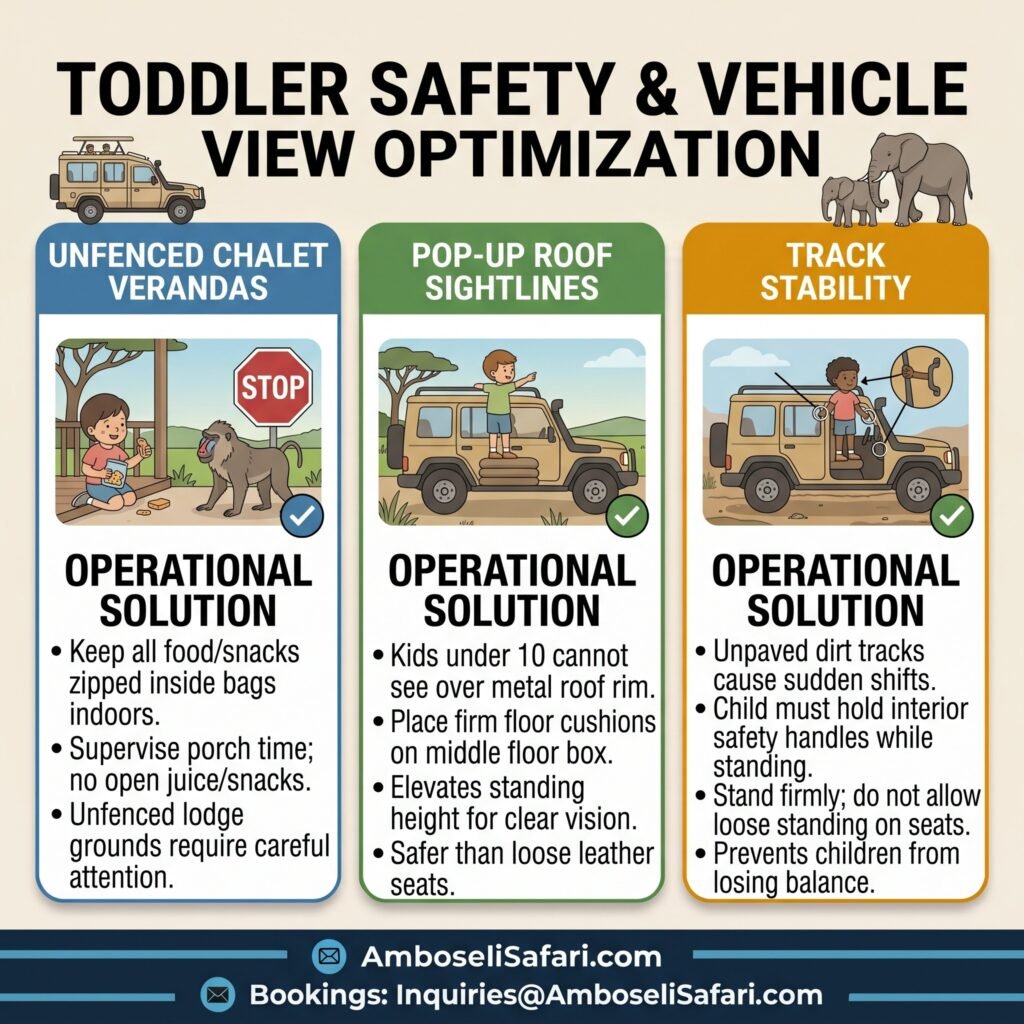
Staying inside the national park gives your family quick access to game tracks, but un-fenced lodge grounds require careful attention during downtime between game drives.
- Baboon Deterrence: At Ol Tukai Lodge, chalets sit directly on open lawns where vervet monkeys and yellow baboons roam freely. Leaving snacks, juice boxes, or fruit out on chalet verandas attracts baboons right to your sliding glass doors. Keep all food zipped inside bags indoors, and never let toddlers sit outside on porches holding open snacks or juice boxes unattended.
- Pop-Up Roof Cushions: Standard pop-up roof hatches in safari vehicles are designed for adult standing height. Children under 10 standing on the floor box cannot see comfortably over the metal roof rim without being held or standing on loose leather seats. Ask your driver-guide for firm floor cushions or bring a portable booster cushion. Placing a firm cushion on the middle floor box lets young kids stand safely with their heads comfortably elevated above the pop-up rim, keeping them stable on unpaved dirt tracks.
Toddler Safety & Vehicle View Optimization
Navigating unfenced lodge grounds and open safari vehicles with young children requires proactive safety measures and sightline adjustments. Standard pop-up roof hatches are built for adult standing heights, which can obscure views for younger safari-goers on unpaved tracks. Use this quick reference guide to safeguard your chalet veranda and optimize vehicle sightlines for young children.
| Focus Area | Challenge / Risk Factor | Operational Solution |
| Unfenced Chalet Verandas | Vervet monkeys and baboons attracted to food | Keep all food/snacks zipped inside bags indoors; supervise porch time. |
| Pop-Up Roof Sightlines | Kids under 10 cannot reach adult rim height | Place firm floor cushions on middle box to elevate standing height comfortably. |
| Track Stability | Rough dirt roads cause sudden vehicle shifts | Ensure child holds interior safety handles while standing on booster cushions. |
Cold Spring Pools & Early Kids Dinners
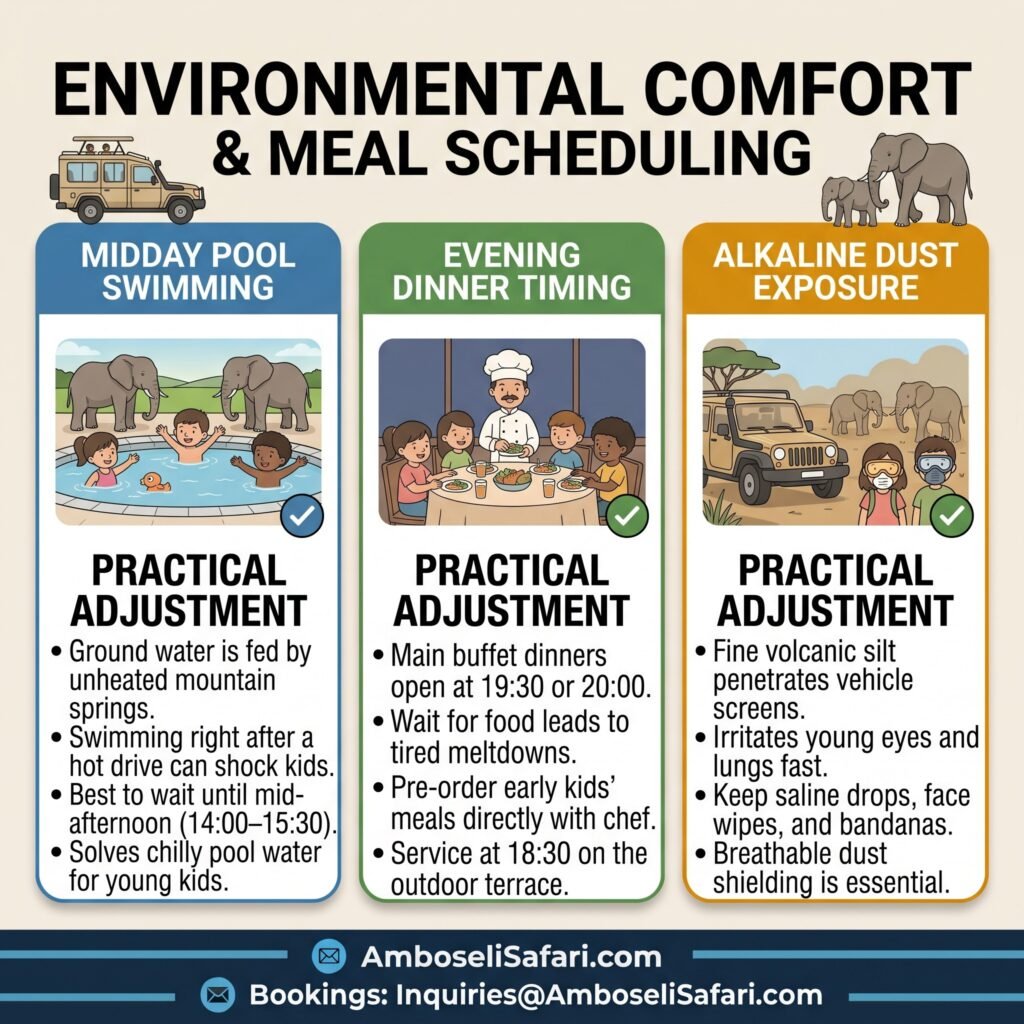
Midday downtime at your lodge gives children time to burn off energy, but local water conditions require realistic timing.
Lodge swimming pools across Amboseli are fed by unheated groundwater springs. Nighttime temperatures drop to 14°C (57°F), making pool water chilly even when afternoon air hits 30°C (86°F). Jumping straight in right after a hot morning drive can shock young kids. Wait until mid-afternoon to swim, after the sun has had a few hours to warm up the top water layer.
Main buffet dinners at safari lodges open at 19:30 HRS (7:30 PM) or 20:00 HRS. For young kids who have been awake since 5:30 AM, waiting until 8:00 PM for food leads to tired meltdowns.
When you return from your afternoon drive at 16:30 PM, speak directly to the camp chef. You can order a simple early kids’ plate—like plain pasta, grilled chicken, or fruit bowls—served on the outdoor terrace at 18:30 PM before the main dining room opens. Explore our Amboseli safari planning guide for more daily timing tips.
Environmental Comfort & Meal Scheduling
Managing daily schedules around young energy levels prevents fatigue and keeps safari days enjoyable for the entire family. Unheated groundwater pools and late-opening buffet lines can disrupt a child’s natural rhythm after early pre-dawn wake-up calls. Review this environmental logistics plan to align swimming, dining, and dust protection with your child’s daily routine.
| Activity / Challenge | Environmental Condition | Practical Adjustment |
| Midday Pool Swimming | Chilly groundwater pools (fed by mountain springs) | Wait until mid-afternoon (14:00–15:30) after the sun warms top water layer. |
| Evening Dinner Timing | Standard lodge buffets open late (19:30–20:00) | Pre-order early kids’ meals directly with camp chef for 18:30 terrace service. |
| Alkaline Dust Exposure | Volcanic silt kicked up across dry lake beds | Equip kids with UV-400 goggles, dust bandanas, and saline eye drops in daypack. |
Observation Hill Safety & Dust Protection for Young Airways
Visiting park landmarks on foot requires extra supervision when traveling with young kids.
- Summit Safety: Observation Hill (Normatior) is the only place inside the national park where you can legally step out of your vehicle and walk around. The stone stairway leading to the top lookout lacks continuous handrails along steep drop-offs near the summit. Gusty morning winds can startle young children standing near open ledges. Hold hands with kids under 8 during the climb, and equip them with sunglasses or dust goggles to block airborne grit at the peak.
- Alkaline Dust Shielding: Across the dry lake bed, fine volcanic silt kicked up by passing vehicles penetrates open window screens. This fine dust irritates young eyes and lungs fast. Keep saline eye drops, damp face wipes, and breathable dust bandanas in your daypack to keep young airways and eyes comfortable during dusty afternoon drives.
During morning drives along Enkongo Narok swamp, you will see elephant families feeding among yellow-fever tree groves (Acacia xanthophloeia). These areas are monitored by researchers from the Amboseli Elephant Research Project. All park entrances are managed by gate rangers from the Kenya Wildlife Service (KWS). If your travel itinerary extends west toward Narok County Council jurisdictions like the Masai Mara, separate regional park fees apply.
Review complete park rules on our KWS fee breakdown or check standard gate regulations.
School Break Timing, Kids’ Programs & Packing Micro-List
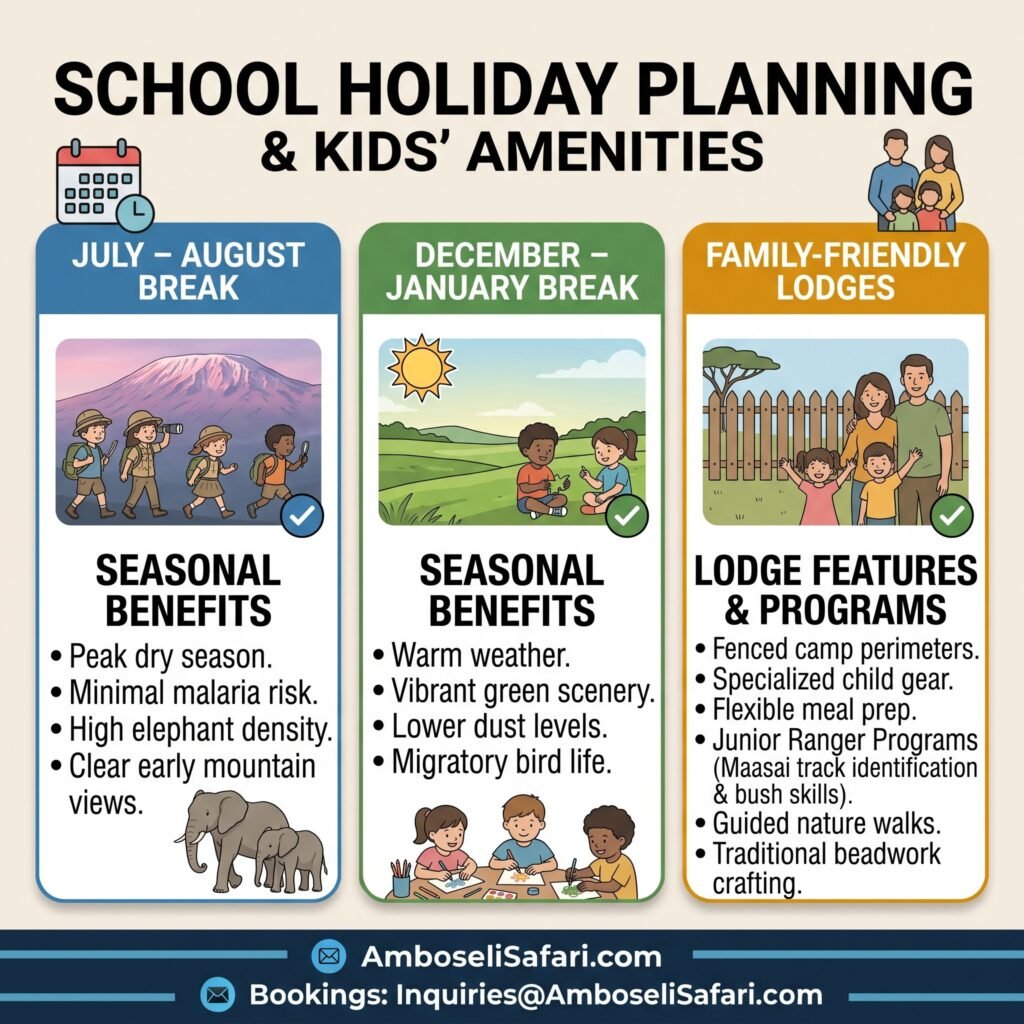
Timing your family trip around school calendars and selecting camps with structured activities keeps children engaged throughout the safari.
- School Break Timing: The July–August summer school break coincides with peak dry season, offering minimal malaria risk, clear early mountain views before mid-morning clouds roll in, and dense elephant concentrations around central swamps. The December–January winter holiday break brings warm weather, green scenery, lower dust levels, and migratory bird life.
- Lodge Kids’ Programs: Properties like Amboseli Serena and Tortilis Camp run guided junior ranger programs inside fenced camp perimeters. Local Maasai guides teach children traditional bush survival skills, animal track identification, fire-making techniques, and beadwork crafting while parents rest between drives.
Essential Family Packing Micro-List:
- Child-sized 8×21 compact binoculars (easier for small hands to hold and focus than heavy adult lenses).
- UV-400 sunglasses and breathable dust bandanas for open 4×4 drives.
- Saline eye drops and damp face wipes to clear fine dry lake-bed dust.
- Reusable water bottles and sealed, spill-proof snack containers for the vehicle.
School Holiday Planning & Kids’ Amenities
Matching your travel dates with school breaks and family-friendly lodge programs keeps children engaged throughout your journey. Select properties offer structured junior ranger activities that provide interactive learning while parents rest between game drives. Use this comparison table to evaluate seasonal benefits and property-specific kids’ amenities for your family trip.
| Travel Period / Property | Seasonal / Feature Advantage | Specialized Kids’ Program |
| July – August Break | Peak dry season; minimal malaria risk, high elephant density | Junior Ranger Programs (Maasai track identification & bush skills). |
| December – January Break | Warm weather, vibrant green scenery, lower dust levels | Guided perimeter nature walks & traditional beadwork crafting sessions. |
| Family-Friendly Lodges | Amboseli Serena / Tortilis / Ol Tukai Lodge | Fenced perimeters, specialized child gear, and flexible meal prep. |
Complete 4-Day / 3-Night Family Safari Itinerary
Day 1: Nairobi to Amboseli & Afternoon Game Drive
Depart Nairobi at 06:00 AM in a private 4×4 Safari Land Cruiser (or take a 40-minute morning flight from Wilson Airport if choosing Luxury Plus). Arrive at your lodge in time for lunch and a long midday rest. At 3:30 PM, head out for an afternoon game drive along Ol Okenya swamp to watch elephant families feed before returning to camp for an early kids’ dinner.
Day 2: Full Day Swamps & Mount Kilimanjaro
Start drives at 06:00 AM sharp to view Mount Kilimanjaro before thermal clouds cover Kibo peak by mid-morning. Track big tuskers along Enkongo Narok swamp, then climb Observation Hill for a view across the central marshes. Return to your lodge by 12:00 PM for lunch and a warm afternoon swim. At 3:30 PM, head out for an evening drive along the acacia woodland edges.
Day 3: Morning Game Drive, Midday Rest & Afternoon Drive
Head out at 06:00 AM to search for lions and cheetahs while the morning air is cool. Return to camp for breakfast and a quiet afternoon rest during peak heat. At 3:30 PM, enjoy your final game drive across the western salt flats, watching zebra and wildebeest herds move across the plains.
Day 4: Relaxed Morning Breakfast & Departure to Nairobi
Enjoy a sleep-in and a relaxed family breakfast at the lodge. There are no game drives scheduled on this final day. Pack your bags, check out, and begin your road transfer back to Nairobi (or transfer to the airstrip for your return flight), arriving in the city by 3:30 PM.
Safari Package Costs & Hotel Tiers
Our 4-day family package covers private 4×4 Safari Land Cruiser transport for the road tiers (4 vehicle operational days), return bush flights for the Luxury Plus tier, 3 nights of full-board lodging, and pre-paid non-resident KWS park permits ($90 USD per adult per 24 hours).
Vehicle, fuel, and guide fees run USD 190 per person sharing per day during standard months, rising to USD 400 per person sharing per day during peak dry season (July to October).
| Package Tier | Included Lodges* | Normal Season (Jan–June, Nov–Dec) | Peak Season (July–Oct) |
| Budget Tier | AA Lodge Amboseli (Road Transfer) | USD 1,480 per person | USD 2,520 per person |
| Mid-Range Tier | Ol Tukai Lodge / Kibo Safari Camp (Road Transfer) | USD 1,930 per person | USD 3,220 per person |
| Luxury Tier | Tortilis Camp / Amboseli Serena (Road Transfer) | USD 2,380 per person | USD 3,970 per person |
| Luxury Plus Tier | Angama Amboseli (Includes Return Bush Flights) | USD 5,760 per person | USD 8,250 per person |
*Prices reflect adult rates based on two adults sharing. Children under 12 receive a 50% discount on lodging when sharing a family room with two adults. Budget camps run generators on scheduled hours (power shuts off 10 PM – 5 AM).
Book Your Safari Now on Amboselisafari.com to secure family rooms and private 4×4 Land Cruiser transport.
Package Inclusions:
- Private 4×4 Safari Land Cruiser with pop-up roof for all transfers and game drives (or return flights for Luxury Plus).
- Services of a TRA-licensed, English-speaking driver-guide.
- 3 nights full-board family accommodation at selected lodge tier.
- Non-resident KWS park permits (3 x 24-hr permit blocks).
- Bottled drinking water in vehicle coolers and emergency medical evacuation insurance.
Package Exclusions:
- International airfare and Electronic Travel Authorization (eTA) fees.
- Personal expenses such as driver tips, souvenirs, laundry, or drinks.
- Optional Maasai village visits or hot air balloon flights.
Optional Add-Ons:
- Authentic Maasai cultural village visit: USD 30 per person.
- Sunrise hot air balloon safari over Amboseli: USD 450 per person.
- One-way flight extension connecting to the Masai Mara: USD 350 per person.
To evaluate lodge choices for families, compare the best luxury lodges in Amboseli.
Cash, Gear & Travel Logistics
- Currency Rules: Bank tellers and lodge cashiers reject pre-2013 US Dollar bills on the spot due to old counterfeit scares. Bring clean USD notes printed in 2013 or later.
- Driver Tipping: Plan on tipping your 4×4 driver-guide $15 to $20 USD per day total from your family budget.
- Camp Tip Boxes: Leave $10 USD per day in the central reception tip box to cover room stewards, cooks, and back-of-house staff.
- Kenya Shillings (KES): Keep KES 5,000 to 10,000 ($35 to $70 USD equivalent) in small notes for roadside fruit purchases or small tips where vendors can’t change USD notes.
- eTA & Health: All visitors must obtain an approved Electronic Travel Authorization from the official Kenyan eTA portal before departure. Bring a Yellow Fever card if transiting through endemic zones, and pack a Type G UK 3-pin adapter to charge electronics during lodge power hours.
Frequently Asked Questions
Is Amboseli safe for young children and toddlers?
Yes. Amboseli is a malaria-risk area, so insect repellent, long clothing for evenings, and doctor-prescribed malaria prophylaxis are recommended. Selecting enclosed lodges or fenced family camps adds peace of mind.
What is the best age for kids on an Amboseli safari?
Children aged 5 and older tend to get the most out of game drives because they can stand comfortably at the pop-up roof and spot animals across open terrain. Younger toddlers enjoy the wildlife, but benefit from shorter game drives and flexible midday pool schedules.
How do we handle long road drives from Nairobi with kids?
The road drive takes 4 to 4.5 hours along paved highways before reaching unpaved park access roads past Emali. Plan a quick pit stop in Emali Town for coffee and restroom breaks, keep snacks and cold drinks in the vehicle cooler, and bring offline games or tablets for the highway leg.
Written by Patrick Mulei. Reviewed by Anthony Mule, Senior Safari Guide with over a decade of field experience in Amboseli.