
What to Pack for Amboseli: Gear List, Duffel Rules & 2027 Package Rates
Overview
Packing for Amboseli is all about managing dust, sudden temperature drops, and strict flight luggage limits. Managed by the Kenya Wildlife Service in Kajiado County—often confused with Narok County Council—this basin hosts famous herds studied by the Amboseli Elephant Research Project.
Fast Navigation Links
- 4 Day Package Rates Lodging
- Category by Category Packing Checklist
- Fly In Duffel Bag Mandates
- Color Rules and Insect Defense
- Dust Protection for Camera Gear
- What NOT to Pack
Packing for a trip across the salt flats takes more than tossing shorts and a t-shirt into a rolling suitcase. Fine volcanic dust, freezing morning air off the mountain, and strict flight luggage limits mean you need to pack intentional gear. Our team at Amboselisafari.com tests these items in the field every season so you stay comfortable on every drive.
4-Day Multi-Destination Safari Package (2 Nights Amboseli + 1 Night Lake Nakuru)
Combining elephants with the flamingos and rhino sanctuaries of Lake Nakuru makes a fantastic safari circuit. We run this trip in private 4×4 Safari Land Cruisers equipped with pop-up roof hatches, high-clearance suspension, and onboard power outlets.
Rates below show total costs per person for two adults traveling together in a private vehicle:
4-Day Circuit Rates & Lodging Options
| Package Tier & Included Lodges | Included Accommodations | Price Range Per Person (Low – Peak)* |
| Budget | Kimana Bush Camp (Amboseli) & Lake Nakuru Lodge (Nakuru) | From USD $1,280 to USD $1,880 |
| Mid-Range | Kibo Safari Camp & Sarova Lion Hill Game Lodge | From USD $1,580 to USD $2,280 |
| Luxury | Amboseli Serena Safari Lodge & The Cliff Nakuru | From USD $2,180 to USD $2,980 |
| Luxury Plus | Tawi Lodge & Loldia House | From USD $3,980 to USD $5,680 |
*Rates cover 2026/2027 travel for two adults sharing a room or tented suite with a private 4×4 Land Cruiser and professional driver-guide. Standard/Low season covers January through May and November. Peak season spans June through October and December. Rates include full-board lodging, private transport, driver allowances, fuel, daily $90 USD KWS park permits, Nakuru sanctuary fees, and chilled vehicle water. Luxury Plus includes domestic flights from Wilson Airport (WIL).
Have questions about dates or route customizations? Reach out through our safari inquiry form.
Package Inclusions
- Private 4×4 Safari Land Cruiser with pop-up roof hatch and custom beanbag mounts
- Services of a TRA-licensed driver-guide skilled in tracking wildlife corridors
- Full-board accommodation covering breakfast, lunch, and dinner
- Pre-paid daily $90 USD KWS park entry permits and Nakuru sanctuary fees
- Chilled drinking water stocked in the vehicle cooler
Package Exclusions
- International flights, travel insurance, and digital entry processing via the official eTA portal
- Tipping your driver-guide or lodge staff
- Alcoholic beverages, soft drinks, or personal laundry
- Optional extras like a Maasai village visit ($30) or a sunrise balloon flight ($450)
Optional Add-Ons
- Night game drive in a private conservancy: USD 50 per person
- Sunrise hot air balloon flight over central marshes: USD 450 per person
If you’re mapping out fuel math and entry permits, we list those exact numbers on our Amboseli safari cost breakdown.
Complete Category-by-Category Packing Checklist
Use this quick checklist to organize your bags before departing for the bush:
Bush Apparel & Footwear
- 3-4 lightweight, moisture-wicking shirts in neutral shades (khaki, tan, olive)
- 2 pairs of zip-off safari trousers to adjust as temperatures climb
- 1 warm fleece jacket or wool sweater for chilly pre-dawn drives
- 1 light windbreaker to block mountain drafts in pop-top Land Cruisers
- 1 pair of closed-vamp leather trail shoes or closed hiking boots
- 3 pairs of merino wool thermal socks pre-treated with permethrin
- 1 wide-brimmed sun hat with a chin strap for windy days
Optics, Electronics & Dust Defense
- 1 pair of 8×42 or 10×42 waterproof binoculars
- Camera body, telephoto lens, and extra memory cards
- 2 breathable cotton buffs or bandanas for mouth and nose cover
- 1 silicone camera squeeze blower bulb to clear dust off front lens elements
- 2-3 sealed dry-bags to protect camera gear from blowing silt
- 1 portable 10,000–20,000 mAh power bank with Type G plug adapters
- 1 dual USB 12V car charger for topping off devices inside the vehicle
Medical, Sanitation & Sun Care
- Polarized sunglasses with side-shields to block white salt pan glare
- Broad-spectrum SPF 50+ reef-safe sunscreen and lip balm with SPF
- Saline eye drops to flush out fine volcanic ash
- Insect repellent containing 20-30% DEET or Picaridin
- Anti-diarrheal medication, oral rehydration salts, and basic painkillers
- Prescription medicines, spare contact lenses, and lens cleaning solution
- Personal hygiene items and sealable disposal bags for off-grid tented camps
Travel Documents & Essentials
- Passport valid for at least 6 months with printed eTA approval confirmation
- Official Yellow Fever vaccination certificate card
- Digital copies of travel insurance documents saved offline on your phone
- Small denomination USD cash bills (issued after 2013) for tipping driver-guides and camp staff
Fly-In Safari Duffel Bag & Weight Restrictions
A critical factor in your planning involves navigating the strict logistic constraints of fly-in safaris. Flying between Nairobi’s Wilson Airport and Amboseli requires specialized frameless duffel bags that fit precisely inside small aircraft cargo pods. This quick visual summary outlines the exact weight limits, dimensions, and bag constructions enforced by regional airlines, a crucial detail frequently overlooked in standard Amboseli packing lists.
| Luggage Category | Specific Requirement | Why This Matters for Fly-Ins |
| Max Weight | 15 kg (33 lbs) per person | Small planes have precise weight limits for safety. |
| Bag Dimensions | 24″ x 12″ x 11″ (max) | Must squeeze into narrow, curved belly-pod cargo areas. |
| Bag Construction | Soft-sided, 100% frameless | Curved cargo pods cannot accommodate rigid, hard-shell bags. |
| Excess Baggage | Extra seat freight fee apply | If the bag fits, you pay extra; if it doesn’t, it stays in storage. |
Fly-In Duffel Bag Mandates & Flight Weight Limits
Flying into the park on Safarilink or Airkenya from Nairobi’s Wilson Airport (WIL) to Amboseli Main Airstrip brings strict luggage rules.
Airlines enforce a hard 15 kg (33 lbs) weight limit per person, including your hand luggage and camera gear. Cessna Grand Caravan aircraft carry narrow, belly-pod baggage compartments. These curved pods require 100% frameless, soft-sided duffel bags measuring no more than 24″ x 12″ x 11″ (60 x 30 x 30 cm).
Flight loaders at Wilson Airport will reject hard-shell luggage on the spot. If your bag doesn’t squeeze into the curved belly pod, you’ll be forced to pay an extra seat freight fee or leave the suitcase in Nairobi storage lockers.
Review flight schedules and road transfer options in our Amboseli safari planning guide.
Color Selection & Wildlife/Insect Defense Rules
Choosing the right clothing colors keeps you comfortable and stops you from attracting bugs:
- Pack neutral tones (khaki, beige, olive, tan): They blend in naturally with bush surroundings and stay cooler under the equatorial sun.
- Skip dark blue and navy: These shades actively attract biting tsetse flies in acacia thickets and absorb extreme heat.
- Avoid bright whites: Stark white shirts stand out across open salt flats, startling skittish wildlife when you stand up in pop-top hatches.
- Leave solid black behind: Black clothing bakes in the afternoon sun after 10:00 AM, making game drives uncomfortably hot.
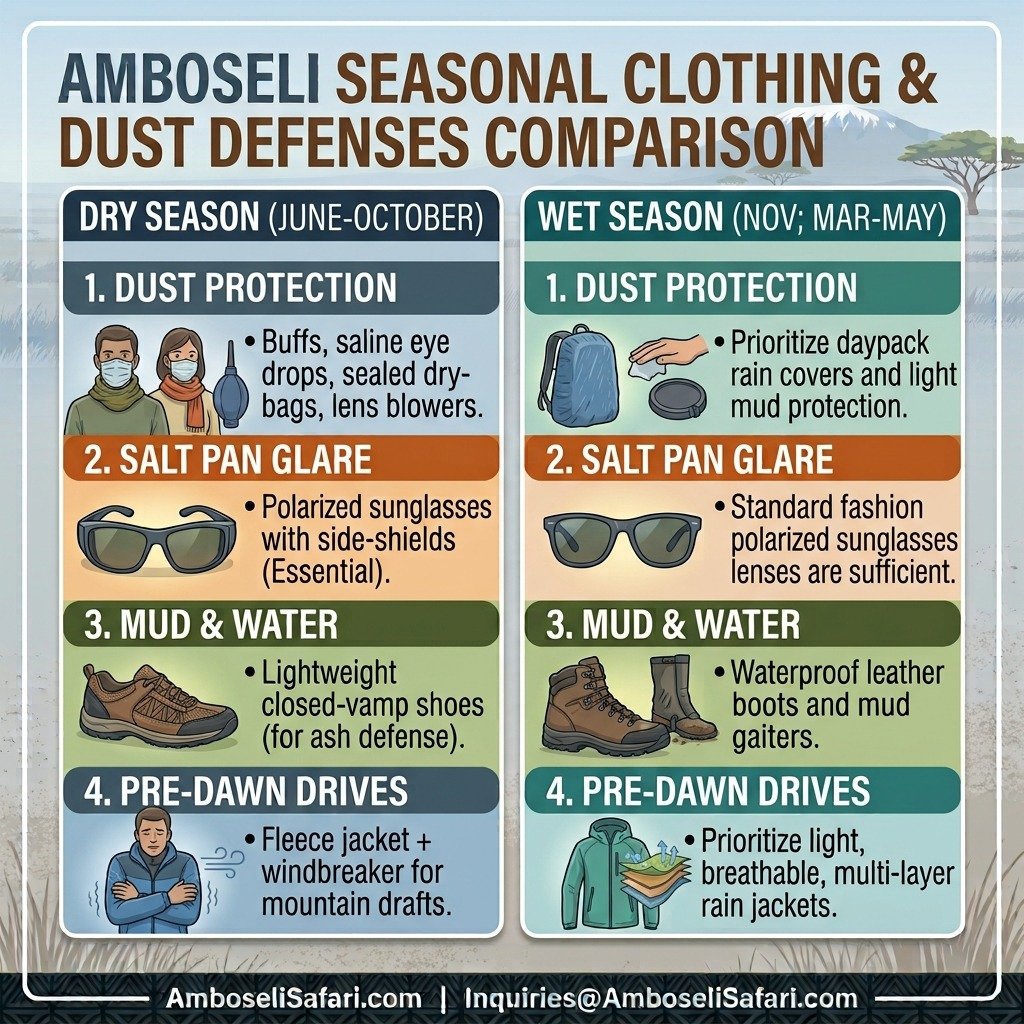
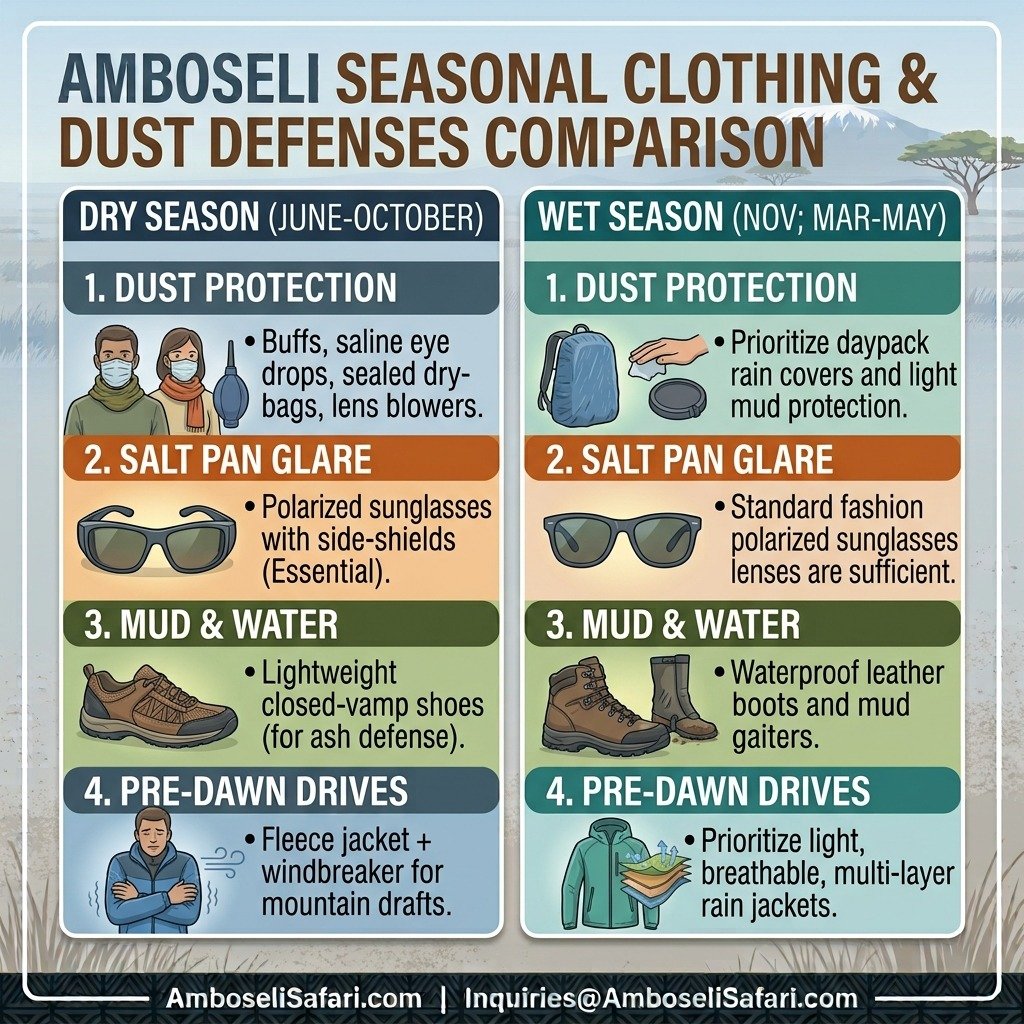
Seasonal Clothing & Dust Defenses Comparison
Understanding the extreme environmental conditions of Amboseli is essential for comfort in the field. This matrix provides an at-a-glance comparison of prioritized gear based on whether you are managing the dramatic temperature shifts and blinding dust of the dry season or navigating muddy wet season tracks. Review these seasonal adjustments to ensure your packing strategy effectively manages volcanic ash, salt pan glare, and mountain drafts.
| Feature / Scenario | Dry Season Priorities (June–Oct) | Wet Season Priorities (Nov; Mar–May) |
| Dust Protection | Buffs, saline eye drops, sealed dry-bags, lens blowers. | Prioritize daypack rain covers and light mud protection. |
| Salt Pan Glare | Polarized sunglasses with side-shields (Essential). | Standard polarized lenses are sufficient. |
| Mud & Water | Lightweight closed-vamp shoes (for ash defense). | Waterproof leather boots and mud gaiters. |
| Pre-dawn Drives | Fleece jacket + windbreaker for mountain drafts. | Prioritize light, breathable, multi-layer rain jackets. |
Protecting Camera Gear from Volcanic Ash
Fine volcanic dust works its way into every open port. Keeping expensive camera gear safe requires clear field habits:
- Never swap lenses while moving: Changing lenses as you drive across dry lakebeds draws floating silt right onto exposed camera sensors, leaving dark spots across your photos.
- Keep gear in dry-bags during transit: Seal camera bodies inside dry-bags when driving between sightings instead of leaving them out on vehicle seats.
- Clear dust with a blower bulb first: Use a hand-held rubber squeeze blower bulb to clear ash off lens glass before wiping it with a microfiber cloth—otherwise, you’ll grind fine volcanic grit straight into the lens coating.
Seasonal Packing Adjustments (Dry vs. Wet Season)
Your gear list shifts depending on when you travel:
- Dry Season (June–October): Prioritize dust gear: bring extra buffs, saline eye drops, sealed dry-bags, and polarized sunglasses to manage intense salt pan glare.
- Wet Season (November, March–May): Focus on mud and rain: bring waterproof leather trail shoes, light rain jackets, mud gaiters, and rain covers for daypacks.
What NOT to Pack
Avoid bringing these items to prevent hassle at airport security and park gates:
- Hard-shell suitcases: Rigid bags with wheels or pop-up metal handles won’t fit into bush plane cargo pods.
- Camouflage clothing: Wearing camouflage apparel is strictly illegal for civilians in Kenya and will be confiscated by border officials.
- Single-use plastic bags: Kenya strictly enforces a legal ban on single-use plastic bags. Use reusable dry-bags or cloth zip pouches instead.
- High-draw appliances: Hairdryers and curling irons trip solar circuit breakers inside tented camps instantly.
Keep our Amboseli self-drive tips in mind if you plan to navigate park tracks independently.
Footwear, Volcanic Ash & Puncture Vine Burrs
Leave open mesh running shoes at home. The dry lakebed features fine, powdery volcanic ash that passes straight through thin shoe mesh. Within twenty minutes on a game drive, fine silt coats your socks black and creates abrasive heel friction.
Watch where you step around Observation Hill—the local kipikipik thorn burrs will go right through thin running shoes and flip-flops.
- Sharp kipikipik thorn burrs easily pierce soft mesh sneakers and rubber flip-flops.
- Fine silt filters through loose canvas shoes, irritating your skin.
- Tightly woven leather trail shoes or synthetic closed-vamp hiking shoes block both fine ash and thorn spines.
Salt Pan Eye Protection & Dust Defense
Midday sun reflecting off the white salt flats of Lake Amboseli creates intense glare. The glare off the white salt pan will give you a blinding migraine by noon if your glasses don’t cover the sides.
Standard fashion sunglasses let bouncing glare enter from the sides. Pack polarized sunglasses fitted with subtle side-shields. This stops lateral glare from straining your eyes during midday drives across open plains.
Bring two cotton buffs and a small bottle of saline eye drops. Blowing dust along dirt tracks dries out eyes quickly, especially when sitting near open windows.
Inspect map layouts and habitat zones across our Amboseli National Park guide.
Off-Grid Power Charging & Solar Camp Setup
Kenya uses British Type G three-pin square sockets (240V).
Eco-camps located along Kimana and Selenkay conservancies run on off-grid solar systems. Generators run during the day but shut off completely between 11:00 PM and 05:00 AM.
Plugging in high-draw heating appliances like hairdryers or curling irons trips the tent’s circuit breaker instantly. Pack a 10,000–20,000 mAh portable power bank and charge it during afternoon generator hours.
Carry a dual 12V USB car charger in your daypack. This lets you charge camera batteries and phones off the Land Cruiser’s onboard inverter while driving.
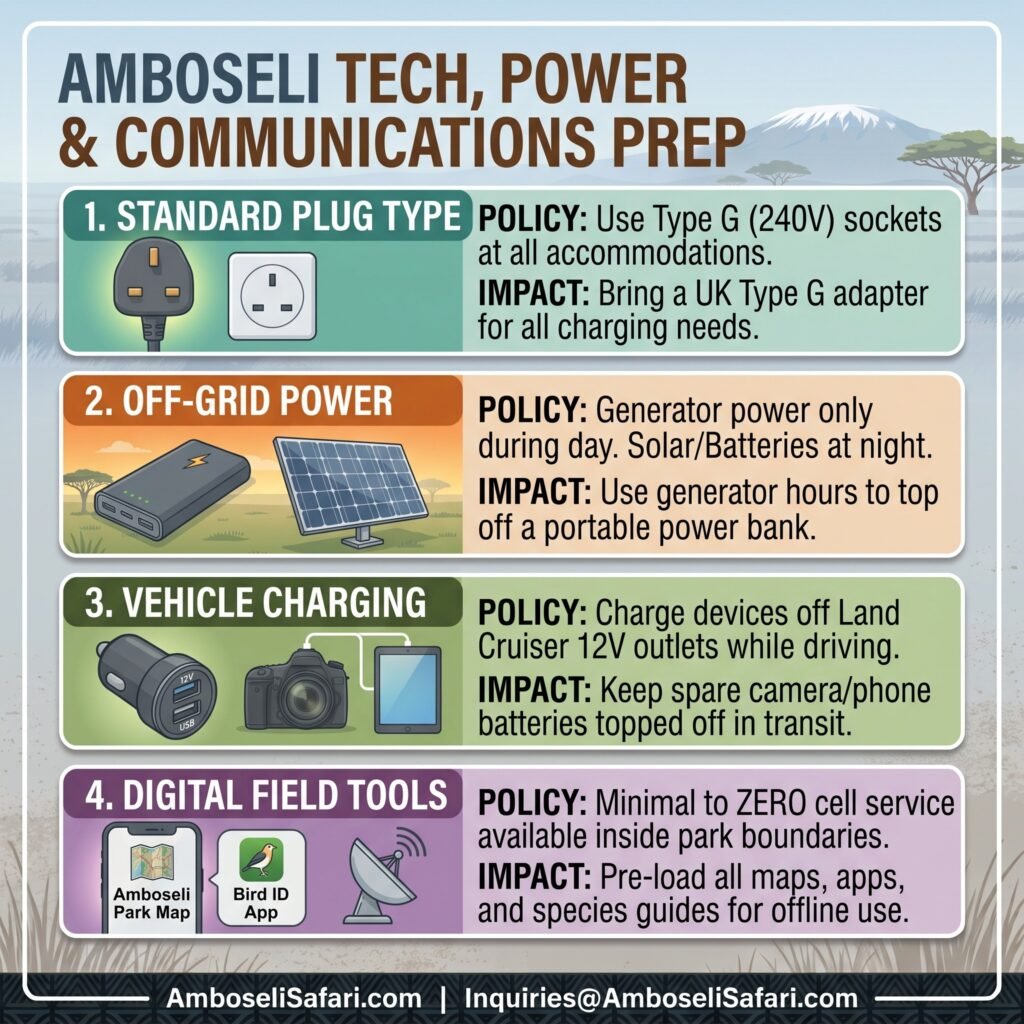
Essential Amboseli Tech, Power & Communications Prep
Maintaining reliable power for cameras and communication profunda within Amboseli requires precise gear selection and understanding local energy constraints. Off-grid solar camps operate differently than standard hotels, necessitating specialized adapters and charging strategies during generator hours. This checklist summarizes the essential technical specifications, from British Type G plugs to onboard vehicle inverter solutions, required for smooth field operations.
| Technology Need | Specific Requirement / Spec | Technical Advantage / Field Practice |
| Standard Plug Type | British Type G (240V) | Use Type G three-pin square sockets at all accommodations. |
| Off-Grid Power | Solar Camps (Kimana/Selenkay) | Generators shut down overnight; use a high-capacity power bank. |
| Vehicle Charging | Dual 12V USB Car Charger | Charge phones/cameras off Land Cruiser inverters while driving. |
| Digital Field Tools | Offline maps, species apps (pre-loaded) | Minimal or zero cell service available near gates/deep within park tracks. |
Saline Borehole Water & Camp Laundry Rules
Tented camps and lodges inside the basin pump groundwater from deep volcanic aquifers. This borehole water carries high mineral salinity that damages delicate synthetic fabrics in washing machines.
Local Maasai cultural customs prohibit lodge staff from washing guests’ personal undergarments.
Do not pack expensive delicate clothing expecting full laundry service every night. Instead, bring a small tube of biodegradable travel laundry soap, a flat rubber sink stopper, and a lightweight travel clothesline. You can quickly hand-wash personal items inside your tent bathroom and hang them to dry overnight.
Find out which camps offer full laundry facilities in our guide on where to stay in Amboseli.
Mountain Wind Layering & Family Packing Tips
Dressing for a game drive means preparing for dramatic temperature shifts:
- 06:00 AM pre-dawn drives: Freezing mountain drafts off Kili drop temperatures to 13°C. Wear a fleece jacket, windbreaker, and long trousers.
- 10:00 AM midday sun: Temperatures climb fast toward 30°C. Strip down to lightweight, breathable shirts.
- Swamp fly defense: Midday drives near Longinye and Enkongo Narok swamp bring swarms of biting stable flies. Pack merino wool thermal socks pre-treated with permethrin insect repellent to keep your ankles warm during chilly mornings and shield exposed skin near marsh channels.
- Family packing hack: When traveling with kids, pack outfits in color-coded compression packing cubes inside one shared frameless duffel. This saves space while keeping morning clothes organized in dim tent lighting.
Read more about elephant marsh feeding routes in our famous elephants guide.
Local Field Insights & Guide Advice
Packing light takes discipline, but carrying unnecessary gear makes traveling between camps frustrating.
Anthony always laughs when he sees big heavy parkas. He tells everyone: “Leave the puffers in Nairobi—just layer a fleece over your shirt when the Kili wind hits at 6 AM.” A bulky winter jacket takes up half a duffel bag, whereas a base shirt, a fleece, and a light windbreaker work far better because you can strip them off as the sun warms the fever tree groves.
Early mornings near the marshes can get cold, but cutting the engine gives you a rare, quiet look at elephant herds moving through the mud.
Ready to book your Land Cruiser and driver-guide on Amboselisafari.com? Send your details through our safari inquiry form or request a custom package via our main safari booking form.
Frequently Asked Questions
What happens if my duffel bag exceeds 15 kg on a fly-in safari?
Airlines enforce the 15 kg limit strictly due to small aircraft weight limits. Excess luggage is charged extra or left behind in secure airport storage in Nairobi.
Can I wear shorts on morning game drives in Amboseli?
Pre-dawn drives start cold at 13°C under mountain winds, and midday swamp stops bring biting insects. Long trousers made of light zip-off fabric work much better.
Why won’t safari lodges wash my underwear?
Local Maasai cultural customs prevent staff from handling guests’ undergarments. Pack travel soap to hand-wash these items in your room.
Do I need plug adapters for charging gear in safari vehicles?
Our safari Land Cruisers carry onboard multi-socket inverters. However, bringing a Type G plug adapter and a 12V USB car charger keeps your gear powered on long tracks.