
Amboseli Safari Plastic Ban & Eco Rules: Gate Checks & Waste Limits
Key Takeaways: Amboseli Eco Rules
- Single-use PET plastic water bottles, disposable Ziploc bags, and plastic straws aren’t allowed inside any park gate.
- Transfer your airport TSA liquid bags into clear, reusable TPU pouches or silicone bags at your hotel before leaving Nairobi.
- KWS rangers issue digital littering fines between $150 and $380 USD on the spot through the eCitizen portal.
Overview
Knowing the Amboseli Safari Plastic Ban & Eco Rules keeps you from getting hit with heavy gate fines. Enforced by the Kenya Wildlife Service, these environmental laws protect fragile marsh habitats around Enkongo Narok swamp and the Amboseli Elephant Research Project herds under Mount Kilimanjaro.
Fast Navigation Links
- Banned versus Compliant Gear Matrix
- 6 Day Safari Package Rates
- Airport Security vs Park Gate Ziplocs
- KWS Gate Water Bottle Inspections
- Toiletries Wet Wipes and Prescriptions
- Comprehensive Gate Coverage
- Drones EWaste and Camera Gear
Kenya banned single-use plastics in national parks back in 2020. Bringing a disposable water bottle or a clear Ziploc sandwich bag into the bush isn’t just bad etiquette. It breaks federal law.
When we arrange park logistics at Amboselisafari.com, guests are often surprised by how strict gate checks can be. A quick stop at a supermarket in Nairobi to buy road snacks can end with KWS wardens pulling plastic packaging out of your daypack at the entrance.
Quick Reference: Banned vs. Compliant Gear
| Item Category | Banned Option | Approved Eco-Alternative |
| Water Containers | Disposable PET plastic bottles | 18/8 stainless steel or silicone flasks |
| Storage Bags | Single-use Ziploc sandwich bags | Reusable silicone Stasher bags or TPU pouches |
| Food Wrapping | Plastic cling wrap & foil pouches | Beeswax wraps or hard-shell Tupperware |
| Sanitary Wipes | Synthetic plastic wet wipes | 100% compostable bamboo wipes |
6-Day Multi-Destination Safari Package (2 Nights Amboseli + 1 Night Lake Naivasha + 3 Nights Masai Mara)
We route this 6-day circuit through Amboseli, Naivasha, and the Mara because it gives you a seamless, plastic-free trip across different habitats. Our private 4×4 Land Cruisers carry 10-liter stainless steel water dispensers on board, so you don’t need single-use bottles on the road.
Rates below show baseline costs per person for two adults traveling together:
6-Day Circuit Rates & Lodging Options
| Package Tier & Details | Included Lodges & Hotels | Price per Person (Low – Peak)* |
| Budget Tier | AA Lodge Amboseli, Naivasha Crescent Camp & AA Lodge Mara | From USD $2,180 to USD $3,450 |
| Mid-Range Tier | Kilima Safari Camp, Lake Naivasha Sopa Lodge & Basecamp Mara | From USD $2,690 to USD $4,350 |
| Luxury Tier | Amboseli Serena, Great Rift Valley Lodge & Mara Intrepids | From USD $3,950 to USD $5,850 |
| Luxury Plus Tier | Tortilis Camp, Kiboko Luxury Camp & Governors’ IL Moran | From USD $6,750 to USD $9,650 |
Rates cover 2026/2027 travel for two adults sharing a room or tented suite with a private 4×4 Land Cruiser and driver-guide. Standard/Low season covers January through May and November. Peak season spans June through October and December. Rates include full-board lodging, private transport, driver allowances, fuel, daily $90 USD KWS park permits (plus mandatory 5% eCitizen fee), Naivasha passes, Mara fees, and chilled vehicle water. Luxury Plus includes scheduled domestic flights on Safarilink or Airkenya.
To check open dates or reserve a private vehicle, submit an inquiry through our safari booking form.
What’s Included
- Private 4×4 Safari Land Cruiser fitted with a 10-liter stainless steel water dispenser
- Services of a dedicated, TRA-licensed driver-guide trained in park eco-rules
- Full-board accommodation at eco-rated lodges and tented camps
- Pre-paid daily $90 USD KWS entry permits (plus 5% eCitizen fee), Naivasha passes, and Mara passes
- Unlimited drinking water refills from onboard dispensers
What’s Excluded
- International flights, travel insurance, and digital Kenya entry processing through the official eTA portal
- Tipping your driver-guide or lodge staff
- Personal laundry or alcoholic beverages
- Optional Maasai village entry vouchers ($30) or hot air balloon flights ($450)
Optional Add-Ons
- Local village entry voucher & cultural walkthrough: USD 30 per person
- Night game drive in a private conservancy: USD 50 per person
- Sunrise hot air balloon flight over central marshes: USD 450 per person
The Airport Security vs. Park Gate Ziploc Conflict
TSA rules and airport security at Jomo Kenyatta International Airport require carry-on liquids in clear 1-quart Ziploc bags. That causes confusion when you read about Kenya’s strict plastic bans inside national parks.
The distinction comes down to where you are. Standard Ziplocs are fine inside international airports and Nairobi taxis.
The problem starts when you head toward the park. Unpack your toiletries at your Nairobi hotel before setting off. Transfer your creams, cables, and small items into clear TPU mesh pouches or reusable silicone bags. Drop the disposable flight Ziplocs in your hotel room recycling bin so they don’t end up in your daypack at the gate.
KWS Gate Inspections for Disposable PET Bottles
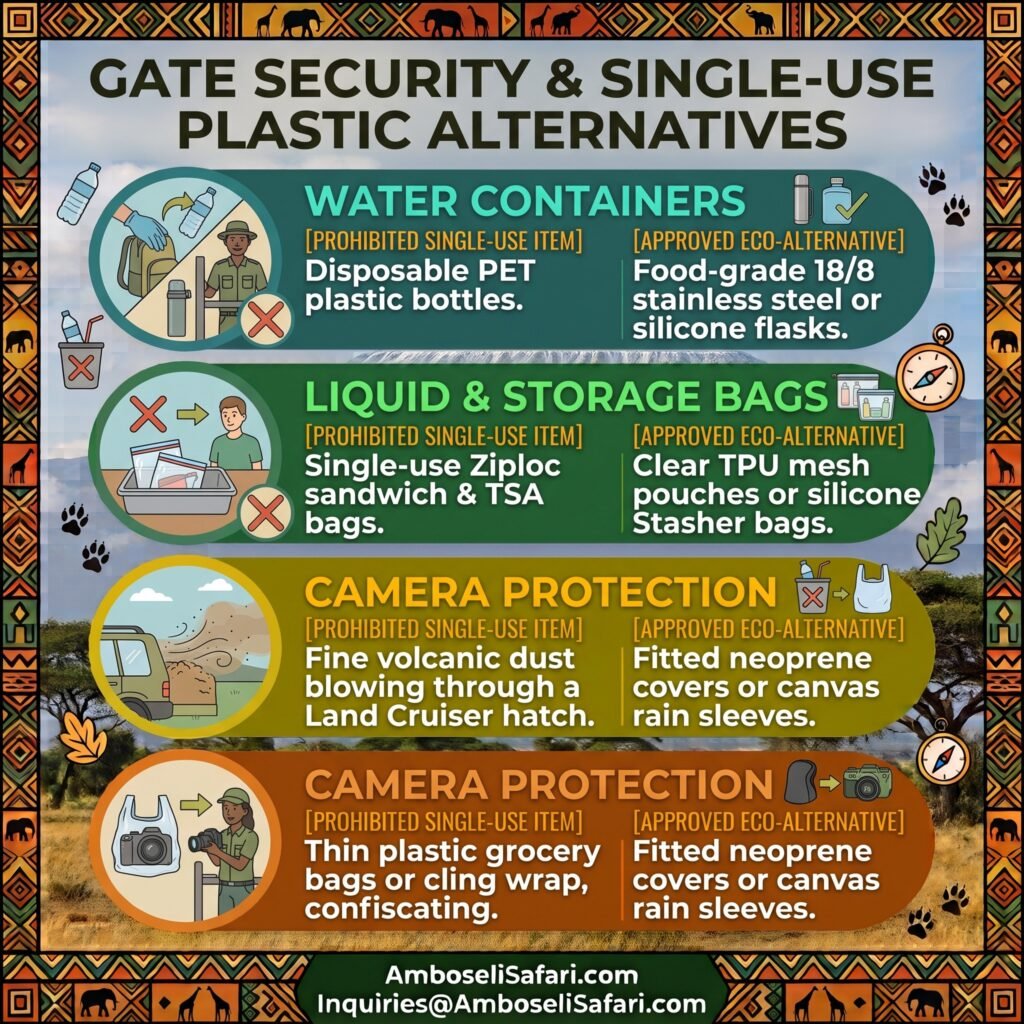
Park rangers enforce the plastic ban right at the entrance.
Wardens search vehicles at Kimana, Iremito, Meshanani, and Kitirua gates before issuing entry tickets. They check glove boxes, look under seats, and inspect daypacks for disposable PET water bottles, plastic straws, and thin grocery bags.
If you bought disposable water bottles on the drive from Nairobi, wardens will make you leave them behind. Decant your water into a hard flask—like a Nalgene or insulated thermos—before reaching the gate. You can read more about entrance procedures and drive times in our Amboseli safari planning guide.
Gate Security & Single-Use Plastic Alternatives
Kenya Wildlife Service rangers rigorously inspect all vehicles entering through Kimana, Iremito, Meshanani, and Kitirua gates to prevent single-use plastics from entering the ecosystem. Wardens search glove boxes, under-seat storage, and daypacks for prohibited items like disposable PET water bottles, plastic straws, and thin grocery bags. Replacing these items with eco-compliant alternatives before reaching park boundaries ensures smooth gate clearance and avoids delays or confiscations. Use this comparative breakdown to audit your daypack gear before arrival.
| Gear Category | Prohibited Single-Use Item | Approved Eco-Alternative |
| Water Containers | Disposable PET plastic bottles | Food-grade 18/8 stainless steel or silicone flasks |
| Liquid & Storage Bags | Single-use Ziploc sandwich & TSA bags | Clear TPU mesh pouches or silicone Stasher bags |
| Camera Protection | Thin plastic grocery bags or cling wrap | Fitted neoprene covers or canvas rain sleeves |
Eco-Compliant Toiletries, Wet Wipes & Prescription Medicine
Personal care items carry hidden plastics that pollute camp waste systems if you aren’t careful:
- Bio-Degradable Wet Wipes Only: Standard commercial wet wipes contain synthetic polyester fibers that choke tented camp septic tanks and don’t rot in soil. Pack 100% compostable bamboo wipes or washable microfiber cloths instead.
- Solid Toiletries: Switch liquid shampoo, conditioner, and body wash for solid bars and toothpaste tablets. It cuts out plastic bottles completely.
- Prescription Medications: Leave prescription pills in their original pharmacy bottles or a reusable pill organizer. Don’t sort medications into small disposable Ziploc baggies.
Comprehensive Gate Coverage: All Four Access Points
Eco inspections apply uniformly across all four park gates:
- Kimana Gate: Primary eastern entrance serving central lodges and road transfers from Emali.
- Iremito Gate: Northeastern entrance handling traffic coming from Nairobi and northern boundary camps.
- Meshanani Gate: Northwestern entrance used when driving in via the Namanga border highway.
- Kitirua Gate: Southwestern entrance used when coming from western private conservancies and salt pan tracks.
Rangers at every single gate run the same single-use plastic checks.
Lodge RO Purification Hubs and Vehicle Dispensers
Getting clean drinking water without plastic bottles is straightforward once you know how lodges operate.
Gold-rated eco-camps and central properties like those featured in our guide on where to stay in Amboseli run on-site Reverse Osmosis (RO) and UV purification plants. They serve safe, filtered water in glass carafes at dining tables.
Our Land Cruisers carry 10-liter stainless steel thermal dispensers in onboard coolers. You refill your thermal flask from the tap in the back of the truck before driving out toward the marsh.
Aluminum Flask Oxidation from Borehole Water
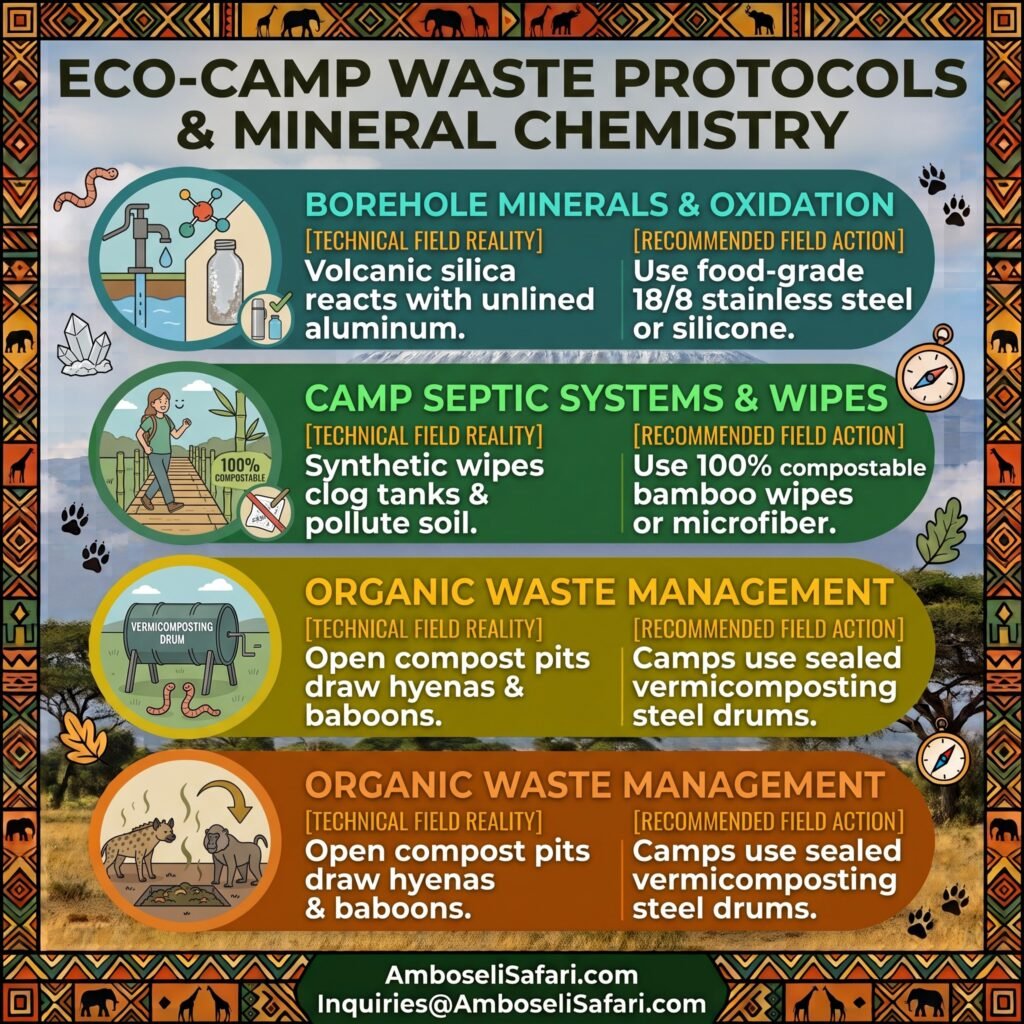
The metal your bottle is made of matters when refilling in the bush.
Deep groundwater pumped from lodge boreholes near Mount Kilimanjaro carries dissolved volcanic minerals and silica. The water is completely safe once it passes through a lodge filtration system.
However, if you leave filtered borehole water inside a cheap, unlined aluminum bottle for a few days, those minerals react with the metal, creating a chalky white crust on the inside walls. Bring a food-grade 18/8 stainless steel thermal flask or a silicone bottle instead.
If you’re driving yourself, check our Amboseli self-drive tips for water storage and dust seal advice.
Eco-Camp Waste Protocols & Mineral Chemistry
Managing waste and hydration in Amboseli requires understanding the unique environmental conditions of the Kilimanjaro basin. Local lodge boreholes pump groundwater rich in dissolved volcanic minerals and silica, which can react with unlined metals if stored incorrectly. Furthermore, camps operate strict eco-protocols—such as vermicomposting and zero open waste pits—to protect wildlife like hyenas and baboons from scavenged trash. Review this field matrix to select safe gear and support local conservation efforts.
| Feature / Issue | Technical Field Reality | Recommended Field Action |
| Borehole Minerals | Volcanic silica reacts with unlined aluminum | Use food-grade 18/8 stainless steel or silicone |
| Camp Septic Systems | Synthetic wipes clog tanks & pollute soil | Use 100% compostable bamboo wipes or microfiber |
| Organic Waste Management | Open compost pits draw hyenas & baboons | Camps use sealed vermicomposting steel drums |
Luggage Limits & Camera Gear Dust Protection
Plastic rules overlap with general gear packing:
- Soft-Sided Duffels vs. Hard Cases: Hard plastic suitcases don’t pack well in 4×4 boots and are strictly rejected on light aircraft flights. Pack frameless canvas or nylon duffel bags instead.
- Camera Dust Protection: Fine volcanic dust blows through open hatches during dry season drives. Don’t wrap camera bodies in thin plastic grocery bags—wardens will confiscate them at the gate. Use fitted neoprene covers or canvas rain sleeves instead.
Drone Regulations and E-Waste Protocols
Strict rules apply to electronics across the basin:
- Recreational Drones Prohibited: Flying drones inside KWS parks is illegal. Drones disturb wildlife and interfere with low-flying bush planes. Operating one requires joint permits from the Kenya Civil Aviation Authority, the Ministry of Defence, and KWS wardens.
- E-Waste Management: Remote camps can’t recycle dead electronics. If a camera battery, flashlight bulb, or power bank dies during your trip, pack it out and take it back home for proper disposal.
Maasai Boma Plastic Snack Packaging Bans
Visiting a traditional Maasai homestead (Enkang) near Kimana Gate requires extra attention.
Strip all plastic candy wrappers, foil snack pouches, and plastic bottle safety rings from your pockets before walking into the village. Dropping plastic inside a boma is dangerous for livestock.
Zebu cattle and goats graze around the huts. They’ll swallow dropped plastic wrappers that smell like salt or food residue, leading to fatal stomach blockages. Keep all snacks locked in the Land Cruiser. You can learn more about village visits and elephant movements in our famous elephants guide.
Camp Composting and Hyena Bans
Tented camps operating outside Iremito Gate face strict waste management rules for food scraps.
Camps can’t dig open compost pits because high alkaline volcanic silt slows down natural decomposition. More importantly, open compost smells draw Spotted Hyenas and Yellow Baboons straight into guest areas.
Eco-camps use sealed, elevated vermicomposting steel drums or haul organic waste out to bio-digesters in Loitokitok Town. You can see how eco-levies factor into total trip costs on our Amboseli safari cost breakdown page.
eCitizen Litter Fines and Gate Penalties
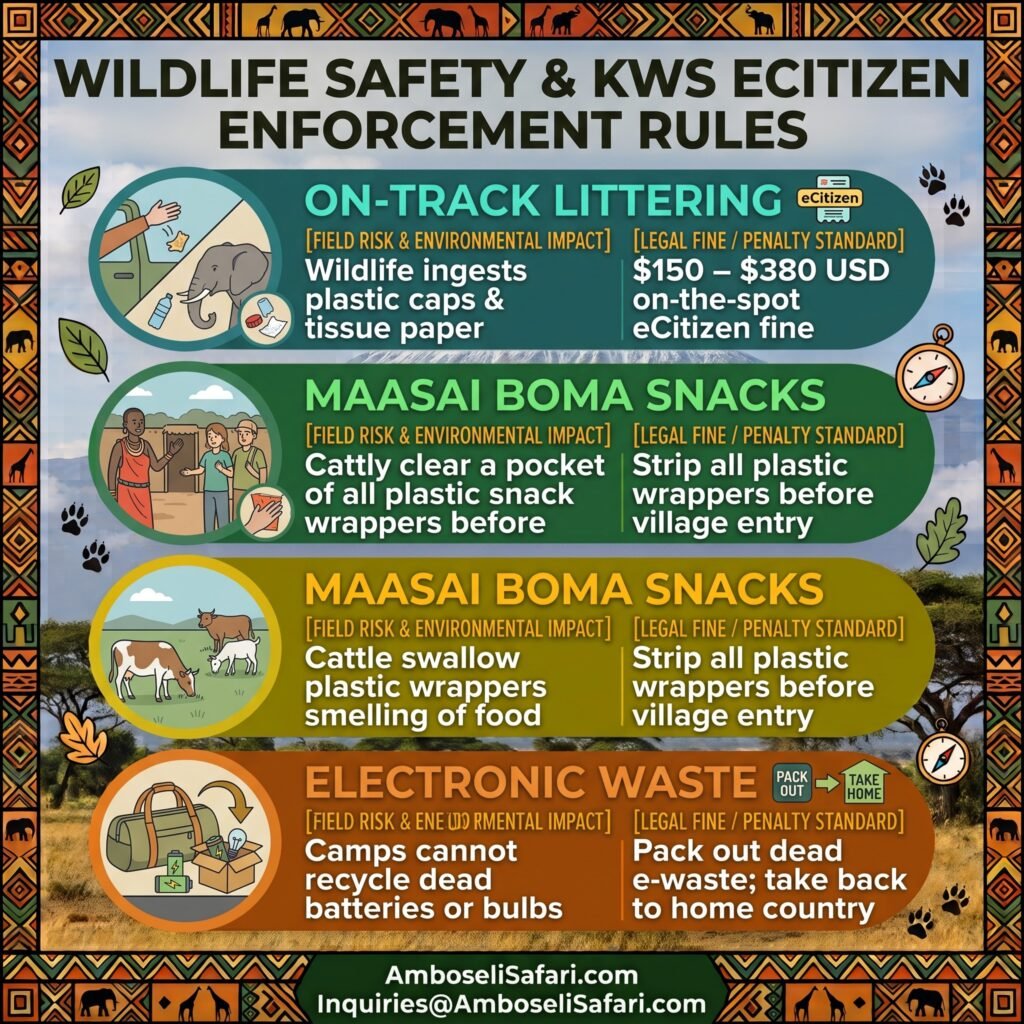
Throwing trash out of a vehicle window will ruin your trip fast.
Dropping a plastic bottle cap, candy wrapper, or tissue paper out of a Land Cruiser hatch along causeways near Observation Hill triggers heavy KWS penalties.
Mobile KWS patrol units issue on-the-spot fines ranging from KES 20,000 to KES 50,000 ($150 to $380 USD). Fines are processed digitally right on the dirt road via the eCitizen portal. If a driver lets passengers litter repeatedly, KWS can suspend the driver’s professional park permit.
Wildlife Safety & KWS eCitizen Enforcement Rules
Environmental enforcement inside Amboseli extends beyond park gates to include active mobile ranger patrols across marsh causeways and public tracks. Dropping litter—even small item caps or tissue paper—triggers steep, digital fines issued instantly on-site. Additionally, visitors must observe strict packaging rules when visiting community Maasai bomas to prevent livestock fatalities from ingested plastic. Use this reference matrix to stay fully compliant with park regulations and community protocols.
| Rule / Violation | Field Risk & Environmental Impact | Legal Fine / Penalty Standard |
| On-Track Littering | Wildlife ingests plastic caps & tissue paper | $150 – $380 USD on-the-spot eCitizen fine |
| Maasai Boma Snacks | Cattle swallow plastic wrappers smelling of food | Strip all plastic wrappers before village entry |
| Electronic Waste | Camps cannot recycle dead batteries or bulbs | Pack out dead e-waste; take back to home country |
Field Notes & Practical Advice
Managing waste is easy once you get used to reusable gear.
Anthony Mule, a senior guide who’s been driving our trucks through these gates for a decade, keeps a close eye on what guests bring along: “I always tell people during our morning briefing to clear out Ziploc bags before we leave the hotel. If we pull up to Kimana Gate and a warden spots a plastic sandwich bag sitting on the dash, they’ll pull the truck aside for a 20-minute search. Pack your small items in a canvas pouch instead.”
Following these rules keeps the swamps clean for wildlife and saves you from delays at the gate.
If you want to book an eco-compliant Land Cruiser and driver-guide, contact us through our safari booking form to reserve your dates.
Frequently Asked Questions
Are Ziploc bags allowed inside Amboseli National Park?
No. Clear plastic Ziploc bags and thin disposable grocery bags are strictly banned by Kenya Wildlife Service. Wardens at Kimana, Iremito, Meshanani, and Kitirua gates will confiscate them during routine searches. Use reusable silicone Stasher bags or canvas pouches instead.
Can I bring disposable water bottles into the park?
No. Single-use PET plastic water bottles are prohibited. You must pour your water into a reusable hard-plastic, stainless steel, or silicone bottle before entering the park gates.
How do lodges provide drinking water without plastic bottles?
Most lodges and eco-camps operate on-site Reverse Osmosis (RO) water purification plants. They provide safe, filtered drinking water in sterilized glass carafes in your room and at dining tables.
What is the penalty for littering inside the national park?
KWS wardens issue immediate on-the-spot fines ranging from $150 to $380 USD for dropping wrappers or tissues out of a vehicle. Fines are processed digitally via the eCitizen portal.
Can I pack hard-shell plastic luggage for an Amboseli safari?
Hard-shell suitcases are strongly discouraged for Land Cruiser road travel and strictly rejected by bush flight operators like Safarilink and Airkenya. Pack frameless, soft-sided duffel bags that fit easily into vehicle boots and narrow aircraft belly pods.
Are wet wipes banned inside Amboseli National Park?
Standard synthetic wet wipes containing polyester fibers are banned from park disposal systems because they clog camp septic tanks and pollute soil. Bring 100% compostable bamboo wet wipes or washable microfiber cloths instead.