
Best Camera Gear for Amboseli Safari: Lens Picks, Settings & Safari Rates
Overview
Choosing the best camera gear for Amboseli safari photography means preparing for blinding alkaline dust, severe midday light contrasts, and massive focal range shifts. While many photographers assume the park is managed under Narok County Council, the ecosystem sits entirely in Kajiado County under Kenya Wildlife Service (KWS) jurisdiction. Protecting sensitive camera sensors near Enkongo Narok swamp while framing tuskers studied by the Amboseli Elephant Research Project takes specific gear setups. Full-board 3-day and 4-day photography packages in a private 4×4 Land Cruiser run from $1,080 per person for budget stays up to $5,950 per person for fly-in luxury trips.
Fast Navigation Links
- Photography Packages & Rates
- Lens Recommendation Matrix
- Camera Body Specs
- Settings Cheat Sheet
- Cloud Windows & Heat Haze
- Dust Shielding & Field Cleaning
Photography Packages & 2027 Safari Rates
Working out of an open-top 4×4 Land Cruiser gives you 360-degree clearance to track herds moving across the salt pan. Our photography vehicles feature pop-up roofs with padded support rails, giving you a steady base for telephoto lenses without vehicle vibrations ruining your focus.
All package rates below cover two adults traveling together in a private vehicle. Rates include full-board lodging, private Land Cruiser transport, guide fees, fuel, vehicle entry permits, cold bottled water, and pre-paid non-resident KWS permits ($90 USD per adult every 24 hours).
3-Day & 4-Day Amboseli Photography Safari Packages
| Package Tier & Accommodations | Standard Season (USD / Person)* | Peak Season (USD / Person)* | Booking Action |
| 3-Day Budget Photography Safari (Sentrim Amboseli / AA Lodge / Amboseli Eco Camp) | $1,080 | $1,820 | Book Budget Safari |
| 3-Day Mid-Range Photography Safari (Kibo Safari Camp / Zebra Plains / Kilima Safari Camp) | $1,280 | $2,050 | Book Mid-Range Trip |
| 3-Day Luxury Photography Safari (Ol Tukai Lodge / Amboseli Serena / Tawi Lodge) | $1,580 | $2,480 | Book Luxury Safari |
| 4-Day Fly-In Luxury Plus Safari (Safarilink Flight + Elewana Tortilis / Sanya Camp / Porini) | $3,950 | $5,950 | Book Fly-In Package |
*Rates are based on two adults sharing a room/tent and a private 4×4 Land Cruiser. Standard season runs January through May and November. Peak season covers June through October and December. Includes full-board lodging, private transport, guide allowances, fuel, and daily $90 USD KWS entry passes. Fly-in options include roundtrip domestic flights from Wilson Airport (WIL) on Safarilink or Airkenya plus airstrip transfers.
Package Inclusions
- Private 4×4 Safari Land Cruiser with pop-up roof for gear mounting
- Services of a TRA-licensed, English-speaking driver-guide
- Full-board accommodation at your chosen property
- Pre-paid non-resident KWS park permits ($90 USD per 24 hours)
- Chilled bottled drinking water kept in the vehicle cooler
Package Exclusions
- International flights, visa fees, and entry processing through the official eTA portal
- Driver-guide tips, laundry, and alcoholic drinks
- Optional Maasai cultural village visits ($30 per person) or hot air balloon safaris ($450 per person)
Optional Add-Ons
- Local Maasai village photo tour: USD 30 per person
- Sunrise hot air balloon flight over central marshes: USD 450 per person
We detail complete transport logistics, permit calculations, and fuel costs on our Amboseli safari cost breakdown page.
Dedicated Lens Recommendation Matrix
Matching focal length to the open terrain of Kajiado County keeps your bag lightweight while covering every perspective.
| Lens Focal Length | Primary Field Use Case | Real-World Advantage |
| 16–35mm f/2.8 or f/4 | Wide environmental compositions | Frames full elephant bodies against Mount Kilimanjaro. |
| 70–200mm f/2.8 | Close herd crossings & low-light dusk drives | Excellent for side-profile portraits and low-light lion tracking. |
| 100–500mm or 150–600mm | Primary workhorse zoom lens | Essential range for subjects moving across open salt pans. |
| 500mm or 600mm Prime | Skittish birdlife & distant predators | Isolates small waders inside Enkongo Narok papyrus beds. |
A flexible telephoto zoom (like a 100–400mm or 100–500mm) is far more useful on game drives than a heavy fixed prime lens. When heat shimmer builds up across the open lakebed later in the morning, zooming back slightly cuts through optical distortion while keeping your subject sharp.
Lens Focal Length & Framing Decision Matrix
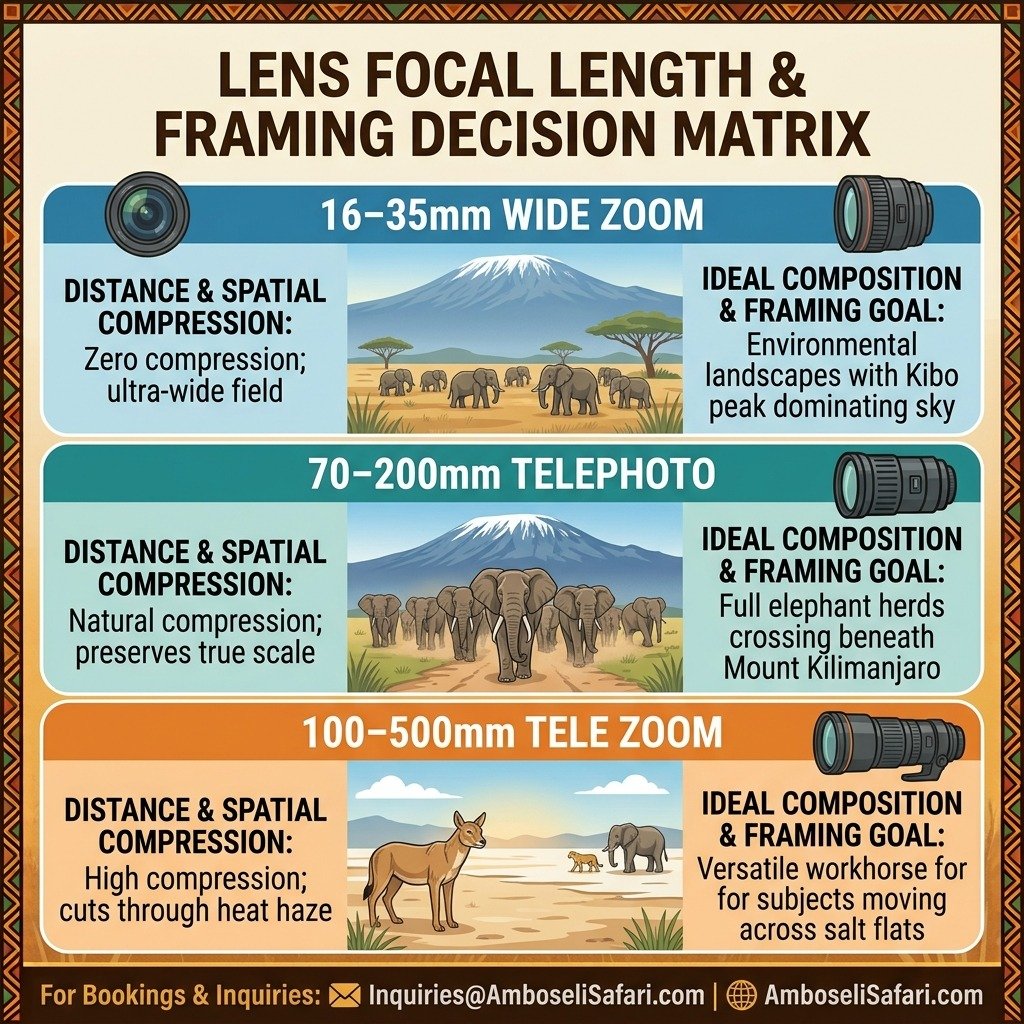
Choosing the correct focal length across Lake Amboseli’s open salt flats determines how Mount Kilimanjaro scales against foreground wildlife. Because the peak rises nearly 5,000 meters above the basin floor, super-telephoto lenses compress distance while wider focal ranges capture sweeping environmental landscapes. This focal decision guide maps specific lens ranges to subject distance, spatial compression effect, and ideal composition goals. Match your lens choice to your target subject before unlatching gear inside the vehicle.
| Lens Focal Range | Distance & Spatial Compression | Ideal Composition & Framing Goal |
| 16–35mm Wide Zoom | Zero compression; ultra-wide field | Environmental landscapes with Kibo peak dominating sky |
| 70–200mm Telephoto | Natural compression; preserves true scale | Full elephant herds crossing beneath Mount Kilimanjaro |
| 100–500mm Tele Zoom | High compression; cuts through heat haze | Versatile workhorse for subjects moving across salt flats |
Camera Body & Hardware Requirements
Working in remote bush environments requires gear redundancy and fast buffer handling:
- Mirrorless vs. DSLR Bodies: Mirrorless cameras offer silent electronic shutters, which prevent spooking skittish cheetahs or close-range tuskers. However, exposing the sensor every time you change lenses increases dust risks on open salt flats.
- Dual Card Slots: Always run dual card slots in mirrorless bodies configured to write images simultaneously. If a card corrupts in the field, you retain a complete backup without needing cloud access in the bush.
- Memory Card Speeds: Pack high-speed memory cards like CFexpress Type B or V90 UHS-II SD cards. High write speeds clear camera buffers instantly during continuous burst shooting when an elephant herd splashes through water channels.
Amboseli Camera Settings Cheat Sheet
Bright white salt dust reflecting intense equatorial sunlight creates massive dynamic range challenges:
Snow vs. Dark Hide Exposure Control
Dial in -0.7 to -1.0 EV exposure compensation when photographing dark elephant hides against Mount Kilimanjaro. Auto-exposure meters get tricked by dark animal hides, blowing out Kibo’s snow cap into solid white blocks. Spot-metering on bright mountain ice lets you recover dark hide details in post-processing later.
Autofocus Configuration for Marshes
Set your camera to Animal Eye-AF or Zone AF. Zone AF prevents your lens from hunting back and forth when tracking lions resting behind tall papyrus reeds or moving through dusty air.
Shutter Speed Benchmarks
- 1/1000s Minimum: Ideal baseline for walking elephants, browsing giraffes, and slow herd movements.
- 1/2000s or Faster: Essential for tracking marshland birds in flight or hunting cheetahs sprinting across open salt crusts.
- 1/30s Slow-Shutter Panning: Great for capturing motion blur on dust trails kicked up behind galloping zebra herds during golden hour.
Lighting Windows & Atmospheric Challenges
Mount Kilimanjaro follows a strict daily weather pattern dictated by thermal air currents.
The Morning Cloud Window (06:00 AM – 08:30 AM)
Kibo peak is usually clear at dawn. By 09:00 AM, rising thermal heat off the dry basin floor creates dense cloud cover around the snow-capped summit. Position your vehicle north of your subject facing south toward the mountain early, and keep your primary camera body ready with a 70–200mm lens mounted.
Beating Midday Heat Haze
After 10:30 AM, intense ground heat creates heavy atmospheric wave shimmer across the dry lakebed. Long telephoto lenses above 300mm struggle to hold sharp focus over distance. Switch to wide-angle storytelling shots focusing on foreground detail, or head into the shaded canopy of yellow-fever tree groves (Acacia xanthophloeia) until late afternoon light returns.
Dust Shielding & The “Ziplock Field Tent” Protocol
Fine white silt off Lake Amboseli is relentless. When afternoon winds blow across the dry basin, alkaline dust gets driven into every open car window, smelling like dry chalk and settling over exposed gear in seconds.
Changing lenses inside an open Land Cruiser exposes camera sensors to swirling micro-particles. To avoid sensor spots, use a 10-liter heavy-duty clear ziplock bag as a portable field tent.
Place your camera body and replacement lens inside the bag before unmounting. Uncap the mount and swap the glass entirely inside the sealed plastic envelope. This keeps airborne grit from landing on open sensor glass during field swaps.
Alkaline Dust Shielding & Sensor Care Protocol
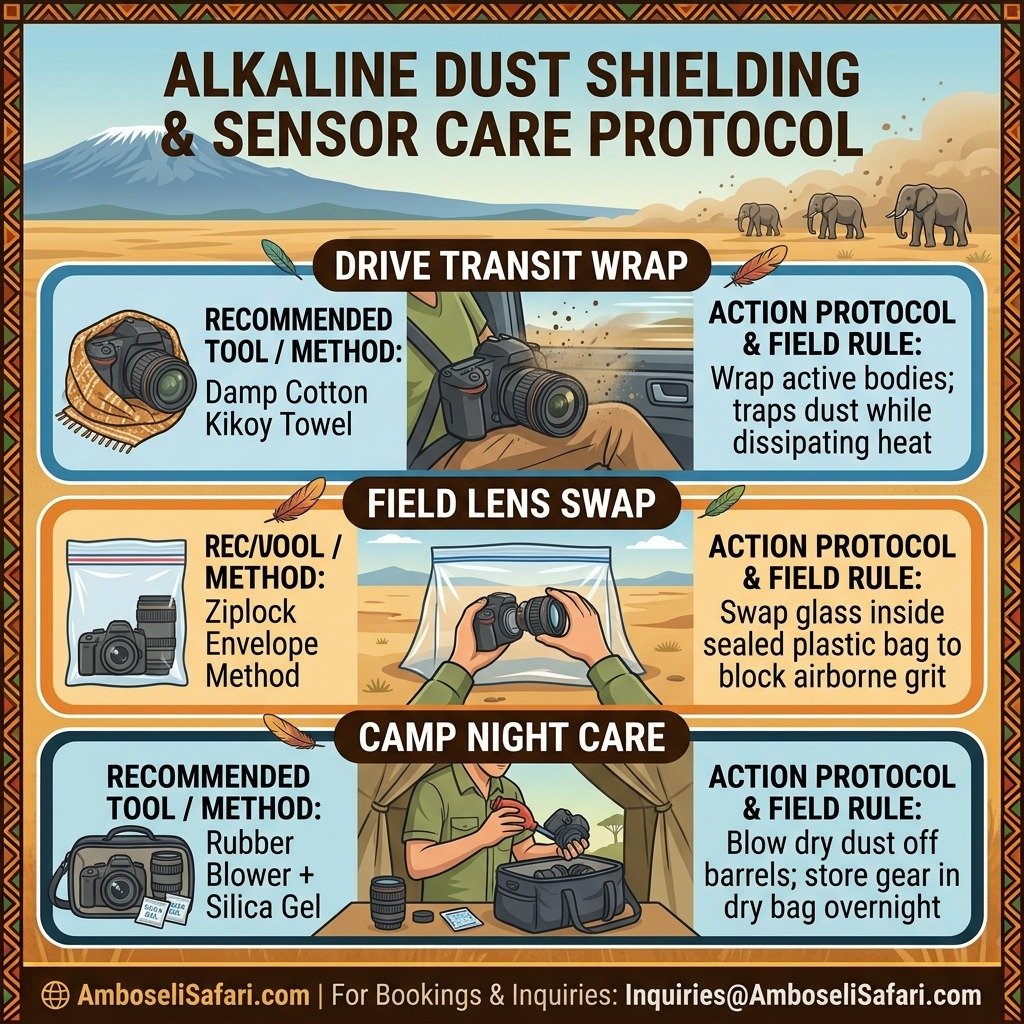
Fine silt from Lake Amboseli is extremely abrasive and can easily lock up focus rings or ruin camera sensors during afternoon windstorms. Standard cleaning habits like using compressed air cans or dry microfibers can permanently damage delicate optical coatings on safari. This field maintenance matrix details safe, effective protocols for shielding gear during transit, swapping lenses in dusty air, and cleaning sensors at camp. Follow these preventative steps daily to keep gear operational in harsh savanna conditions.
| Cleaning Stage | Recommended Tool / Method | Action Protocol & Field Rule |
| Drive Transit Wrap | Damp Cotton Kikoy Towel | Wrap active bodies; traps dust while dissipating heat |
| Field Lens Swap | Ziplock Envelope Method | Swap glass inside sealed plastic bag to block airborne grit |
| Camp Night Care | Rubber Blower + Silica Gel | Blow dry dust off barrels; store gear in dry bag overnight |
Cotton Kikoy Wraps vs. Plastic Condensation Traps
Sealing cameras inside rubber dry bags or plastic sacks inside a warm safari vehicle creates a greenhouse trap. Heat builds up fast, causing internal glass elements to fog up when you bring the camera out into cooler morning air.
Instead of plastic, wrap active camera bodies in a slightly damp cotton Maasai kikoy or heavy microfiber towel. Cotton traps fine dust while allowing heat to dissipate naturally, keeping your gear cool and ready for instant action when a predator moves.
While driving through yellow-fever tree groves, keep your wrapped camera on your lap. The low bass rumblings of elephant communication vibrate right through the vehicle frame, so having your gear cushioned on your knees prevents mechanical shocks.
You can compare property locations and shade benefits in our guide on where to stay in Amboseli.
Vehicle Power Logistics & USB-C PD Banks
Plugging multi-bay camera battery chargers into a Land Cruiser’s 12V socket or low-wattage inverter often trips vehicle fuses when the engine idles at waterholes.
Skip the vehicle outlets entirely. Carry a dedicated 20,000mAh+ USB-C Power Delivery (PD) power bank inside your camera bag. Modern mirrorless bodies charge quickly via USB-C, and a high-capacity power bank maintains regulated power without relying on vehicle alternator output during long game drives.
Plan seasonal weather windows and lighting conditions using our Amboseli safari planning guide.
Essential Non-Optical Safari Gear Checklist
Packing for a photography safari in Amboseli requires more than just high-end camera bodies and telephoto glass. Fine alkaline dust, hot midday vehicle temperatures, and unpredictable power sources can stall your workflow if you lack proper support hardware. This visual field checklist details the essential non-optical accessories needed to protect gear, power mirrorless batteries, and stabilize telephoto lenses inside a 4×4 Land Cruiser. Ensure these support items are packed in your daypack before heading out on daily game drives.
| Accessory / Tool | Recommended Specification | Primary Field Advantage |
| Power Bank | 20,000mAh+ (USB-C PD 65W) | Charges mirrorless batteries without relying on vehicle 12V |
| Lens Support | Canvas Wedge Beanbag | Fits low-angle door sills & pop-up roof rails for stability |
| Dust Protection | 10L Heavy-Duty Ziplock Bag | Serves as a sealed “field tent” for swapping camera lenses |
Low-Angle Shots with Door Sill Wedge Beanbags
Draping a standard beanbag over a high pop-up roof works well for distant wildlife, but shooting from six feet up flattens the scale of giant tuskers.
To make a big bull look imposing, wedge a low-profile wedge beanbag onto the Land Cruiser’s lower door sill or floorboard. Kneeling on the vehicle floor and shooting upward from door-level frames the elephant towering directly over your foreground, with Kibo peak rising dramatically in the background.
Our lead guide, Anthony Mule, brings ten years of experience guiding photographers across these tracks. He advises cutting the Land Cruiser engine the second you drop down to door level, ensuring zero engine vibration affects long telephoto shutter speeds.
Learn how research teams track giant bulls across the basin in our famous elephants guide.
Field Sensor Cleaning & Editing Workflow
Keeping sensor glass clean and handling high-contrast RAW files requires specific maintenance tools and post-processing steps:
- In-Field Cleaning Tools: Pack a heavy-duty rubber rocket blower, sensor cleaning swabs, and a soft optics lens pen. Never use compressed air cans on safari—high heat inside safari vehicles can cause compressed air cans to explode or spray liquid chemical propellants directly onto lens coatings.
- RAW Post-Processing Tips: Use batch dust-spot removal in Adobe Lightroom to clean repeating sensor spots caused by alkaline dust. Boost Shadows (+20 to +30) on backlit tuskers to reveal hide texture, while pulling Highlights (-30 to -50) to recover glacier detail on Mount Kibo.
Nighttime Dry Box Care & Silica Gel Paste Prevention
Alkaline dust collecting on lens barrels during hot afternoon drives absorbs ambient night humidity inside tented camps. If left uncovered, wet silt turns into a sticky paste that corrodes electronic lens mount pins and rubber zoom rings.
When you return to camp at night, clean your gear before dinner:
- Wipe down lens barrels and rubber grips with a barely damp cloth to remove dry salt crust.
- Place camera bodies and lenses inside a sealed dry bag with 100g silica gel desiccant packs overnight.
The silica gel pulls moisture out of the dust, keeping internal electronics dry and preventing corrosion.
Explore full swamp tracks and gate entry rules across our main Amboseli National Park guide.
If you want to secure a private 4×4 Land Cruiser equipped for photography on Amboselisafari.com, send us your dates through our safari inquiry form or request a custom itinerary via our safari booking form.
Frequently Asked Questions
What is the best single lens focal length for an Amboseli safari?
A 100–400mm or 100–500mm zoom lens on a full-frame camera is the most versatile option. It lets you capture wide landscape shots of herds framed against Mount Kilimanjaro while giving you enough telephoto reach for distant lion prides.
How do I prevent heat haze from ruining telephoto shots in Amboseli?
Midday heat shimmer bouncing off the dry salt pan distorts telephoto focus after 10:00 AM. Shoot during early morning hours (06:00 AM–08:30 AM), keep your distance to subject shorter, and lower your shooting angle toward the ground.
Should I bring a tripod on a game drive in Amboseli?
Tripods are impractical inside safari vehicles because the legs get tangled in seats. A canvas beanbag draped over the pop-up roof or door sill provides far better stability without taking up floor space.
Can I charge my camera batteries inside the safari vehicle?
Vehicle 12V sockets can be unreliable when the engine is off. Bringing a 20,000mAh+ USB-C Power Delivery power bank in your daypack ensures steady, portable charging for mirrorless camera batteries throughout the day.