
Campsites in Amboseli National Park: Field Reviews & Booking Guide
Overview
Pitching a tent at campsites in Amboseli National Park gives you direct views of Mount Kilimanjaro and immediate access to central elephant tracks. Options range from fenced public grounds near Kimana Gate with hot showers to wild, unfenced special campsites near Observation Hill requiring an armed ranger escort. Daily KWS non-resident park entry is $90 per adult, plus $30 a night for public camping. Full-board 3-day and 4-day safari packages with a private 4×4 Land Cruiser run from $850 per person for budget public camping up to $5,850 for fly-in luxury canvas setups.
Fast Navigation Links
- KWS Public vs Special Sites
- Official KWS DIY Fee Schedule
- Step-By-Step Special Site Booking
- Complete Campsite Facility Directory
- Essential Bush Gear Checklist
- Season-By-Season Camping Calendar
- Boundary Campsites & Wind Realities
- Seasonal Camping Package Rates
- Frequently Asked Questions
KWS Public Grounds vs. Special Wilderness Campsites
Camping inside park boundaries lets you hear hyenas whooping through the canvas while yellow-fever trees (Acacia xanthophloeia) sway overhead. When checking in at Kimana Gate, the duty warden usually reminds travelers that picking between public and special campsites comes down to whether you need running water or total isolation.
KWS Public Campsite (Kimana Gate HQ)
Set about 200 meters inside the main park gate, the KWS Public Campsite gives you basic amenities: flush toilets, hot showers, and a covered kitchen shelter with 220V outlets to charge camera gear.
Olive baboons roam the grounds constantly during the day. They watch from the trees and will unzip tent flaps or pop open car windows to grab food the second you step away.
While the wire perimeter fence keeps big cats out, you’ll hear the rumble of diesel generators running at nearby lodge and admin sites into the evening.
Observation Hill Special Campsite (Noomotio)
Set near the base of Observation Hill (Noomotio), this site is purely wild. It’s unfenced. You won’t find toilets, running water, or trash pits. You have to haul in every liter of drinking water and carry out all your garbage.
Booking Observation Hill requires written approval from the Park Warden. Because hippos leave the central marshes at night to graze and lions hunt along the swamp edges, you have to hire an armed KWS ranger for overnight guard duty in Amboseli National Park.
Official KWS DIY Fee Schedule
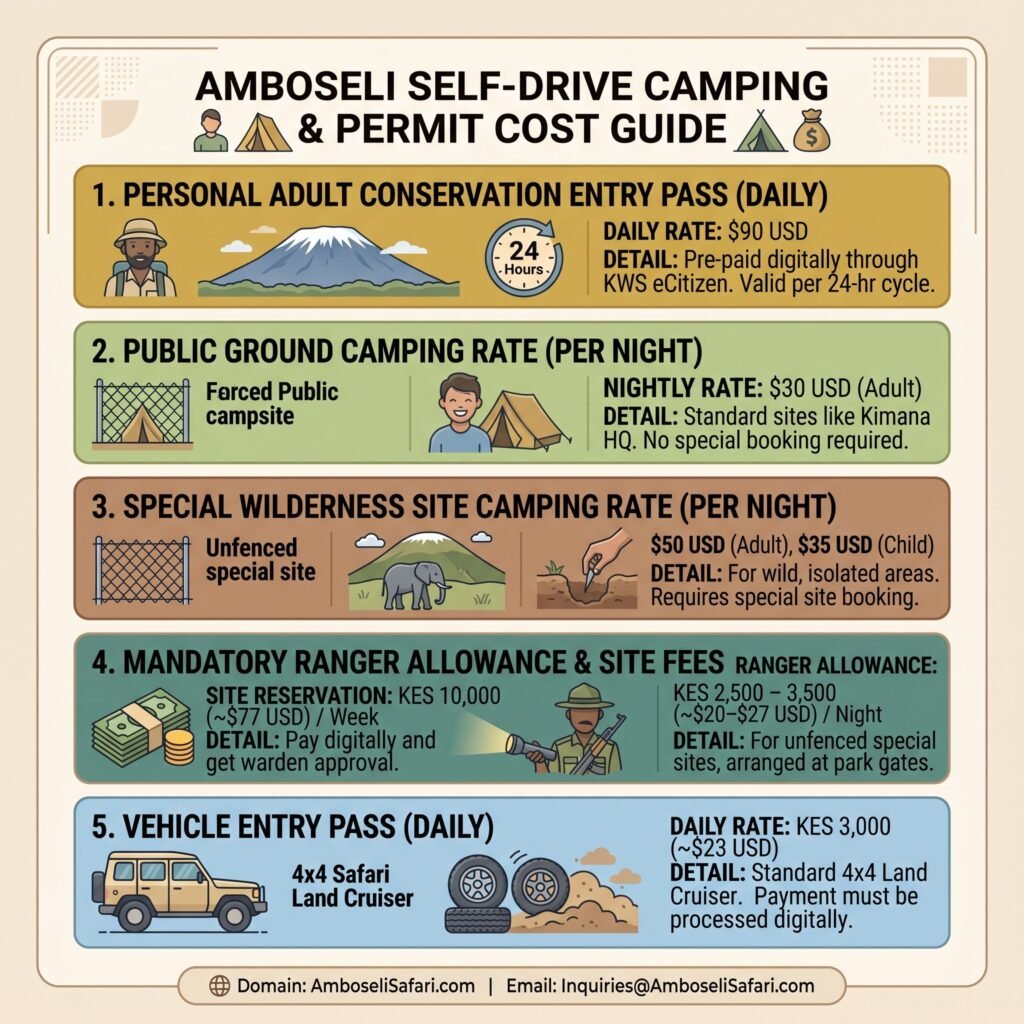
Independent overlanders and self-drive travelers must pay personal entry passes, nightly camping fees, and vehicle entry fees. The Kenya Wildlife Service handles payments digitally through the eCitizen system and accepts no cash at gate counters.
| Fee Category | Visitor Residency / Item | Daily Rate |
| Conservation Entry Pass | Non-Resident Adult / Child | $90 USD / $45 USD |
| Public Campsite Nightly Rate | Non-Resident Adult / Child | $30 USD / $25 USD |
| Special Campsite Nightly Rate | Non-Resident Adult / Child | $50 USD / $35 USD |
| Special Site Reservation Fee | Per Reservation / Week | KES 10,000 (~$77 USD) |
| Armed KWS Ranger Escort | Per Guard / Night | KES 2,500 – 3,500 (~$20–$27 USD) |
| Vehicle Entry Fee | 5-Seater Car / 4×4 Land Cruiser | KES 1,000 / KES 3,000 |
Note: Personal conservation passes run on a strict 24-hour cycle. Camping fees are charged per night spent inside the park. All payments must be processed via M-Pesa or card through the KWS eCitizen Portal.
Complete Self-Drive Camping & Permit Cost Guide
Campsites in Amboseli National Park: Self-Drive & DIY Cost Matrix
Calculating the true cost of DIY camping inside Amboseli requires factoring in personal conservation passes, vehicle fees, site reservation costs, and mandatory ranger allowances. Payments must be processed digitally through the KWS eCitizen portal prior to gate arrival. The breakdown below summarizes all standard non-resident overlanding costs for accurate budgeting.
| Fee / Item Category | KWS Public Ground Cost | Special Wilderness Site Cost | Mandatory Booking Requirement |
| Adult Entry Pass (24 Hrs) | $90 USD / Adult | $90 USD / Adult | Pre-paid via KWS eCitizen |
| Nightly Camping Rate | $30 USD / Adult ($25 Child) | $50 USD / Adult ($35 Child) | Paid per night spent inside park |
| Special Reservation Fee | N/A (Included at gate) | KES 10,000 (~$77 USD) / week | Written approval from Park Warden |
| Armed Ranger Allowance | Not required (Fenced) | KES 2,500–3,500 (~$20–$27 USD)/night | Arranged at Kimana or Meshanani Gate |
| 4×4 Vehicle Entry Pass | KES 3,000 (~$23 USD) / day | KES 3,000 (~$23 USD) / day | Covers standard 4×4 Land Cruiser |
Step-by-Step KWS Special Campsite Booking Guide
- Reserve your dates at least two weeks early on the KWS eCitizen Portal or apply directly at the Kimana Gate warden office.
- Pay the non-refundable KES 10,000 reservation fee plus your daily $50 USD non-resident special camping rate. Save the digital receipts on your phone.
- Request an armed KWS ranger for overnight duty at Kimana Gate HQ or Meshanani Gate, and pay the ranger allowance at the cashier desk.
- Pass the self-sufficiency check. Rangers verify that your vehicle carries at least 5 liters of drinking water per person per day, cooking fuel, and heavy trash bags before letting you through.
Complete Campsite Facility Directory
| Campsite Name | Perimeter Fenced | Ablutions / Hot Water | Proximity to Swamps |
| KWS Public Campsite | Yes (Wire Fence) | Flush Toilets / Hot Shower | 5 minutes to Enkongo Narok |
| Observation Hill Special | No (Wilderness) | None (Self-Dug) | Right beside central marsh |
| Manjaro Campsite | Yes (Secured) | Tiled / Gas Hot Showers | Overlooks private waterhole |
| Kimana Community Camp | Yes (Manicured Lawn) | Basic Flush / Shared | 10 minutes to Kimana Gate |
| Selenkay Conservancy Camp | No (Wilderness) | Bush Bucket Showers | 45 minutes to northern tracks |
| Kudu Campsite (Iremito) | Yes (Basic Fence) | Flush / Solar Showers | 15 minutes to Iremito Gate |
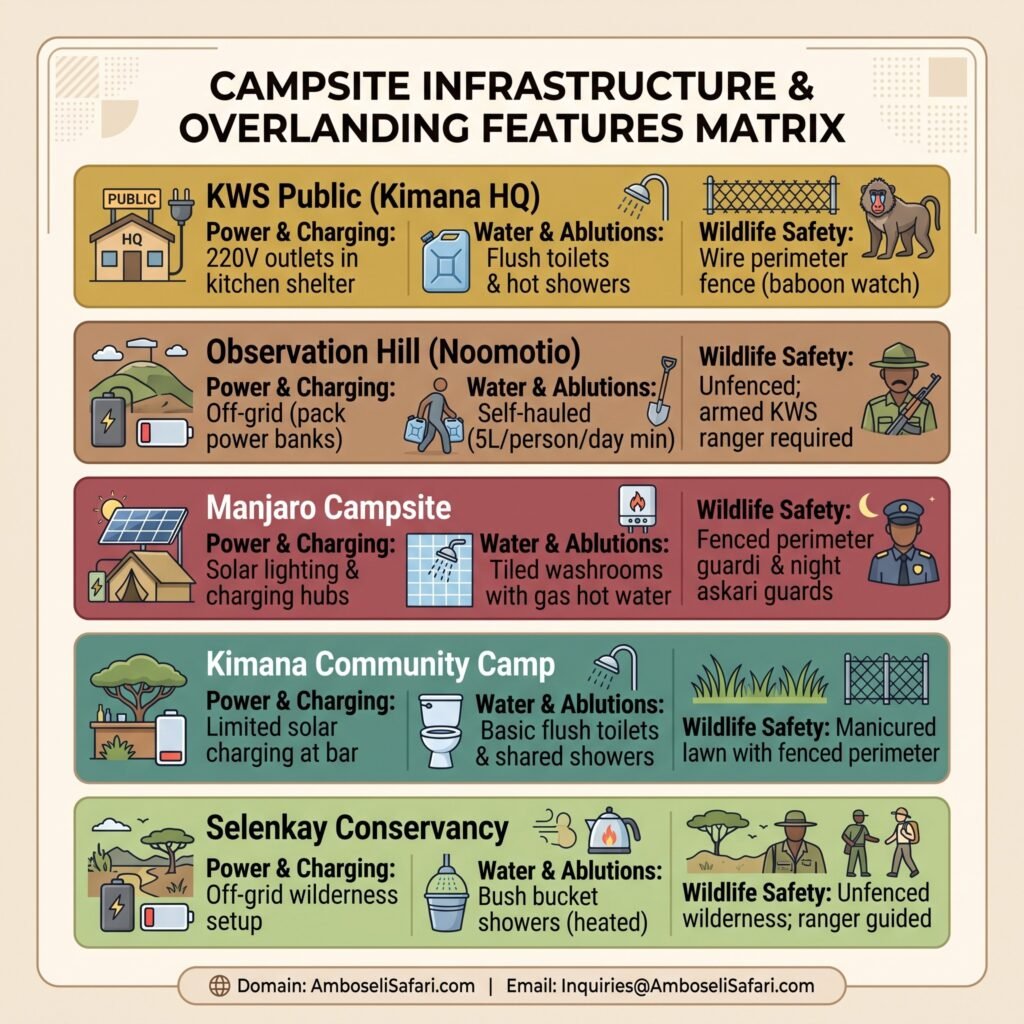
Campsite Infrastructure & Overlanding Features Matrix
Choosing between public grounds and wilderness sites in Amboseli comes down to utility needs, safety preferences, and water access. While public sites provide basic amenities like hot water and power sockets, special campsites offer complete isolation requiring full self-sufficiency. Use this comparison matrix to evaluate power, water, and security setups across top campsites before booking.
| Campsite Location | Power & Charging Utility | Water Sourcing & Ablutions | Wildlife Safety & Escort |
| KWS Public (Kimana HQ) | 220V outlets at kitchen shelter | Flush toilets & hot showers | Wire perimeter fence (baboon watch) |
| Observation Hill (Noomotio) | Off-grid (pack power banks) | Self-hauled (5L/person/day min) | Unfenced; armed KWS ranger required |
| Manjaro Campsite | Solar lighting & charging hubs | Tiled washrooms with gas hot water | Fenced perimeter & night askari guards |
| Kimana Community Camp | Limited solar charging at bar | Basic flush toilets & shared showers | Manicured lawn with fenced perimeter |
| Selenkay Conservancy | Off-grid wilderness setup | Bush bucket showers (heated) | Unfenced wilderness; ranger guided |
Essential Amboseli Camping Gear Checklist
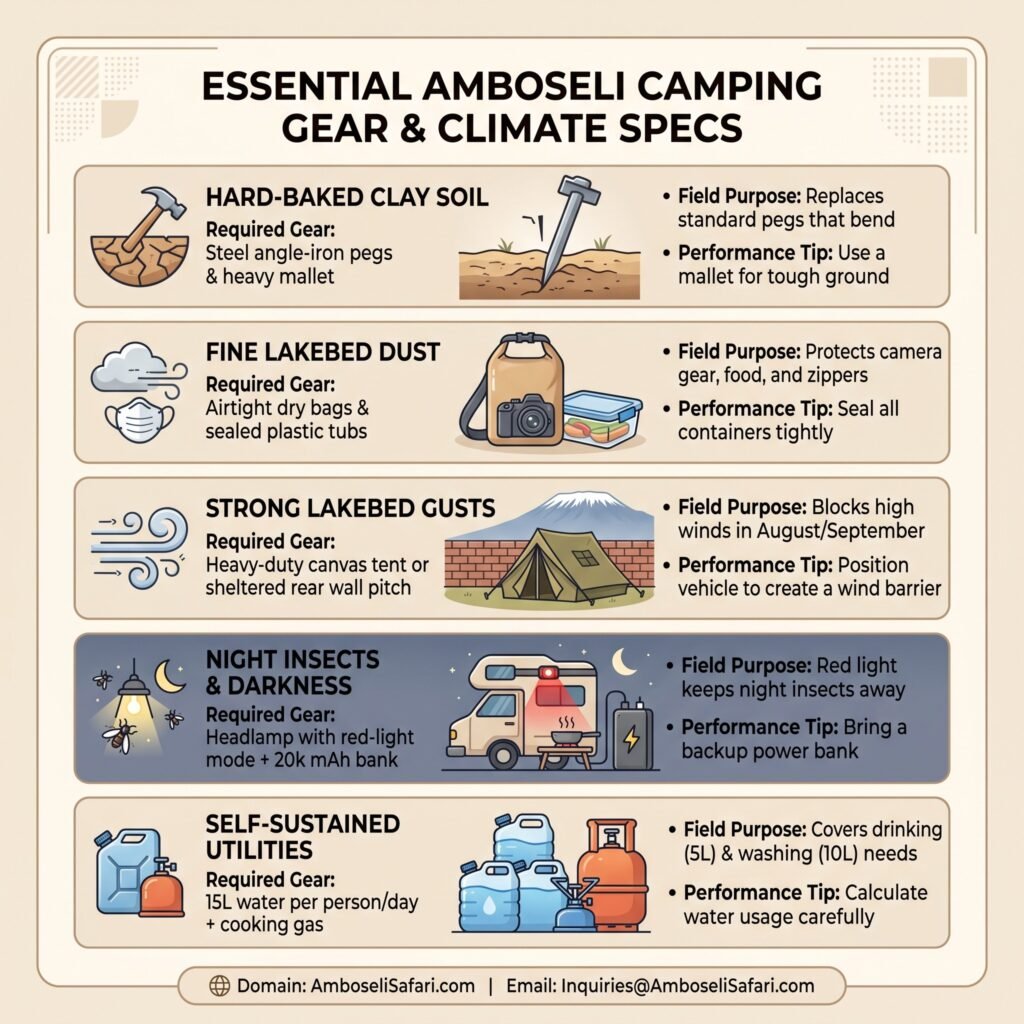
Ground conditions in the basin are dry, dusty, and tough on equipment.
- Pack heavy-duty steel angle-iron pegs and a solid mallet. Thin aluminum tent stakes bend instantly in the hard-baked clay soil around Kimana.
- Bring airtight dry bags for everything. Wind kicking off the lakebed forces fine white dust into camera bodies, tent zips, and food bags.
- Calculate water carefully. You’ll need 5 liters of drinking water per person each day, plus another 10 liters for washing up. If you forget gas or food, stop in Emali for Kenswitch ATMs, gas canisters (like K-Gas or Pro-Gas 6kg/13kg refills), and dry provisions before hitting the corrugated dirt on the C103 road.
- Carry a 20,000+ mAh power bank. Outlets in the public kitchen shelter fill up fast in the evenings.
- Use a headlamp with a red-light setting. White light draws clouds of night insects while you prepare dinner at camp.
Essential Amboseli Camping Gear & Climate Specs
Campsites in Amboseli National Park: Essential Gear & Terrain Checklist
The dry lakebed environment around Amboseli poses unique challenges for camping gear, from baked clay soils to fine dust and sudden wind gusts. Equipping your setup with specialized stakes, windproofing, and storage solutions prevents gear failure during your trip. Use this field-tested gear checklist tailored specifically to Amboseli’s seasonal climate realities.
| Climate / Terrain Challenge | Required Camping Gear | Field Purpose & Performance Tip |
| Hard-Baked Clay Soil | Steel angle-iron pegs & heavy mallet | Replaces thin aluminum stakes that bend in dry clay |
| Fine Lakebed Dust | Airtight dry bags & sealed plastic tubs | Protects camera bodies, food, and tent zips from silt |
| Strong Lakebed Gusts | Heavy-duty canvas tent or rear wall pitch | Pitching behind kitchen shelter blocks August wind |
| Night Insects & Darkness | Headlamp with red-light mode + 20k mAh bank | Red light keeps night insects away while cooking |
| Self-Sustained Utilities | 15L water per person/day + gas canisters | Covers 5L drinking water + 10L washing allowance |
Season-by-Season Camping Calendar
- July to October & January to February (Peak Dry Months): Expect clear morning views of Mount Kibo, low mosquito activity, and heavy wildlife activity around Enkongo Narok swamp. Midday heat gets intense, strong winds kick up dust across open pitches, and Kimana Gate sees morning vehicle lines.
- April to May & November (Green / Rainy Season): The landscape turns green, birdwatching picks up, and tourist numbers drop. Rains convert fine dust into sticky black-cotton mud along Lake Amboseli, so engaging 4×4 low range is required to avoid getting mired.
- June & December (Transitional Months): Daytime temperatures stay comfortable, dust is manageable, and post-rain skies yield sharp photography angles.
Boundary Campsites: Manjaro, Tortilis Bandas & Kimana
Staying outside the main park boundary lets you avoid strict KWS evening curfews while keeping access close to the gates.
Manjaro Campsite
Manjaro sits right outside Kimana Gate and works well for self-drive overlanders. It has a secure fenced perimeter, tiled washrooms with gas hot showers, and stone fire rings. The campsite borders a natural waterhole where elephant herds drink at dusk, and askari guards manage the gate for late-returning vehicles.
KWS Tortilis Bandas Campsite
Set near Kitirua Gate in the southwestern sector, Tortilis Bandas uses simple solar lights and outdoor wood hearths. Remember that there are no shops, gas stations, or canteens inside the park. Buy all charcoal, camping gas, drinking water, and groceries in Kimana town (25 km away) before heading through the gate for your Amboseli self-drive trip.
Kimana Community Campsite
Run by local Maasai community members near the eastern gate, this grassy campground handles up to 60 people. It has a small bush bar selling cold drinks, and staff supply dry hardwood firewood for evening bonfires under Kibo.
Lakebed Wind Hazards, Baboon Raids & Ground Realities
Camping under canvas here comes with a few harsh realities:
- Strong winds sweep off the dry lakebed during August and September. These sudden gusts snap cheap fiberglass tent poles on open grass pitches. When driving the Ol Tukai route, local drivers advise pitching tents right behind the concrete kitchen shelter wall at the KWS Public Campsite to block the wind while keeping dawn views clear.
- Fine alkaline dust gets everywhere. Keep tent mesh zipped tight, seal camera gear in dry bags, and store food in hard plastic tubs rather than cloth sacks.
- KWS entry permits run on a strict 24-hour clock ($90 USD per non-resident adult). If you enter Kimana Gate at 08:00 AM on Day 1, your ticket expires at 08:00 AM on Day 3. Staying past your time slot triggers an automatic extra day’s permit fee.
When tracking elephant matriarchs studied by the Amboseli Elephant Research Project, our driver-guides position vehicles near central marshes early so you can hear herds splashing through papyrus beds against the mountain backdrop.
Seasonal Camping Package Rates
Our road packages include a private 4×4 Safari Land Cruiser, driver-guide allowances, fuel, vehicle entry, dome tents, thick foam mattresses, cooking gear, a private safari cook, bottled water, and pre-paid KWS permits ($90 USD per adult per 24 hours).
Our senior guide, Anthony Mule, brings over ten years of field experience handling gate entries and setting up mobile camps across Kajiado County. Rates below reflect total per-person costs for two adults traveling together.
| Package Duration & Setup | Standard Season Rate | Peak Season Rate |
| 3-Day Public Camp (Kimana HQ) | $850 per person | $1,480 per person |
| 3-Day Private Camp (Manjaro / Tortilis) | $980 per person | $1,650 per person |
| 4-Day Special Wilderness Camp (Observation Hill) | $1,250 per person | $2,090 per person |
| 4-Day Fly-In Luxury Canvas Camp (Fly & Camp) | $3,850 per person | $5,850 per person |
*Prices reflect total per-person cost for two adults sharing a tent setup and a private 4×4 Safari Land Cruiser. Standard Season covers January to May and November. Peak Season covers June to October and December. Includes full-board mobile meals, private transport, guide fees, fuel, camping equipment, armed ranger fees (where applicable), and pre-paid KWS permits. Fly-in packages include roundtrip flights from Wilson Airport (WIL) on Safarilink or Airkenya.
Need a private 4×4 Land Cruiser and mobile camp setup? You can reserve your equipment on Amboselisafari.com or send a custom camping inquiry to check guide schedules.
Package Inclusions:
- Private 4×4 Safari Land Cruiser with pop-up roof for game drives and transfers
- TRA-licensed driver-guide and dedicated safari cook
- Waterproof dome tents, foam mattresses, sleeping bags, mess chairs, and cook gear
- Pre-paid KWS entry permits ($90/24 hrs) and daily camping fees
- Armed KWS ranger fees for special wilderness campsites
- Chilled bottled water in the vehicle cooler
Package Exclusions:
- International flights, visas, and eTA fees
- Personal tips for guide/cook, alcohol, and towels
- Optional Maasai village visits ($30/person) or hot air balloon rides ($450/person)
Frequently Asked Questions
Are public campsites inside Amboseli National Park safe from lions?
Yes, KWS public campsites near Kimana Gate have a wire fence that keeps large predators out. Unfenced special campsites (like Observation Hill) require an armed KWS ranger to guard the perimeter at night.
Do I need a 4×4 vehicle to reach campsites in Amboseli?
A 4×4 with good ground clearance is necessary. While the highway from Nairobi to Emali and Kimana is paved, the C103 dirt road and internal park tracks feature heavy corrugated ruts, fine sand, and deep dust.
How do I book an armed ranger for special campsites in Amboseli?
Armed KWS rangers are assigned at Kimana Gate HQ or Meshanani Gate upon arrival. When you book a special camping trip through us, we arrange ranger permits and allowances in advance.
Can I buy food and drinking water inside Amboseli National Park?
No. There are no grocery stores or canteens inside the park. You must purchase all food, drinking water, charcoal, and ice in Emali town or Kimana town before entering the gates.