
Solo Travel in Amboseli: SGR Routes, Solo Costs & Safety Guide
Overview
Planning Solo Travel in Amboseli gives you complete control over your game drive schedule. The Kenya Wildlife Service manages this Kajiado County ecosystem—frequently confused with Narok County Council—where Amboseli Elephant Research Project herds roam near Enkongo Narok swamp beneath Mount Kilimanjaro.
Fast Navigation Links
- 4 Day Solo Package Rates
- Solo versus Group Cost Comparison
- Saving Money with SGR Trains
- Best Lodges for Solo Travelers
- Solo Female Safety Guide
- High Season vs Low Season
Driving into the park on your own gives you full freedom over your day. You don’t have to negotiate wake-up times, rush past a pride of lions near the marshes, or compromise on photo stops because someone else in the truck is tired. Paying for a 4×4 Land Cruiser by yourself is expensive though, and picking a lodge where you won’t feel awkward eating alone takes some planning.
4-Day Multi-Destination Solo Safari Package (2 Nights Amboseli + 1 Night Lake Naivasha)
Booking a dedicated solo safari package removes the stress of coordinating daily transport, gate permits, and hotel transfers. Pairing the open elephant plains of Amboseli with the shaded waterfront of Lake Naivasha gives you a varied, well-paced trip.
Rates below reflect total costs for one solo traveler traveling in a private 4×4 Safari Land Cruiser with a dedicated driver-guide, single-occupancy rooming, and all park permits included:
4-Day Solo Circuit Rates & Lodging Options
| Package Tier & Accommodations | Included Lodges & Hotels | Total Solo Price Range (Low – Peak)* |
| Budget Tier | AA Lodge Amboseli & Fisherman’s Camp Naivasha | From USD $2,600 to USD $4,460 |
| Mid-Range Tier | Sentrim Amboseli Lodge & Lake Naivasha Country Club | From USD $3,140 to USD $5,120 |
| Luxury Tier | Ol Tukai Lodge & Enashipai Resort & Spa | From USD $3,790 to USD $6,070 |
| Luxury Plus Tier | Tortilis Camp Amboseli & Kiboko Luxury Camp Naivasha | From USD $5,840 to USD $8,720 |
Rates cover 2026/2027 travel for one solo traveler in a private single room or tented suite with a private 4×4 Land Cruiser and driver-guide. Standard/Low season covers January through May and November. Peak season spans June through October and December. Rates include full-board lodging, private vehicle transport, driver allowances, fuel, daily $90 USD KWS park permits (plus the mandatory 5% eCitizen gateway processing fee), Naivasha sanctuary fees, and chilled vehicle water. Luxury Plus includes domestic flights from Wilson Airport (WIL) on Safarilink or Airkenya.
To check open dates or ask about joining an upcoming group departure, submit your details through our safari booking form.
Package Inclusions
- Private 4×4 Safari Land Cruiser with pop-up roof hatch and custom camera beanbags
- Services of a dedicated, TRA-licensed driver-guide for the full 4-day trip
- Single-occupancy full-board accommodation covering breakfast, lunch, and dinner daily
- Pre-paid daily $90 USD KWS entry permits (plus 5% eCitizen fee) and Lake Naivasha passes
- Chilled drinking water stocked in the vehicle cooler
Package Exclusions
- International flights, travel insurance, and digital Kenya entry processing through the official eTA portal
- Tipping your driver-guide or lodge staff
- Alcoholic beverages, sodas, or personal laundry
- Optional Maasai village entry vouchers ($30) or hot air balloon flights ($450)
Optional Add-Ons
- Local village entry voucher & cultural walkthrough: USD 30 per person
- Night game drive in a private conservancy: USD 50 per person
- Sunrise hot air balloon flight over central marshes: USD 450 per person
Solo Private Safari vs. Shared Group Cost Comparison
Understanding how daily expenses stack up helps you decide whether to hire a private vehicle or join a shared group departure:
- Solo Private Vehicle ($450 – $650 per day): You hire a private 4×4 Land Cruiser and absorb the entire daily vehicle rental, fuel bill, driver allowance, and single room rate alone. You get 100% control over your schedule and route stops.
- Shared Group-Joining Trip ($200 – $280 per day): You join 4 to 5 other travelers in a shared 4×4 Land Cruiser. Transport and fuel costs are split evenly across the group, drastically reducing your daily outlay while still securing an outer window seat.
Saving Money with the SGR and Matatus
If you want to stretch your budget, you can reach the park gates using Kenya’s public transport system instead of booking a private highway transfer:
- Take the SGR Train to Emali: Book an early morning ticket on the Madaraka Express SGR Train from Nairobi Terminus to Emali Station. It takes under two hours and costs around KES 1,000 for Economy. Once you step off the train at Emali, prepare for a hot, dusty five-minute walk past the taxi ranks to the main highway junction.
- Hop on a Local Matatu: From the Emali junction, grab a shared matatu (minibus) heading down the paved C103 road to Kimana Town for about KES 300 to KES 500. You can also negotiate a local taxi directly to Kimana Gate for around KES 2,500.
- Pre-Pay Your Park Fees: Pay your $90 KWS entry fee on the eCitizen portal before leaving your hotel in Nairobi. Payment servers at Kimana Gate suffer from frequent network outages, and rangers cannot let you through without a digital receipt.
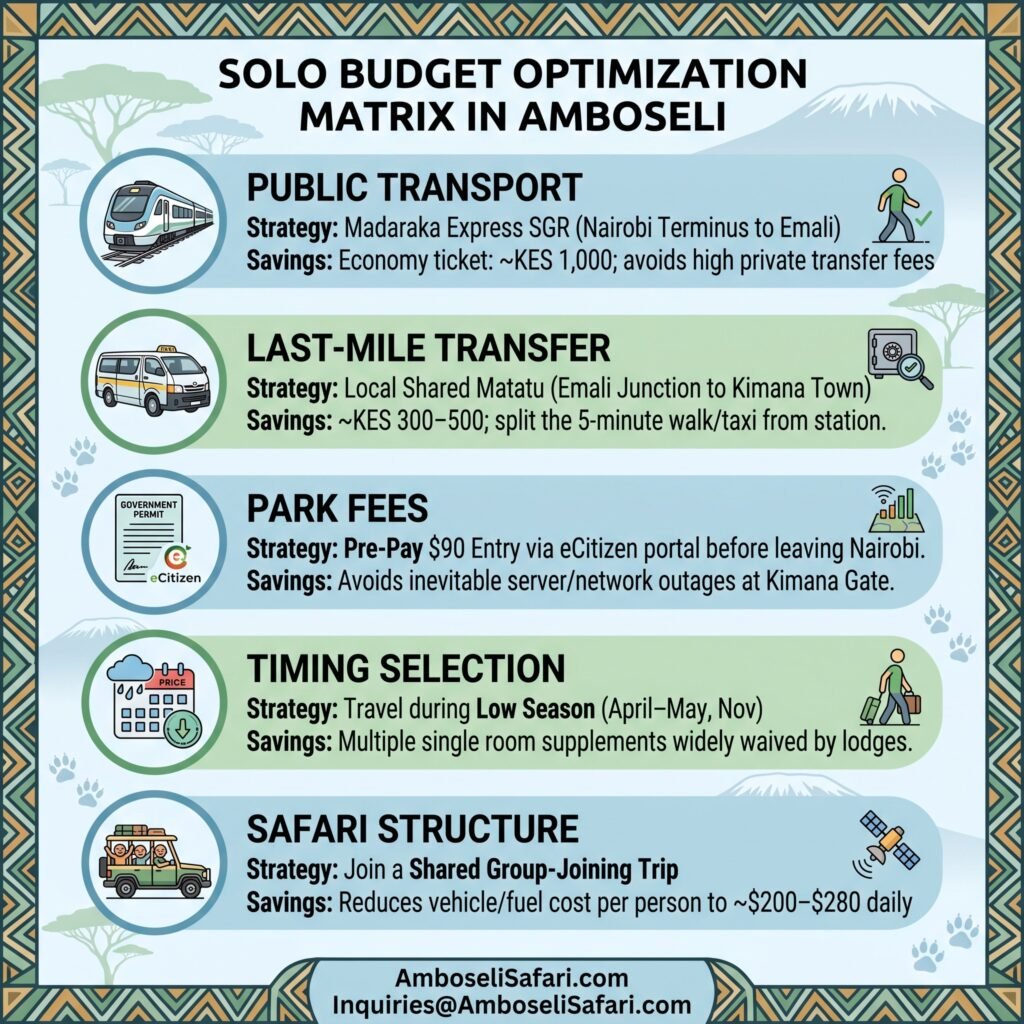
Solo Budget Optimization Matrix
Navigating Amboseli on a budget means making smart, non-traditional transport and timing decisions. Utilizing Kenya’s public transit network and strategically selecting low-season travel dates can slash daily outlays significantly. This matrix aggregates essential field-tested savings strategies, from train routes to entry fee pre-payment hacks, tailored exclusively for the solo adventurer.
| Budget Hack Category | Strategy & Item | Potential Savings / Practical Notes |
| Public Transport | Madaraka Express SGR (Nairobi Terminus to Emali) | Economy ticket: ~KES 1,000; avoids high private transfer fees |
| Last-Mile Transfer | Local Shared Matatu (Emali Junction to Kimana Town) | ~KES 300–500; split the 5-minute walk/taxi from station |
| Park Fees | Pre-Pay $90 Entry via eCitizen portal before leaving Nairobi | Avoids inevitable server/network outages at Kimana Gate |
| Timing Selection | Travel during Low Season (April–May, Nov) | Multiple single room supplements widely waived by lodges |
| Safari Structure | Join a Shared Group-Joining Trip | Reduces vehicle/fuel cost per person to ~$200–$280 daily |
Best Lodges for Solo Travelers
Dining alone in a large hotel restaurant can feel isolating. Choosing camps with communal dining tables or central campfires makes connecting with fellow travelers effortless:
| Property Name | Social Setting & Dining Layout | Best Features for Solo Guests |
| Porini Amboseli Camp | Open Campfires & Shared Tables | A single large dining table hosted by camp managers; nightly campfires for evening stories. |
| Ol Tukai Lodge | Central Lounge & Open Grounds | Large lounge bar overlooking Elephant Swamp; easy to chat with travelers or read quietly. |
| AA Lodge Amboseli | Busy Pool Deck & Bar | An active pool area where group-joining travelers gather after afternoon game drives. |
| Amboseli Serena Lodge | Quiet & Private Setup | Individual table setups; peaceful atmosphere if you want total privacy and quiet nights. |
Compare room layouts, social vibes, and camp settings across our guide on where to stay in Amboseli.
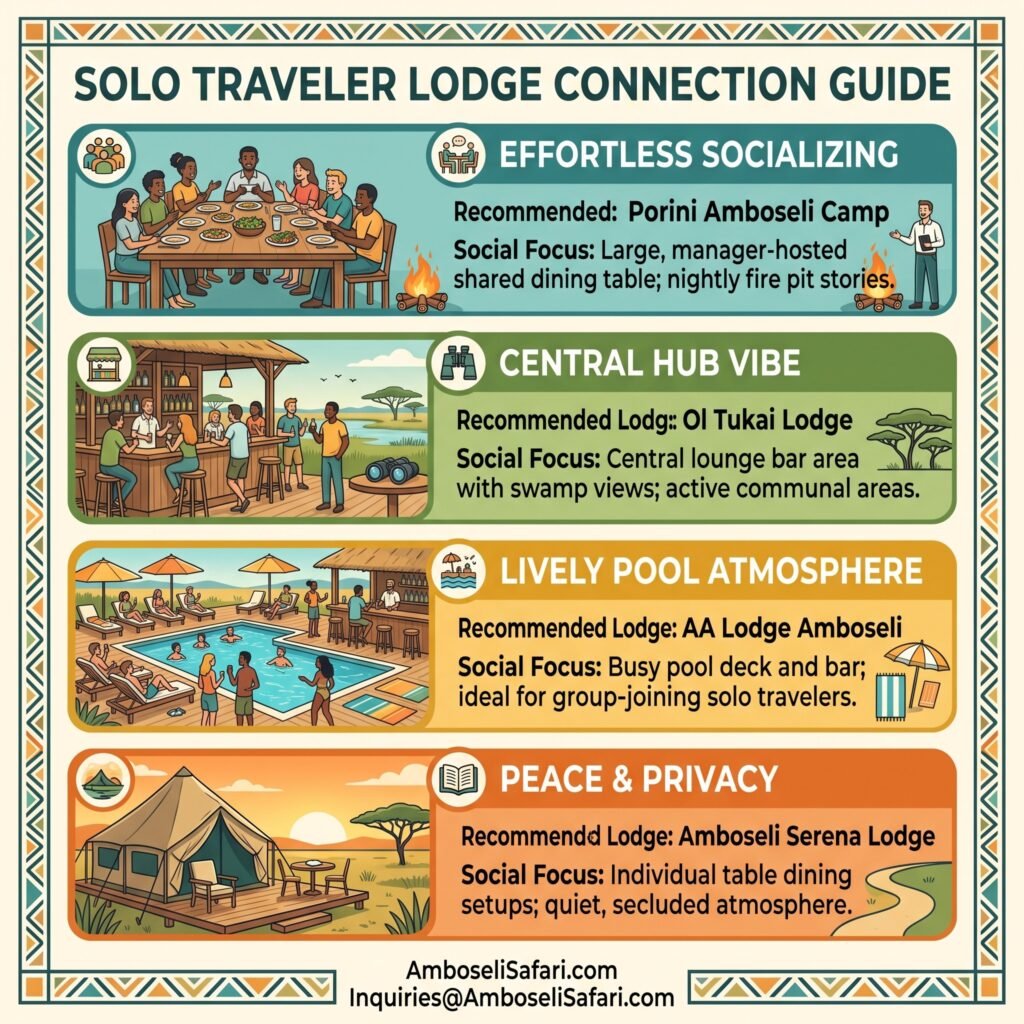
Solo Traveler Lodge Connection Guide
Choosing the right accommodation in Amboseli can transform your solitary dining experience into a connection-building opportunity. From communal fire pits to quiet observation lounges, each camp offers a unique social ecosystem for independent guests. Use this curated guide to select the property that matches your desired social vibe, whether it’s effortless networking or peaceful isolation.
| Preferred Social Vibe | Recommended Lodge | Social Focus Area / Activity |
| Effortless Socializing | Porini Amboseli Camp | Large, manager-hosted shared dining table; nightly fire pit stories |
| Central Hub Hub | Ol Tukai Lodge | Central lounge bar area with swamp views; active communal areas |
| Lively Pool Atmosphere | AA Lodge Amboseli | Busy pool deck and bar; ideal for group-joining solo travelers |
| Peace & Privacy | Amboseli Serena Lodge | Individual table dining setups; quiet, secluded atmosphere |
Solo Female Safety Guide
Amboseli is safe for solo female travelers. To keep your trip completely hassle-free:
- Vetted Guides: Book your vehicle and transfers through licensed operators with background-checked drivers.
- Evening Escorts: Always ask a Maasai guard (Askari) to walk you between your room and the dining area after 7:00 PM. Unfenced camps have wild animals wandering through the grounds after dark.
- Room Security: Tented suites use heavy canvas zippers with internal padlocks or solid timber doors. Lock up from the inside before going to sleep.
High Season vs. Low Season Costs
Selecting the right travel month impacts both your wallet and your chances of joining a group departure:
| Season & Months | Benefits for Solo Travelers | Drawbacks & Trade-Offs |
| Low Season (April – May, Nov) | Single room fees are widely waived; quiet tracks with zero vehicle traffic. | Harder to find shared group departures; rain turns dirt tracks to thick mud. |
| High Season (July – Oct, Dec) | Guaranteed daily group departures; lively evening campfires. | Full single room surcharges apply; busier viewings around swamp causeways. |
Review seasonal weather shifts and animal migration timing in our Amboseli safari planning guide.
Mobile Signals and Offline Navigation
Staying connected while exploring remote tracks keeps you safe and on schedule:
- Safaricom vs. Airtel: Safaricom offers solid 3G and 4G coverage near central lodges (Ol Tukai, Serena) and Kimana Gate. Airtel signal is spotty or non-existent across most of the basin. Pick up a local Safaricom SIM card at Nairobi Airport upon arrival.
- Wi-Fi Coverage: Wi-Fi works in central reception areas at most mid-range and luxury lodges, but signal rarely reaches outer guest tents.
- Offline Navigation: Cell coverage drops out completely on the western salt flats near Kitirua Gate. Download offline map areas on Maps.me or Gaia GPS while you still have hotel Wi-Fi in Nairobi so you can track your position offline.
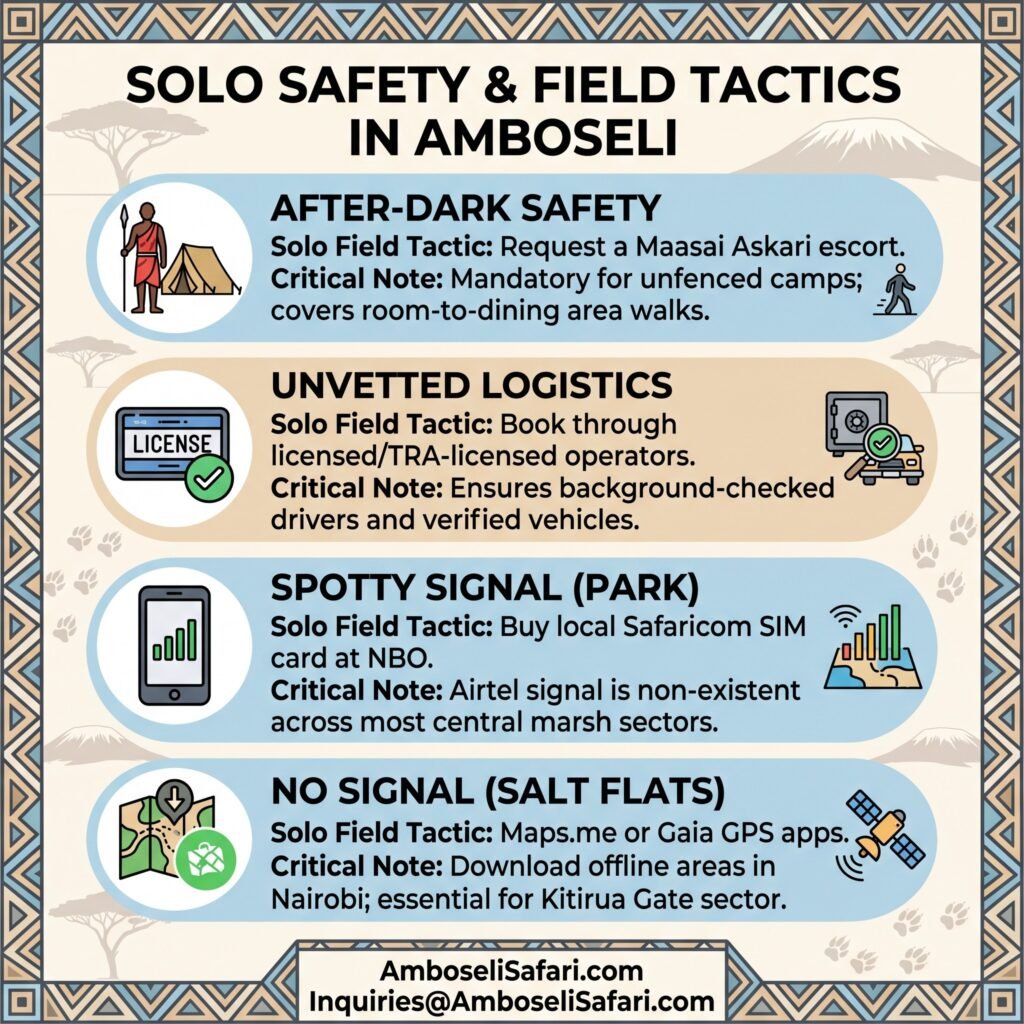
Solo Safety & Field Tactics
Maintaining physical safety and reliable navigation is paramount when exploring Amboseli’s vast, often off-grid marshlands and salt flats independently. This field guide provides a proactive, step-by-step checklist of vetted safety protocols and offline tech hacks. By following these licensed operator standards, from vetted escorts to essential map downloads, you can focus on the wildlife without security concerns.
| Safety & Navigation Hazard | Solo Field Tactic / App | Critical Practical Note |
| After-Dark Safety | Request a Maasai Askari escort | Mandatory for unfenced camps; covers room-to-dining area walks |
| Unvetted Logistics | Book through licensed/TRA-licensed operators | Ensures background-checked drivers and verified vehicles |
| Spotty Signal (Park) | Buy local Safaricom SIM card at NBO | Airtel signal is non-existent across most central marsh sectors |
| No Signal (Salt Flats) | Maps.me or Gaia GPS apps | Download offline areas in Nairobi; essential for Kitirua Gate sector |
Buying Snacks and Supplies in Town
Lodge gift shops and camp bars charge inflated prices for simple items.
Have your driver stop in Kimana Town before passing through the park gates. You can pick up 5-liter water jugs to refill your personal water bottle, along with local street snacks like kashata (coconut peanut brittle) or freshly roasted maize (mahindi choma) right off the roadside grills.
Field Notes & Real Experience
Traveling alone allows you to tune into the subtle details of the bush without cabin chatter.
“When you drive through Kimana Gate early in the morning, baboons in the fever tree (Acacia xanthophloeia) thickets usually bark alarm calls long before you spot a leopard moving in the brush,” notes Anthony Mule, a senior guide with ten years of park experience. “Solo guests often spot cats first because the vehicle cabin is completely quiet.”
Standing near Enkongo Narok swamp at dawn, cold air rushes down from Mount Kibo’s snowcap. Watching matriarch herds monitored by the Amboseli Elephant Research Project move through the marsh without any cabin chatter is an incredible experience.
Check our Amboseli self-drive tips if you plan to navigate these tracks independently, or look over itemized costs on our Amboseli safari cost breakdown page.
Ready to lock in your trip or join an upcoming departure? Send your details through our safari booking form to reserve your seat.
Frequently Asked Questions
Is Amboseli good for solo travelers?
Yes. Amboseli is safe, accessible from Nairobi via paved highways or SGR train, and features several lodges with communal dining tables that make connecting with other travelers easy.
How much does a solo safari in Amboseli cost?
A group-joining road safari costs between $200 and $280 USD per day. A private solo safari with a dedicated 4×4 Land Cruiser and private single rooming ranges from $450 to $650+ USD per day depending on lodge tier and season.
Can a solo traveler join a group safari from Nairobi?
Yes. Operators run regular group-joining departures from Nairobi in 4×4 Land Cruisers capped at six passengers, guaranteeing every solo guest an outer window seat and pop-top roof access.
What is a single supplement fee on safari?
A single supplement is a surcharge added by lodges (usually 30% to 50%) to cover the cost of one person occupying a double room. Many camps waive this fee during the low season (April–May).